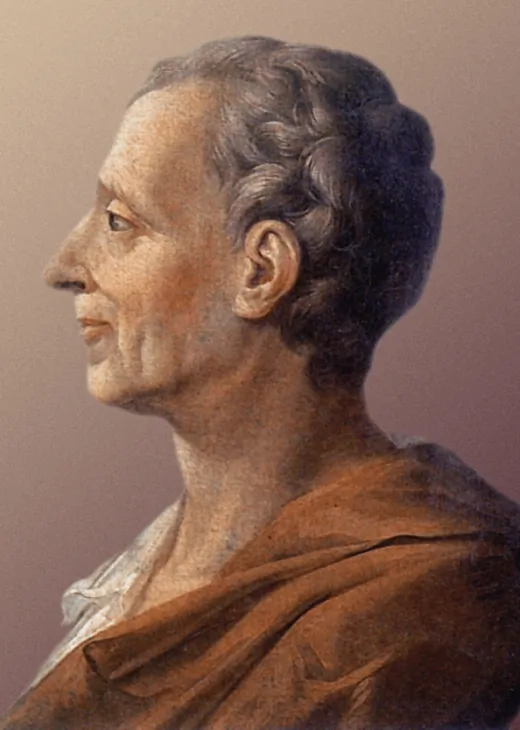
Montesquieu
Details
- Roles
- Author
Referenced works
Referenced works (6)
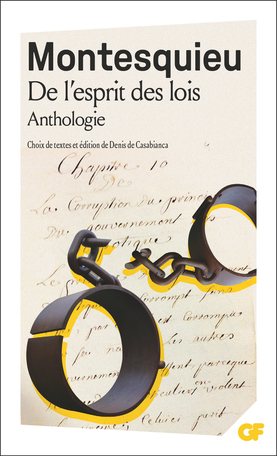
Montesquieu: The Spirit of the Laws
Author
A true political summation, On the Spirit of the Laws (1748) is Montesquieu’s masterpiece. The author engages in reflection on the different governments, a survey of human societies and a comparative analysis of laws, in order to train everyone to evaluate legislative intervention. By attempting to grasp the “spirit of the laws” – or the relationships that the laws have with the climate, religion, morals, wealth an…
- Philosophy
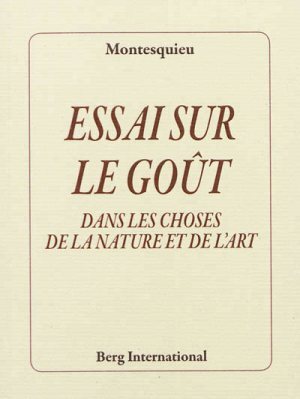
Montesquieu: Essay on taste
Author
Montesquieu seeks the causes of aesthetic pleasure in curiosity, order, variety and surprise. Taste appears as a living relationship between the qualities of the object and the faculties of the mind.
- Philosophy
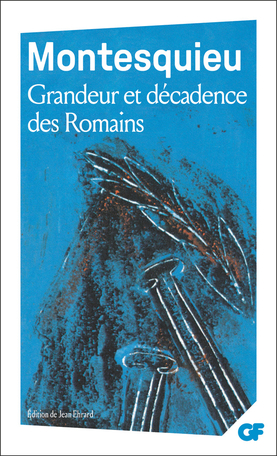
Montesquieu: The Rise and Fall of the Romans
Author
Writing about Rome: after Bossuet, Saint-Evremond and so many others, the company no longer had, in 1734, the merit of novelty. However, Montesquieu was able to renew this “worn material”, in the words of Voltaire who recognized in the Considerations “very fine reflections and very strong paintings”. As a true historian – and no longer as a storyteller – the writer describes ancient Rome, its power, its abuses and i…
- Philosophy
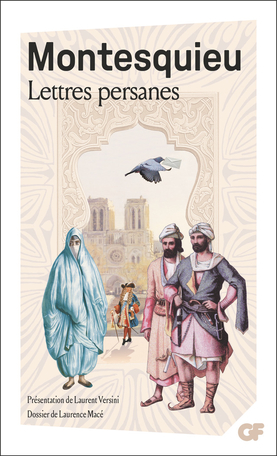
Montesquieu: Persian Letters
Author
The East and the West, the seraglio and the salons, the intrigues of the sultanas and the coquetry of the Parisians, the muftis and the pope... This is what nourishes the correspondence maintained by Usbek and Rica, Persian lords who left to discover the France of Louis XIV, with their friends who remained in Isfahan. Under the cover of a distant gaze, Montesquieu draws up in the Persian Letters (1721) an uncomprom…
- Essay
- Philosophy
- Classical

Montesquieu: Pleasures and Happiness and Other Thoughts
Author
This choice of thoughts reveals a Montesquieu attentive to the pleasures, affections and concrete conditions of happiness. The fragments combine moral observation, irony and art of living.
- Philosophy
Montesquieu: Praise of sincerity
Author
In this youth speech, Montesquieu opposes sincerity to the artifices of social life. He makes it a virtue of trust, justice and freedom in human relations.
- Philosophy
Information may change.