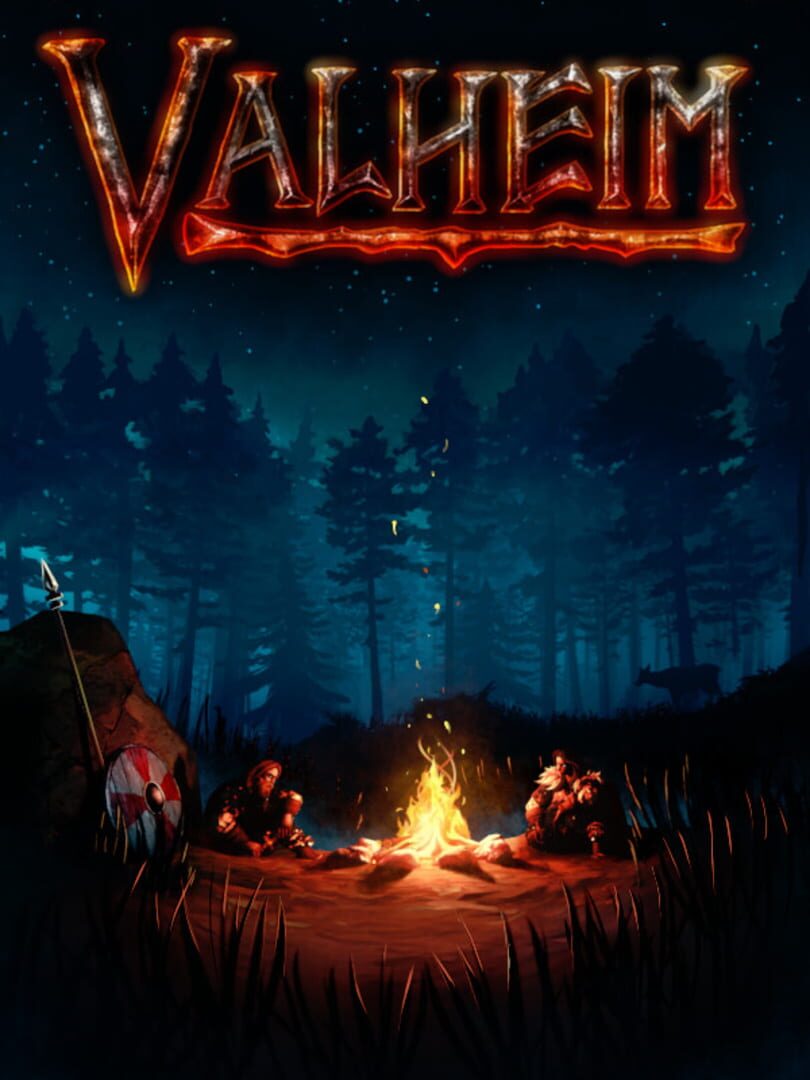
Explore a mysterious world made up of diverse environments, inhabited by formidable enemies and filled with resources and hidden secrets. As a Viking, sail across the seas in search of unknown lands and confront bloodthirsty creatures. Raise great Viking longhouses and establish settlements capable of protecting you from the dangers ahead. Customize your buildings, improve their structures and develop your defenses. To survive, gather materials, craft weapons, armor, tools and ships, cultivate the land, cook meals and brew meads and potions. Each victory against increasingly powerful bosses reveals new recipes and crafting blueprints, gradually opening the way to new possibilities.
Video game
2021
Action
Adventure
Fantasy
RPG
Survival
Open world
Sandbox
Indie
Valheim
- Coffee Stain Publishing Publisher
- Iron Gate Studios Developer
Build, explore and survive at the edge of Norse legends.
Details
- Type
- Video game
- Release
- February 2, 2021
- Countries
- 🇸🇪 Sweden
- Genres
- Action, Adventure, Fantasy, RPG, Survival, Open world, Sandbox, Indie
- Platforms
- PlayStation 5, Xbox Series, Xbox One, PC, Mac, Linux, Nintendo Switch 2
- Engine
- Unity
- Game modes
- Single player, Multiplayer, Co-operative
Synopsis
Valheim


Trailer
Watch the trailer
Overview
Presentation
Developed by Iron Gate Studios and published by Coffee Stain Publishing, Valheim is an open-world survival and exploration game initially launched in Early Access on February 2, 2021. Inspired by Norse mythology, it immerses players in a fantasy world where crafting, building and combat accompany the discovery of untamed territories. Following several years of major updates, the game reached version 1.0 on September 9, 2026, introducing the Deep North biome among other additions.
Its world is procedurally generated, meaning that every playthrough features a different distribution of islands, continents and resources. Meadows, dark forests, swamps, mountains, plains and increasingly hostile regions each contain their own creatures, materials and environmental challenges. Progression revolves around exploring these biomes and confronting powerful bosses, whose rewards unlock new equipment and additional crafting possibilities. Sailing plays an essential role: rafts, boats and longships provide access to distant lands, while portals make certain journeys between settlements easier.
Survival is built around closely connected systems. Wood, stone and ores are gathered to produce tools, weapons, armor and crafting facilities. Hunting, fishing, farming and animal husbandry provide ingredients for meals and beverages with different properties. Unlike many other survival games, going without food does not directly cause starvation: meals primarily determine available health and stamina. Combat relies on managing stamina, dodging, blocking and parrying, with weapons suited to different ranges and situations.
Building represents another major pillar of the experience. Using modular construction pieces, players can create shelters, longhouses, workshops, villages and fortifications. The system accounts for structural stability and smoke ventilation from indoor fires. Homes can be furnished and decorated, while workshops, kilns and metalworking facilities support increasingly advanced crafting. Settlements therefore become places for preparation, storage and protection against external threats.
The artistic identity of Valheim is defined by the contrast between simple polygonal models, deliberately low-resolution textures and modern lighting, fog and weather effects. Sunlit forests, storms at sea and snow-covered landscapes contribute to the atmosphere of a world inspired by Scandinavian legends. Playable alone or cooperatively with up to ten participants, the game allows players to share exploration, construction and combat within the same persistent world.
Key Highlights
- A procedurally generated Norse world: every world features a different geography, with distinctive biomes, resources and creatures.
- Exploration-driven progression: discovering new materials and defeating bosses unlocks additional crafting possibilities and equipment.
- Detailed construction systems: buildings can be extensively customized while accounting for structural stability, shelter and ventilation.
- Preparation-based survival: food, rest, equipment and stamina management directly influence a character's capabilities.
- Essential maritime exploration: ships allow players to cross oceans, discover distant lands and transport resources.
- Integrated cooperation: sessions support up to ten players, with dedicated servers and shared construction.
Conclusion
Valheim combines survival mechanics with progression structured around exploration and the conquest of new territories. Settlement construction, expedition preparation and battles against mythological creatures form a network of interconnected systems. Its procedurally generated world and distinctive visual identity, blending retro graphics with atmospheric effects, establish a particular approach to the open-world Viking adventure, balancing creative freedom with milestone-based progression.
Did You Know?
- Originally released in Early Access in February 2021, Valheim reached version 1.0 on September 9, 2026, introducing the Deep North, additional creatures, new equipment and achievements.
- The game uses the Unity engine and supports cooperative play for up to ten players, including cross-platform multiplayer.
- Food is not required to prevent starvation: it primarily improves health, stamina and their regeneration.
- Buildings follow certain physical constraints: insufficient support can cause structures to collapse, and indoor fires require proper smoke ventilation.
- After death, a character's equipment can be recovered from a tombstone at the place where they fell; skills may suffer a penalty depending on world settings.
- Generated worlds are persistent, and characters can participate in different games while retaining their equipment and skills.
Link graph
Open in the full graphLoading the graph…
Only the strongest links are shown.