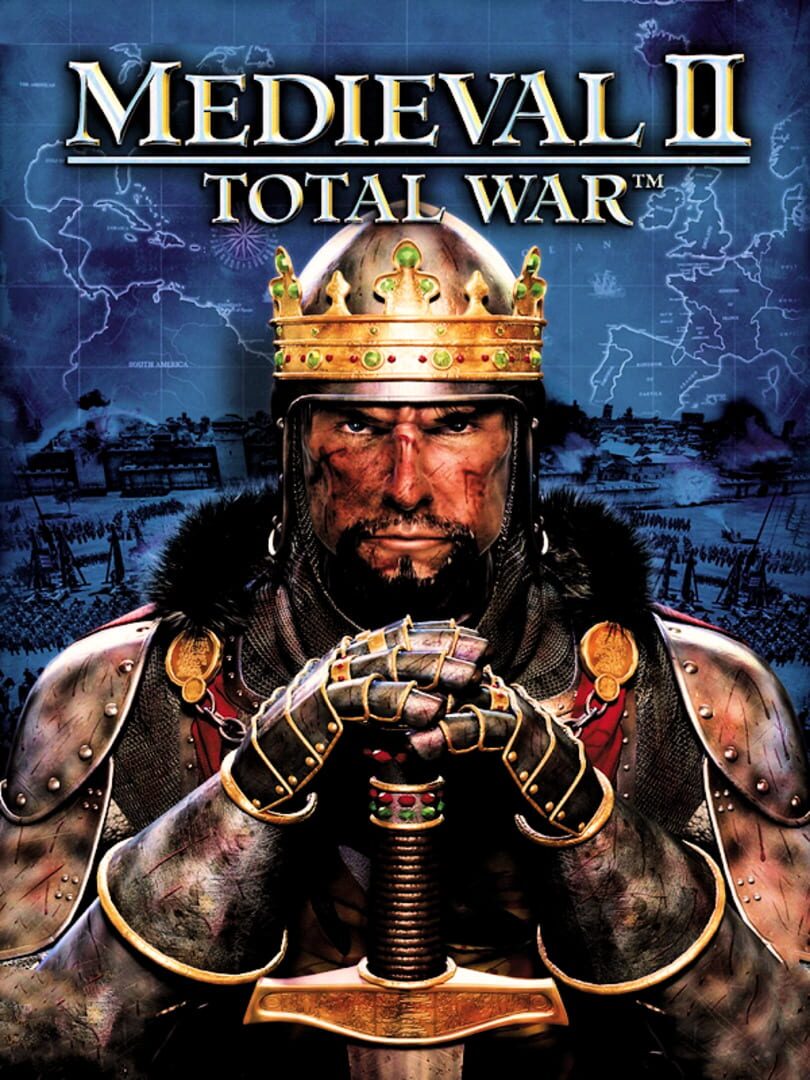
Take command of a medieval kingdom and expand your rule through conquest, diplomacy and the development of your settlements. Lead enormous armies in real-time battles across landscapes where terrain and weather conditions influence the fighting. From 1080 to 1530, experience centuries of upheaval: the age of chivalry, the Crusades, the spread of gunpowder, the emergence of professional armies and the discovery of the Americas. From Europe to North Africa and the Middle East, develop your kingdom and attempt to rewrite history.
Video game
2006
Historical
Simulation
Strategy
Tactical
Real-time strategy
Total War: Medieval II
- Creative Assembly Developer
- Feral Interactive Publisher
- Sega Publisher
From medieval fortresses to early firearms, kingdoms struggle for power.
Details
- Type
- Video game
- Release
- November 10, 2006
- Countries
- 🇬🇧 United Kingdom
- Genres
- Historical, Simulation, Strategy, Tactical, Real-time strategy
- Platforms
- PC, Mac, Linux, Mobile
- Engine
- TW Engine 2
- Game modes
- Single player, Multiplayer
Synopsis
Total War: Medieval II


Trailer
Watch the trailer
Overview
Presentation
Developed by Creative Assembly and published in part by Sega, Total War: Medieval II is a strategy game released on November 10, 2006. A successor to Medieval: Total War (2002), it covers the period from 1080 to 1530, across Europe, North Africa and the Middle East. Players lead a medieval power, such as England, France, the Holy Roman Empire or Egypt, seeking to develop their kingdom and conquer additional territories. The campaign unfolds through turn-based economic management, military movements and diplomatic relations, while battles are commanded directly in real time.
One of the game's defining features is the distinction between cities and castles. Cities emphasize trade, population growth and tax revenue, while castles provide stronger defenses and allow the recruitment of specialized military units. Players can convert one settlement type into the other, although this requires reorganizing its infrastructure. Roads, ports, farms and religious buildings also contribute to territorial development. Guilds may establish themselves in particular settlements, providing specialized benefits. Diplomacy includes alliances, trade agreements and negotiations conducted by various agents, including diplomats, spies, assassins and merchants.
Religion plays an important role in international politics. Catholic factions must consider the authority of the Pope, who can demand an end to hostilities, call for a Crusade or pronounce excommunication. Priests may become cardinals and participate in papal elections. Muslim powers have their own religious warfare mechanics associated with jihad. Dynastic politics also influence the campaign: rulers age, heirs succeed them, and marriages can support diplomatic objectives. Generals acquire character traits through their actions, developing attributes such as Chivalry or Dread, which influence their military abilities and methods of government.
Real-time battles feature knights, spearmen, archers, crossbowmen, cavalry and siege engines. Formations, fatigue, morale, weather conditions and flanking attacks affect the outcome of engagements. Sieges involve assaulting fortresses using siege towers, battering rams and artillery. As the centuries pass, gunpowder weapons and early cannon gradually transform battlefield tactics. The game also features historical and custom battles alongside multiplayer engagements. Naval battles on the campaign map, however, are resolved automatically.
Campaign progression introduces new enemies and opportunities for expansion, including the Mongol and Timurid invasions and eventual access to the Americas. This entry refers to the original 2006 game, rather than a remaster. Its Kingdoms expansion, released separately in 2007, adds four campaigns focusing on the British Isles, the Crusades, Northern Europe and the New World. Later editions, including the Definitive Edition, bundle the base game with the expansion.
Key Highlights
- A campaign spanning centuries: from 1080 to 1530, kingdoms evolve through feudal warfare, Crusades and the arrival of firearms.
- Two settlement types: cities emphasize economic development, while castles support defense and military recruitment.
- Political and religious diplomacy: alliances, agents, the Papacy, Crusades and jihads influence relations between powers.
- Dynastic management: succession, marriages and general traits shape the development of each kingdom.
- Real-time tactical battles: cavalry, infantry, archers, sieges and artillery require different strategies.
- Gradual geographical expansion: campaigns extend from Europe and the Middle East to the Americas.
Conclusion
Total War: Medieval II combines military conquest with the economic, dynastic and religious management of medieval powers. The distinction between cities and castles introduces territorial decisions, while religious authorities and the succession of rulers influence political stability. The evolution of armies, from feudal formations to gunpowder weapons, accompanies a campaign spanning centuries of historical change.
Did You Know?
- The Grand Campaign covers 1080 to 1530, with seventeen playable factions in total. Only certain factions are available initially; others must be unlocked.
- A city can be converted into a castle, and vice versa. This changes available buildings and recruitment options.
- Generals develop traits including Chivalry and Dread according to their actions, affecting command and administration.
- Catholic factions can participate in papal elections if they have a cardinal. The Pope can also issue excommunications.
- Armies participating in Crusades and jihads benefit from special conditions affecting movement and upkeep.
- Guilds offer different advantages according to their specialization and can support economic or military activities.
- The Mongol and Timurid invasions are campaign events, while access to the Americas opens a new theater of conquest.
- The Kingdoms expansion adds four campaigns: Britannia, Crusades, Teutonic and Americas. It is separate from the original game.
- A mobile adaptation developed by Feral Interactive was released for iOS and Android on April 7, 2022, featuring redesigned touchscreen controls and interfaces.
Link graph
Open in the full graphLoading the graph…
Only the strongest links are shown.