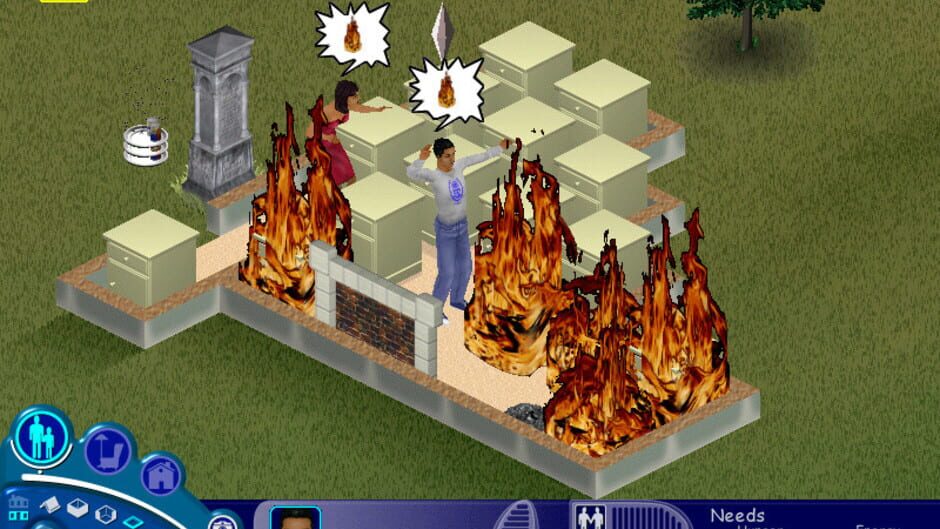
Create virtual characters and make the decisions that shape their everyday lives. Customize their appearance, personality, skills and relationships, then build and furnish the homes where they live. Guide your Sims through daily activities, social encounters and professional careers. Ten different career tracks allow them to progress according to their skills and friendships. Their autonomy and interactions give rise to unexpected situations. Life also brings difficulties: fires, burglaries, household problems and neglected needs can disrupt a family's routine. It is up to you to care for your characters, encourage their well-being or observe the consequences of your decisions.
Video game
2000
Comedy
Fantasy
Romance
Simulation
Sandbox
The Sims
- Aspyr Media Publisher
- Electronic Arts Publisher
- Maxis Developer
- TransGaming Technologies Publisher
One house, a few characters and an entire life to imagine.
Details
- Type
- Video game
- Release
- February 4, 2000
- Countries
- 🇺🇸 United States
- Genres
- Comedy, Fantasy, Romance, Simulation, Sandbox
- Platforms
- PC, Mac, Linux
- Engine
- The Sims Engine
- Game modes
- Single player
Synopsis
The Sims
Trailer
Watch the trailer
Overview
Presentation
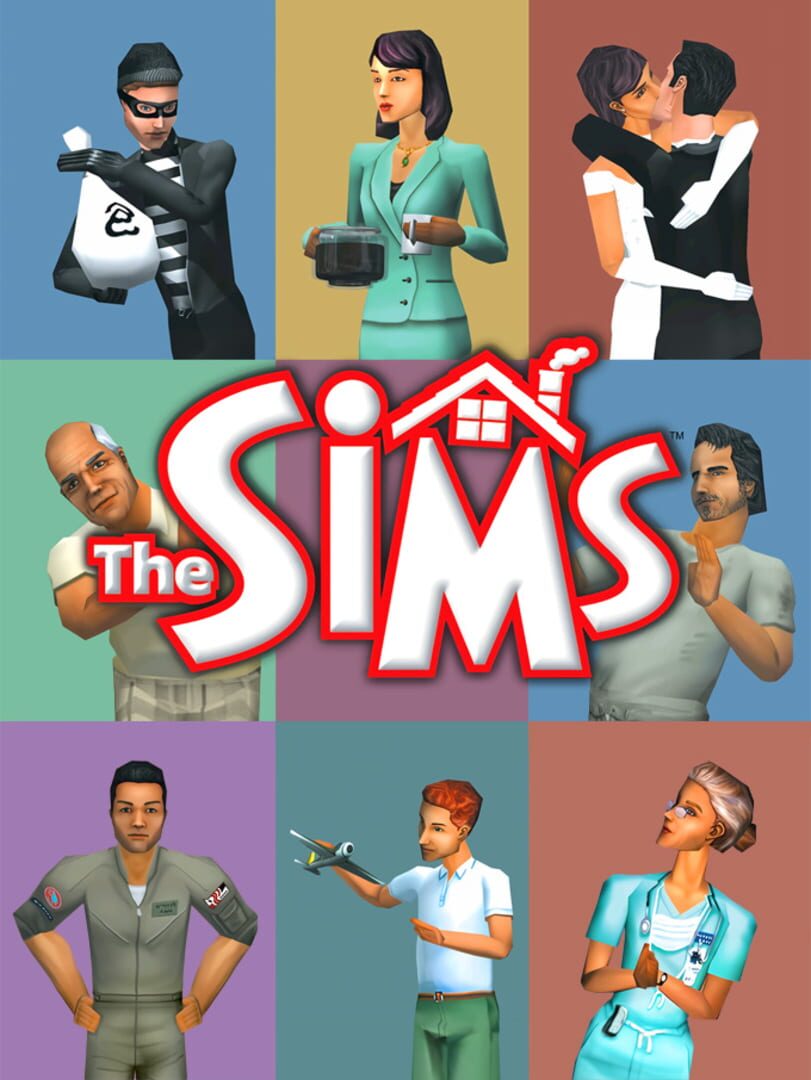
Developed by Maxis and published by Electronic Arts, with Aspyr Media and TransGaming Technologies associated with other editions, The Sims is a life simulation game released on February 4, 2000. Conceived by Will Wright, also known for creating SimCity, it shifts the focus from managing an entire city to controlling the lives of its inhabitants. Players create virtual characters called Sims, move them into homes and organize their daily routines, without a mandatory campaign or victory condition. The experience follows an open-ended principle: deciding how characters spend their time, which relationships they develop and how their households change. Humor, occasionally unpredictable behavior and the fictional language known as Simlish accompany a simulation where small decisions can lead to significant consequences.
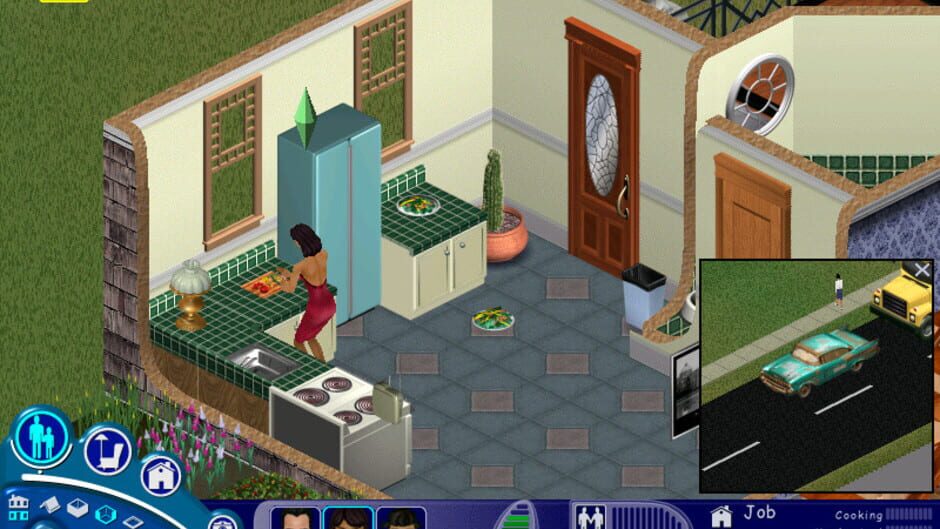
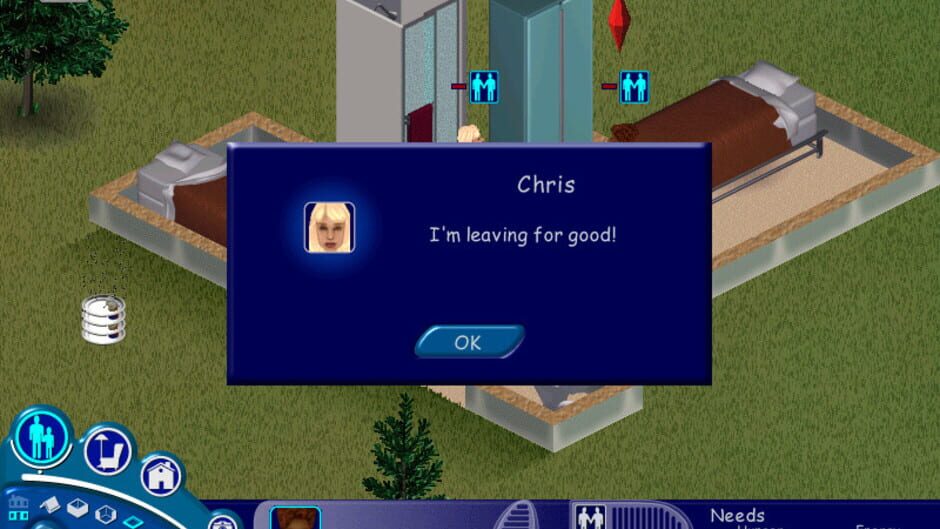
Gameplay revolves around eight fundamental needs: Hunger, Comfort, Hygiene, Bladder, Energy, Fun, Social and Room. Each is represented by a meter that changes according to the characters' activities and the objects available in their homes. Eating, sleeping, washing, socializing and enjoying entertainment help maintain a positive mood, while neglected needs interfere with behavior. Personality also plays a role: when creating a Sim, players distribute points across five characteristics related to neatness, sociability, activity, playfulness and kindness. The Free Will option allows characters to perform certain actions autonomously, although important decisions still require player intervention. Poorly managed households can experience arguments, domestic accidents or more serious consequences.
Professional and social life forms another essential part of the simulation. The base game includes ten career tracks, each with ten levels, covering fields such as business, medicine, politics, science and entertainment. To earn promotions, Sims must develop specific skills and maintain enough friendships. Cooking, Mechanical, Charisma, Logic, Body and Creativity skills improve through activities and the use of certain household equipment. Social interactions allow characters to establish friendships, rivalries and romantic relationships. Managing working hours, bills and household finances creates an organizational challenge, requiring players to balance personal ambitions, immediate needs and the time available.
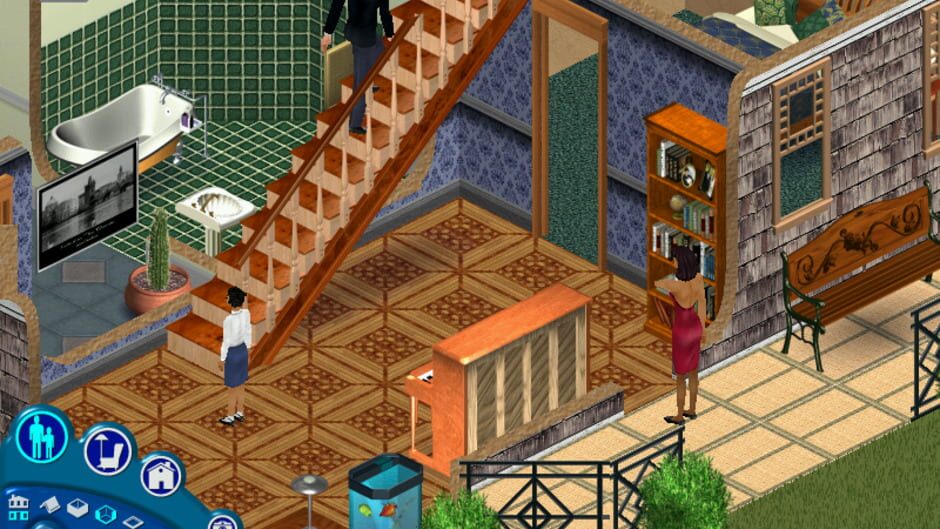
Build Mode and Buy Mode allow players to shape the surroundings of each household. They can purchase a lot, construct a house, move walls, install doors and windows, select floor and wall coverings, and arrange furniture. Every object serves a purpose and affects specific aspects of the simulation: beds support rest, bookshelves encourage learning, and recreational equipment increases enjoyment. Buildings are viewed from an isometric perspective with several predefined camera angles. Unlike The Sims 3, the neighborhood is not an open world: it primarily serves as a selection screen for lots and families, while daily life takes place on the active property. The original game also lacks the aging and multigenerational progression systems that would become central to The Sims 2.
The identity of The Sims is defined by recognizable domestic environments: suburban homes, familiar furniture, exaggerated gestures and thought bubbles expressing the characters' intentions. The soundtrack, associated particularly with composer Jerry Martin, accompanies activities with instrumental music, including distinctive themes for building and furnishing. Following release, seven major expansion packs gradually introduced new activities, additional locations, pets and supernatural elements. These additions extended a formula that, from its original version, was built around creating characters and experimenting with different ways of living.
Key Highlights
- Open-ended life simulation: no mandatory storyline or victory condition determines how players experience the game.
- Customizable characters: appearance and five personality characteristics influence behavior and relationships.
- Eight needs to manage: food, sleep, hygiene, entertainment, surroundings and social interaction structure daily life.
- Ten career paths: Sims can develop skills, earn money and progress through different professions.
- Household construction: architecture, furniture and equipment allow players to change their characters' living conditions.
- Partial autonomy: Sims can act spontaneously, although certain situations require player intervention.
- Emergent storytelling: romances, conflicts, accidents and domestic events develop through interactions between gameplay systems.
Conclusion
The Sims establishes the foundations of a life simulation series by making everyday activities its central subject. Managing needs, building relationships and progressing through careers provide opportunities for development without imposing a predefined narrative. Construction tools directly connect the environment with character behavior, while autonomous actions introduce an element of unpredictability. This combination of management, creation and observation forms the basis upon which later installments would develop generations, open neighborhoods and more elaborate personality systems.
Did You Know?
- Will Wright conceived The Sims after his work on the SimCity series. The project developed partly from ideas about architecture, interior design and interactions between inhabitants and objects.
- The original game's eight needs are Hunger, Comfort, Hygiene, Bladder, Energy, Fun, Social and Room. The last is influenced by the quality and cleanliness of the surrounding environment.
- The five personality characteristics are determined by distributing 25 points. Their combination also determines a Sim's associated zodiac sign.
- The base game features ten career tracks with ten levels each. Promotions depend partly on skills, friendships and the character's mood.
- Unlike The Sims 2, children do not become adults and adults do not die of old age. Babies can, however, grow into children.
- Seven major expansions were released between 2000 and 2003, from Livin' Large to Makin' Magic. Vacations, pets, downtown outings and magic were introduced through these additions rather than the original base game.
- A rerelease, The Sims: Legacy Collection, launched on January 31, 2025, for modern Windows PCs. It includes the original game and all seven expansion packs.
Expansions
Between 2000 and 2003, The Sims received seven major expansion packs, introducing new careers, parties, romantic encounters, vacations, pets, celebrity life and magic.
- The Sims: Livin' Large
- The Sims: House Party
- The Sims: Hot Date
- The Sims: Vacation
- The Sims: Unleashed
- The Sims: Superstar
- The Sims: Makin' Magic
Link graph
Open in the full graphLoading the graph…
Only the strongest links are shown.