Create your own neighborhood or settle into one of three existing neighborhoods populated by families with distinctive stories. Choose a household and guide its residents through everyday life, managing their needs, social relationships, ambitions and personal decisions. Every Sim now has aspirations, wants and fears. Some dream of raising a family, accumulating wealth or gaining knowledge, while others seek romance or popularity. Fulfilling their wishes improves their mood and unlocks rewards, while experiencing their fears can trigger difficult emotional reactions. Sims are born, grow up, inherit characteristics from their parents and eventually grow old. Their greater autonomy and the events shaping their families create stories filled with romance, rivalries, surprises and conflicts between generations.

The Sims 2
- Aspyr Media Publisher
- Electronic Arts Publisher
- Maxis Developer
Dreams to pursue, generations to raise.
Details
- Type
- Video game
- Release
- September 14, 2004
- Countries
- 🇺🇸 United States
- Genres
- Comedy, Fantasy, Romance, RPG, Simulation, Strategy, Sandbox
- Platforms
- PC, Mac
- Engine
- The Sims 2 Engine
- Game modes
- Single player
Synopsis
The Sims 2


Trailer
Watch the trailer
Overview
Presentation
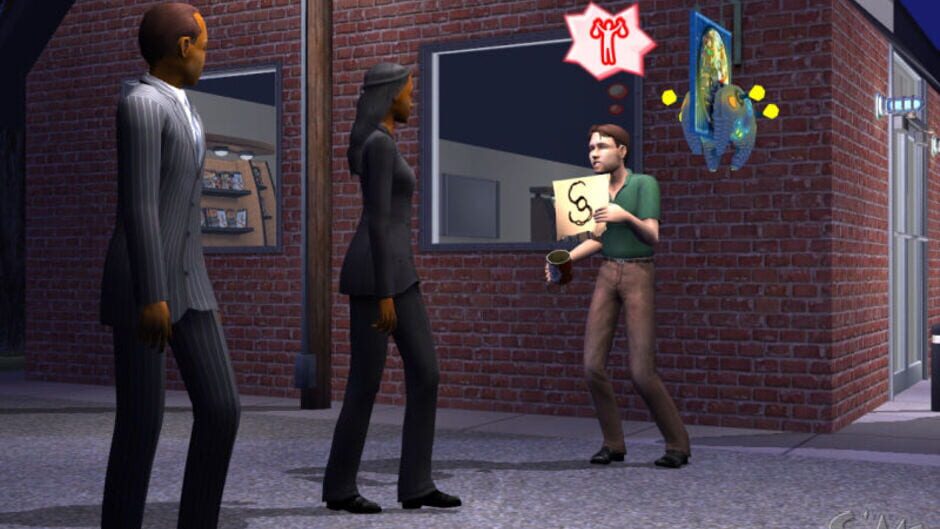
Developed by Maxis and published by Electronic Arts, with Aspyr Media responsible for the Mac edition, The Sims 2 is a life simulation game released on September 14, 2004. The second main installment in The Sims series continues the concept of an open-ended experience without a mandatory storyline or victory condition, where players create characters, furnish their homes and organize their everyday lives. It introduces a fully three-dimensional world, allowing characters and buildings to be viewed from different angles. The game includes three main neighborhoods: Pleasantview, Strangetown and Veronaville, each populated by families with established relationships and backstories. Their rivalries, mysterious disappearances and romantic entanglements give the simulation a narrative dimension while remaining open to player intervention.
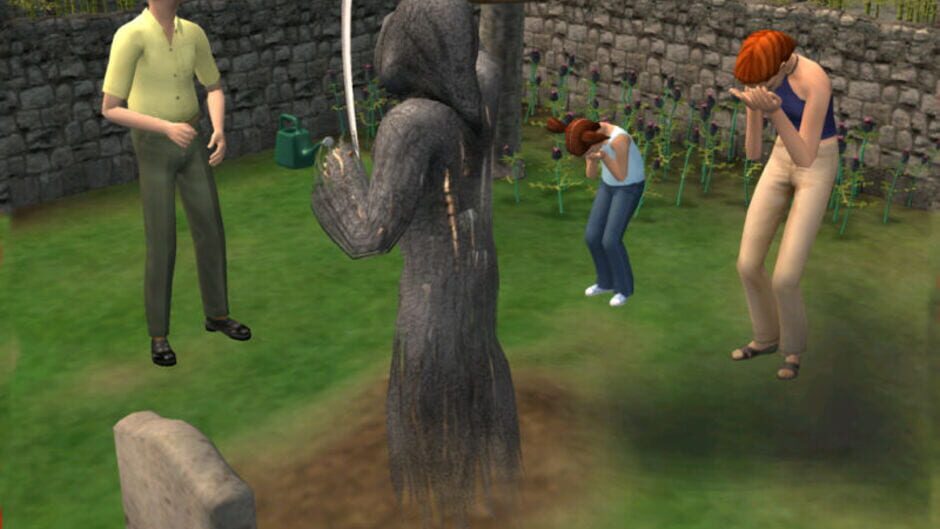
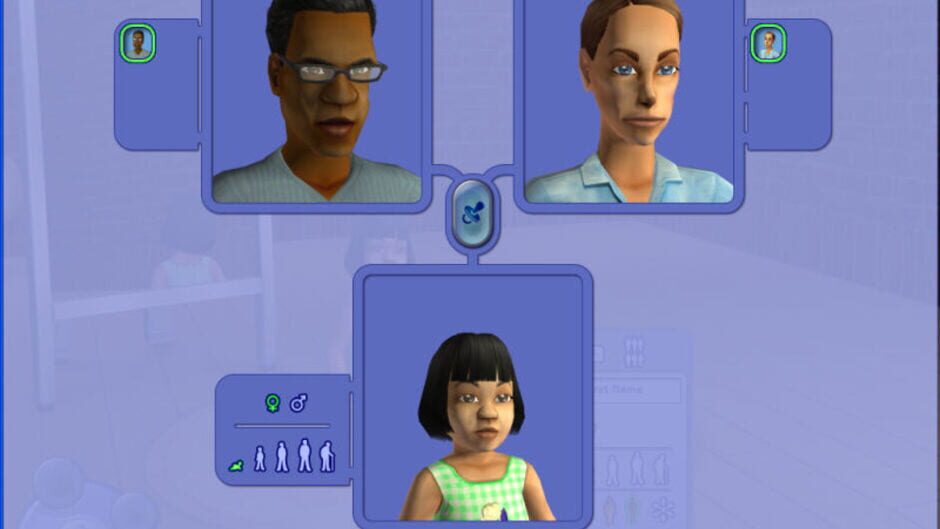
The most significant evolution concerns character development across generations. Sims can now be born, grow into children and teenagers, reach adulthood, become elderly and eventually die of old age. The genetics system allows children to inherit certain physical characteristics from their parents, including facial features and eye or hair colors. Family trees track relationships between relatives, while memories record important events such as marriages, births, separations and the loss of loved ones. These mechanics allow players to follow the same family over several generations, gradually building a history shaped by their decisions.
The Aspiration system gives personal motivation a more prominent role. Beginning in adolescence, each Sim can follow one of the original game's five main aspirations: Family, Fortune, Knowledge, Popularity or Romance. Their Wants and Fears change according to personality and life events. Fulfilling a Want improves the Aspiration Meter and awards points that can be exchanged for special objects, including the Money Tree and Elixir of Life. Conversely, experiencing too many feared events can lead to emotional breakdowns. Sims still manage everyday needs, skills and careers, but also benefit from improved artificial intelligence and greater autonomy, allowing them to handle certain activities without constant player intervention.
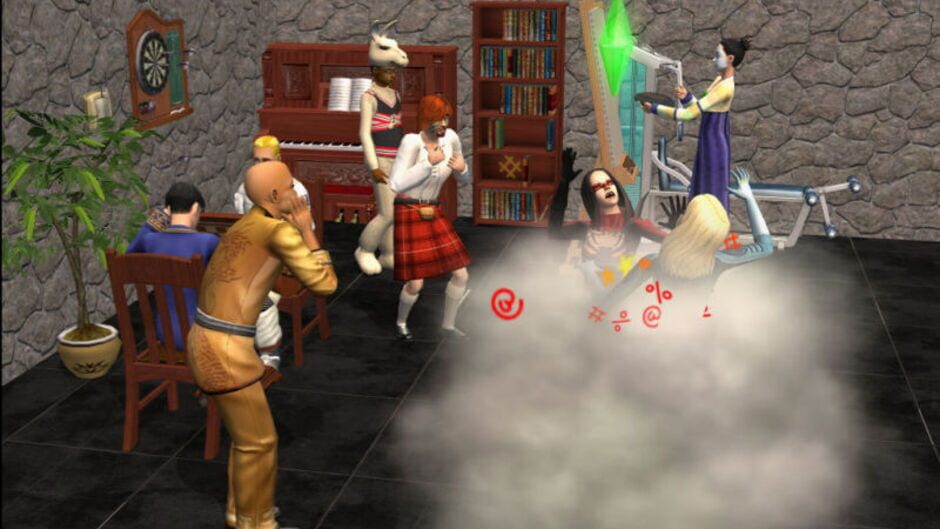
Building and customization remain essential parts of the experience. Create a Sim allows players to adjust faces, body shapes, hairstyles, clothing and personality characteristics. Build Mode supports multistory homes, gardens and architectural changes, while Buy Mode provides furniture and household equipment. Neighborhoods can also be customized with additional lots and families. Players move between individual lots through the neighborhood view, rather than exploring the continuous open world later introduced in The Sims 3. Integrated screenshot and video recording tools also allow players to preserve memories or create short films. Following release, eight major expansion packs introduced additional activities, although these were separate from the original 2004 content.
Key Highlights
- Life simulation across generations: birth, childhood, adolescence, aging and death shape the development of families.
- A genetics system: children can inherit physical characteristics from their parents.
- Personal aspirations: five principal aspirations influence Sims' motivations, Wants and Fears.
- Memories and lasting relationships: important events become part of the history of characters and their families.
- Three neighborhoods with distinctive storylines: Pleasantview, Strangetown and Veronaville feature households connected through established relationships.
- Fully 3D creation: characters, buildings and environments can be customized and viewed from different angles.
- Greater everyday autonomy: Sims manage more activities independently while remaining subject to their needs and player decisions.
Conclusion
The Sims 2 transforms the original game's life simulation by introducing generational progression, inherited genetics and a system of personal aspirations. Characters are no longer defined solely by their immediate needs and relationships: they also possess memories, Wants and Fears that accompany them throughout their lives. Combined with three-dimensional presentation and expanded building tools, these mechanics allow players to develop family stories in which individual events become part of a longer continuity.
Did You Know?
- The five original aspirations are Family, Fortune, Knowledge, Popularity and Romance. Additional options were introduced through later expansion packs.
- The base game includes six life stages: baby, toddler, child, teenager, adult and elder. The young adult stage was added through the University expansion.
- The three original neighborhoods are Pleasantview, Strangetown and Veronaville, each featuring distinctive households and storylines.
- Certain family stories continue events from the first The Sims. The game takes place after the earlier history of the Goth family, whose members face a changed situation.
- The memory system records positive and negative events, while family trees track relationships between generations.
- Neighborhood creation tools can use terrain layouts imported from SimCity 4, allowing players to customize roads and lot arrangements.
- The game received eight major expansion packs between 2005 and 2008. A separate rerelease, The Sims 2 Legacy Collection, arrived on PC in January 2025, bringing together the original game and its major additional content.
Expansions
Between 2005 and 2008, The Sims 2 received eight major expansion packs, introducing university life, nightlife, business management, pets, seasons, travel, hobbies and apartment living.
- The Sims 2: University
- The Sims 2: Nightlife
- The Sims 2: Open for Business
- The Sims 2: Pets
- The Sims 2: Seasons
- The Sims 2: Bon Voyage
- The Sims 2: FreeTime
- The Sims 2: Apartment Life
Link graph
Open in the full graphLoading the graph…
Only the strongest links are shown.