Build and manage your own cities in a simulation where every decision can influence their development. Within a detailed, model-like world, watch residents, activities and infrastructure respond to your choices. Develop a single city or manage a region containing up to sixteen cities, each with its own specialization. Organize their economies and services to create a network of interconnected communities. Alone or in multiplayer, cooperate with other mayors, exchange resources and share services, or pursue competing objectives. Your local decisions can shape the balance and development of the entire region.

Video game
2013
Simulation
Strategy
Sandbox
SimCity
- Electronic Arts Publisher
- Maxis Developer
Every road shapes a city, every city transforms its region.
Details
- Type
- Video game
- Release
- March 5, 2013
- Countries
- 🇺🇸 United States
- Genres
- Simulation, Strategy, Sandbox
- Platforms
- PC, Mac
- Engine
- GlassBox
- Game modes
- Single player, Multiplayer
Synopsis
SimCity

Trailer
Watch the trailer
Overview
Presentation
Developed by Maxis and published by Electronic Arts, SimCity is a city-building and management simulation game released on March 5, 2013, for PC and Mac. Designed as a new interpretation of the series, it allows players to construct cities while considering residents' needs, economic development and the organization of infrastructure. Players establish residential, commercial and industrial zones, lay out roads, provide public services and monitor municipal finances. Every decision influences traffic, employment, quality of life or city revenue. A defining feature of this installment is its regional approach: rather than managing an isolated metropolis, players can develop several cities connected through transport networks and economic exchanges.
The game uses the GlassBox simulation engine, designed to represent urban activities through visible agents and flows. Vehicles travel along roads, residents move between their homes and daily activities, and water, electricity and sewage networks directly affect how neighborhoods function. Problems emerge within the city itself: traffic congestion can delay emergency services, insufficient electricity disrupts buildings, and pollution can harm residents. Data maps allow players to examine these conditions and identify affected areas. Road construction plays a central role, as streets can follow straight or curved paths, while their capacity helps determine the density of development in surrounding buildings.
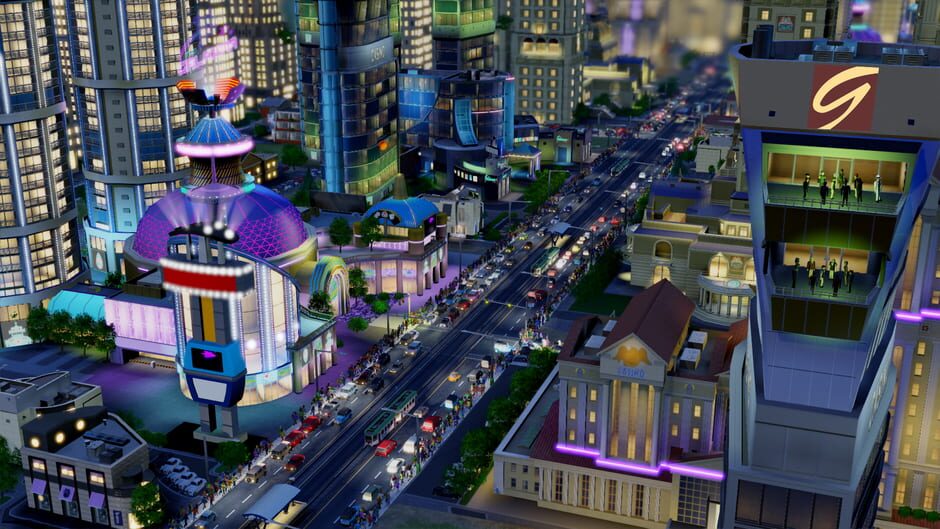
Management also involves a substantial economic and environmental dimension. Cities can extract coal, ore and oil, process certain raw materials and participate in resource trading. Other specializations focus on tourism, cultural attractions, casinos or electronics manufacturing. Each approach creates different requirements for labor, energy, transportation and public services. An industrial city may generate considerable revenue while producing more pollution, whereas a tourist-oriented city depends on accessibility and suitable facilities. Certain public buildings are modular: a fire station, for example, can receive additional facilities to expand its capabilities.
Regional management allows up to sixteen cities on certain maps. Several players can participate in the same region, administer separate territories and cooperate by exchanging resources or sharing services such as emergency response, electricity and waste collection. Large-scale projects known as Great Works can be constructed through contributions from multiple cities. They include facilities such as an international airport or a regional solar power plant. This system encourages complementary urban economies but also exposes cities to difficulties beyond their own boundaries, as traffic, pollution and resource availability can affect neighboring territories.
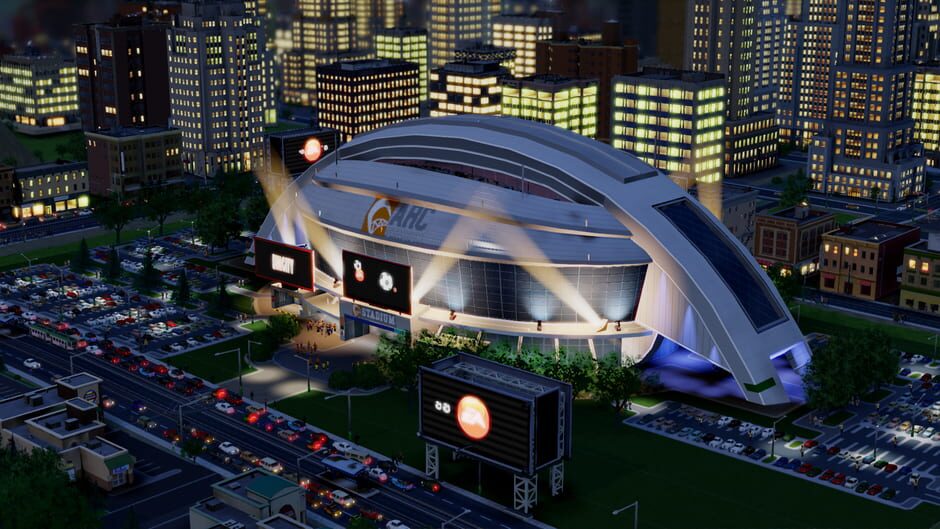
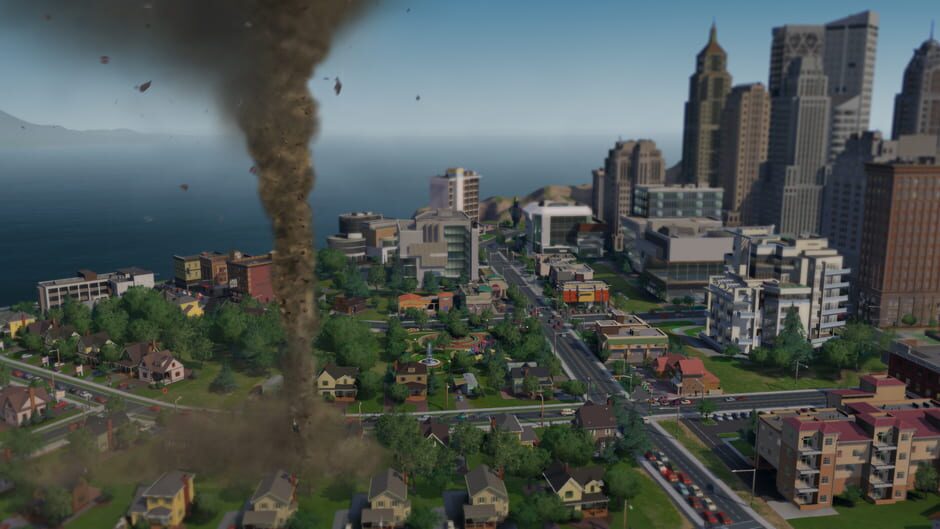
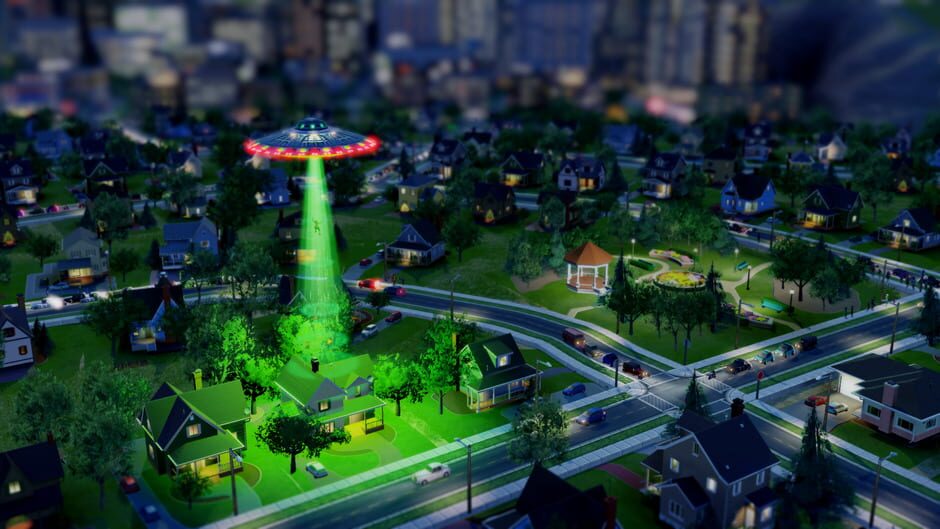
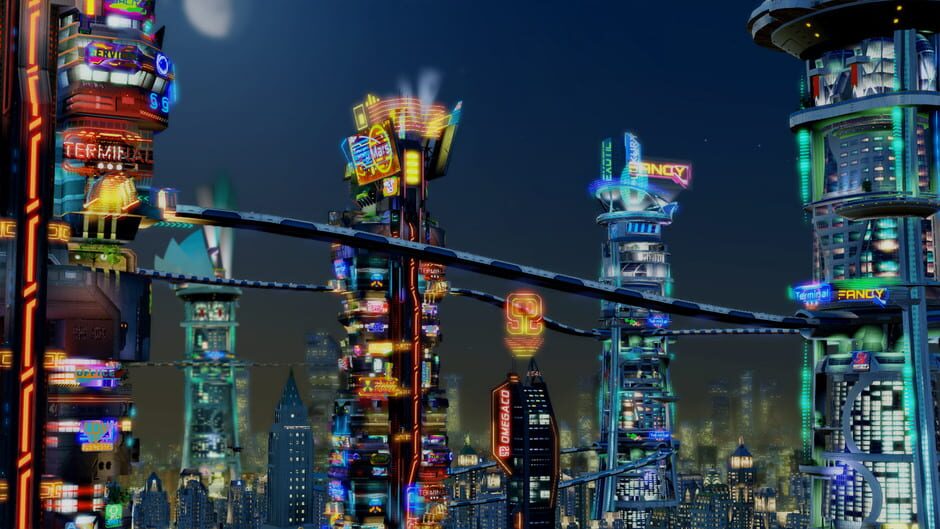
The visual presentation resembles an animated miniature city, with detailed buildings and information integrated directly into the landscape. Maps are divided into building sites of limited size, distinguishing this installment from the larger continuous urban spaces found in certain predecessors. At launch, the game required a permanent Internet connection, including for individual play, and experienced server problems during its initial release. Update 10, released on March 18, 2014, introduced an offline single-player mode with local saving while preserving multi-city regional management. A separate expansion, SimCity: Cities of Tomorrow, also introduced vertical construction and futuristic technologies, which were not included in the original 2013 base game.
Key Highlights
- Detailed urban simulation: the GlassBox engine represents movement, infrastructure and interactions between city systems.
- Flexible construction: curved roads, residential, commercial and industrial zoning, and expandable public buildings shape urban planning.
- Economic specializations: mining, oil extraction, electronics, trade, tourism and gambling influence development strategies.
- Regional management: multiple cities can exchange resources, services and workers, with regions supporting up to sixteen city sites.
- Collaborative projects: Great Works bring together resources from several cities to construct shared infrastructure.
- Multiplayer interaction: mayors can cooperate within a region or pursue competing objectives.
- Offline single-player added after launch: the March 2014 update introduced local city management and saving.
Conclusion
SimCity (2013) develops urban simulation around two complementary principles: detailed observation of a city's operations and interdependence between multiple territories. The GlassBox engine connects infrastructure, movement and economic activity, while specializations and regional projects encourage the distribution of resources between different cities. Limited building space and the importance of regional connections give this installment a structure distinct from that of earlier SimCity games.
Did You Know?
- GlassBox simulates vehicle movement and resource flows, allowing players to observe the consequences of certain urban planning decisions.
- Building density depends primarily on the capacity of roads serving the zones rather than a direct selection between different residential or commercial densities.
- Municipal buildings can receive additional modules, including emergency vehicles, specialized facilities or new services depending on the building type.
- Certain regions contain up to sixteen city sites, which can be managed by one player or distributed among several participants.
- Great Works are regional infrastructure projects whose construction can require resources and contributions from multiple cities.
- The game originally required a permanent Internet connection, even for solo play. Offline mode was introduced on March 18, 2014, through Update 10.
- The SimCity: Cities of Tomorrow expansion, released in November 2013, introduced MegaTowers, additional specializations and futuristic technologies. It is separate from the base game.
Link graph
Open in the full graphLoading the graph…
Only the strongest links are shown.