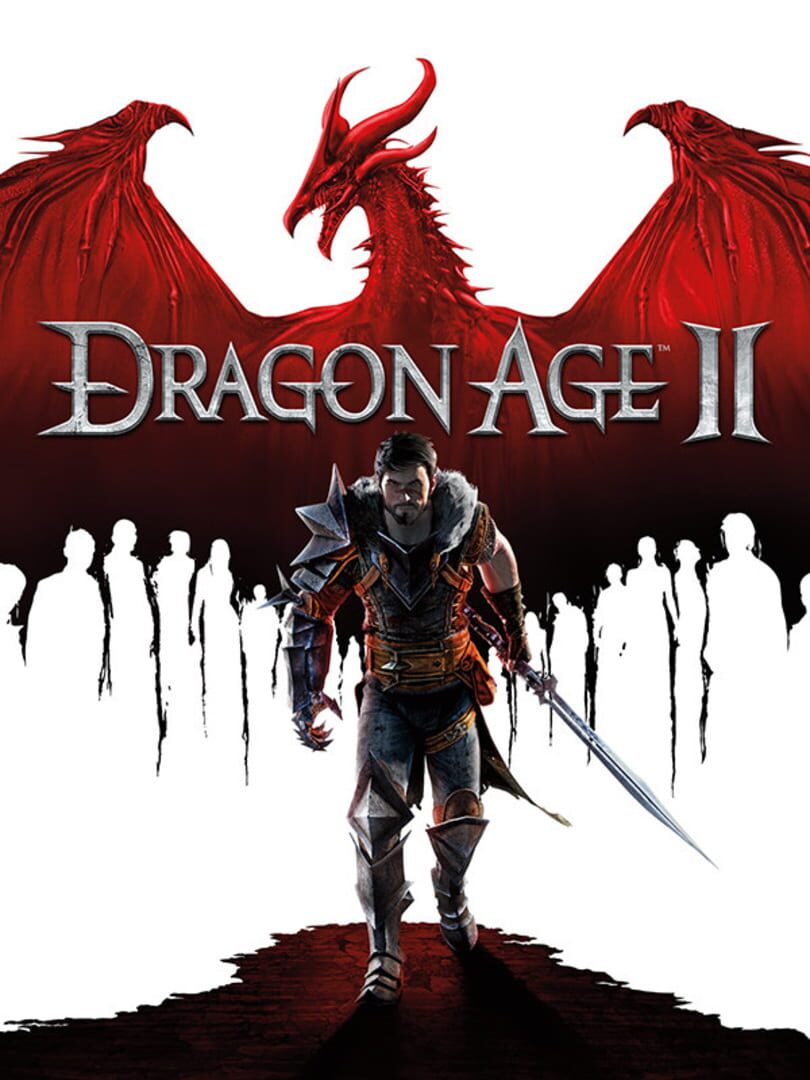
In the world of Thedas, take on the role of Hawke, a human who can become a warrior, rogue or mage. Arriving in Kirkwall as a humble refugee, Hawke struggles to find a place in a city marked by political and social conflict. Over the course of a turbulent decade, Hawke rises from refugee to the legendary Champion of Kirkwall.
Video game
2011
Action
Adventure
Fantasy
RPG
Dragon Age II
- BioWare Edmonton Developer
- Electronic Arts Publisher
From refugee to legend, ten years can transform a city.
Details
- Type
- Video game
- Release
- March 8, 2011
- Countries
- 🇨🇦 Canada
- Genres
- Action, Adventure, Fantasy, RPG
- Platforms
- PlayStation 3, PC, Xbox 360, Mac
- Engine
- Eclipse Engine (BioWare)
- Game modes
- Single player
Synopsis
Dragon Age II


Trailer
Watch the trailer
Overview
Presentation
Developed by BioWare Edmonton and published by Electronic Arts, Dragon Age II is a role-playing game released on March 8, 2011. The second main installment in the series, it follows Dragon Age: Origins with a different narrative structure. Set in the world of Thedas, the adventure follows Hawke, a human who arrives in Kirkwall as a refugee and rises to become the city's Champion during a decade of upheaval. The story unfolds across three acts, separated by significant passages of time, and is presented through the recollections of Varric, one of the protagonist's companions. This structure emphasizes changing relationships, political tensions and everyday life within a single city rather than a journey across several kingdoms.
Players can customize Hawke's appearance, gender and class, although the protagonist is always human. Three classes are available: Warrior, Rogue and Mage. Warriors use two-handed weapons or a one-handed weapon with a shield, while Rogues favor daggers or bows. Mages rely on offensive, defensive and support spells. Every class has its own ability trees, together with specializations unlocked through character progression. Experience earned from quests and battles is used to improve attributes and learn additional abilities. Class selection also influences certain conversations and the way other characters respond to Hawke.
Real-time combat uses a party of four characters, including Hawke and three companions. Players can directly control each party member and pause the action to plan movement, select targets or activate abilities. Characters not currently selected follow behaviors defined through programmable tactics, allowing players to specify when they should heal allies, use abilities or attack particular enemies. The game also introduces cross-class combos: Warriors can stagger enemies, Mages can make them brittle, and Rogues can disorient them. Other classes can then exploit these conditions to inflict additional damage. This system encourages players to vary party composition and coordinate different abilities.
Companions play an important role throughout the adventure. Each character has individual beliefs, objectives, personal quests and a home base in Kirkwall where Hawke can visit them. Relationships follow a distinctive Friendship and Rivalry system. Companions who approve of Hawke's decisions may develop stronger friendships, while repeated disagreements can lead to lasting rivalries. Unlike a simple approval meter, rivalry is not necessarily a failure: both relationship paths can unlock particular conversations, abilities and character developments. Some relationships may also become romantic. Conversations use a dialogue wheel featuring diplomatic, humorous and aggressive responses, which gradually help define Hawke's personality.
Exploration focuses on Kirkwall and its surroundings. Players travel through different city districts, docks, residential areas and poorer neighborhoods before venturing into caves, ruins and nearby wilderness. A map allows destinations to be selected, with certain locations accessible during the day or at night, when different encounters and activities may occur. Main and optional quests evolve throughout the three acts. The game also includes a crafting system managed by specialists: by discovering recipes and resource deposits, Hawke can commission potions, poisons, bombs and runes. Companion equipment follows particular rules, since each character retains a personal armor set that can be upgraded with specific items, while weapons and accessories can be replaced.
Built using BioWare's Eclipse Engine technology, Dragon Age II retains a dark fantasy visual identity while featuring faster combat animations than its predecessor. The soundtrack was composed by Inon Zur. Players can also import certain decisions from Dragon Age: Origins to reflect an established world state without continuing as the first game's protagonist. Additional content, including Legacy, Mark of the Assassin and The Exiled Prince, later expanded the base game with further missions, encounters and exploration opportunities.
Key Highlights
- A story centered on one city: Hawke's rise unfolds over nearly ten years, across three acts depicting changes in Kirkwall.
- A customizable protagonist: Hawke can be a Warrior, Rogue or Mage, with different specializations and progression options.
- Real-time combat with tactical pausing: players control up to four characters and plan their actions through tactical commands.
- Cross-class combinations: stagger, brittle and disorient effects allow different characters to coordinate powerful attacks.
- Friendship and Rivalry relationships: decisions shape lasting bonds with companions, and rivalry is not automatically a negative outcome.
- Dialogue that defines Hawke: diplomatic, humorous and aggressive responses contribute to the protagonist's personality.
- Regional exploration and specialized crafting: Kirkwall's districts, day-and-night destinations, recipes and equipment upgrades support the adventure.
Conclusion
Dragon Age II develops a form of role-playing centered on the evolution of a character and a city over time. Its three-act narrative, Friendship and Rivalry system and dialogue decisions form the main elements of its storytelling structure. Combat combines direct action with tactical coordination, while class progression, crafting and companion quests expand the possibilities for party development. This organization distinguishes the second installment from the broader exploration featured in other entries in the series.
Did You Know?
- Hawke is always human, although players can choose the protagonist's appearance, gender and class from Warrior, Rogue and Mage.
- The story is divided into three acts, spanning almost ten years. It is told retrospectively by Varric, one of Hawke's companions.
- The active party contains four characters. Companions can be controlled directly or follow automated instructions configured through their tactics.
- Cross-class combos rely on three special conditions: Stagger, Brittle and Disorient.
- The Friendship and Rivalry system can unlock special conversations and abilities through either relationship path. Reaching the maximum level establishes a lasting relationship state.
- Companions have personal armor sets that cannot be freely replaced but can receive upgrades found or purchased during the adventure.
- Crafting relies on discovered recipes and resources, followed by orders placed with specialists. Discovered resource deposits are not individually consumed with each crafting order.
- The game can import save data from Dragon Age: Origins or use predefined histories to reflect certain decisions from the earlier game.
- Major downloadable content includes The Exiled Prince, Legacy, Mark of the Assassin and The Black Emporium, all separate from the original base game.
Link graph
Open in the full graphLoading the graph…
Only the strongest links are shown.