In 2062, humanity stands on the brink of extinction. Tiberium, the mysterious extraterrestrial crystalline substance that has contaminated Earth for decades, threatens to make the entire planet uninhabitable. Its spread has fueled the relentless wars between the Global Defense Initiative (GDI) and the Brotherhood of Nod. Kane, Nod's prophetic leader, emerges from seclusion. He claims to have developed a system capable of controlling Tiberium and harnessing its power, but completing it requires GDI's cooperation. The two longtime enemies therefore unite in an attempt to prevent humanity's extinction. Fifteen years later, the Tiberium Control Network is nearing completion. Contamination appears to be under control, and a revitalized Earth approaches a new age of prosperity. Yet one question remains: why did Kane choose to help his former enemies, and what does he expect in return?

Command & Conquer 4: Tiberian Twilight
- EA Los Angeles Developer
- Electronic Arts Publisher
As the Tiberium era approaches its end, Earth's survival depends on two enemies.
Details
- Type
- Video game
- Release
- March 16, 2010
- Countries
- 🇺🇸 United States
- Genres
- Science fiction, Strategy, Real-time strategy
- Platforms
- PC, Linux
- Engine
- SAGE
- Game modes
- Single player, Multiplayer
Synopsis
Command & Conquer 4: Tiberian Twilight
Trailer
Watch the trailer
Overview
Presentation
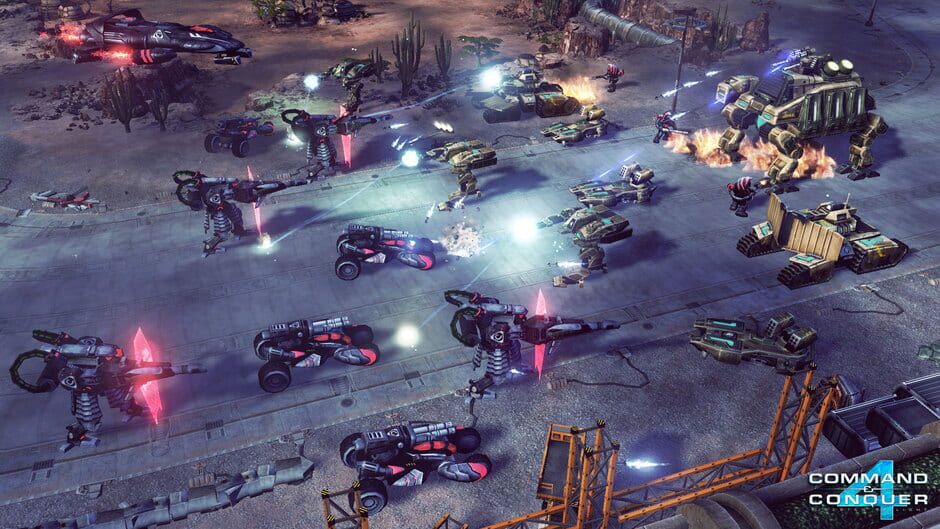
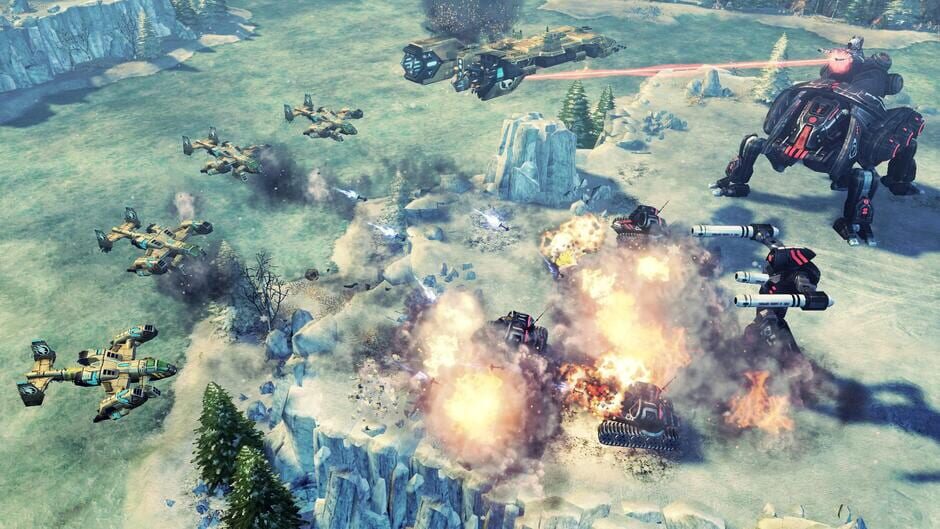
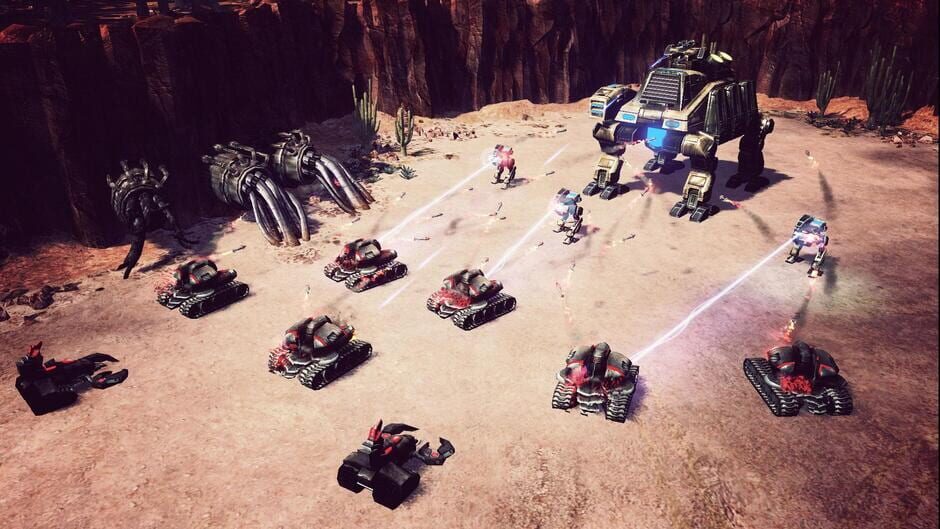
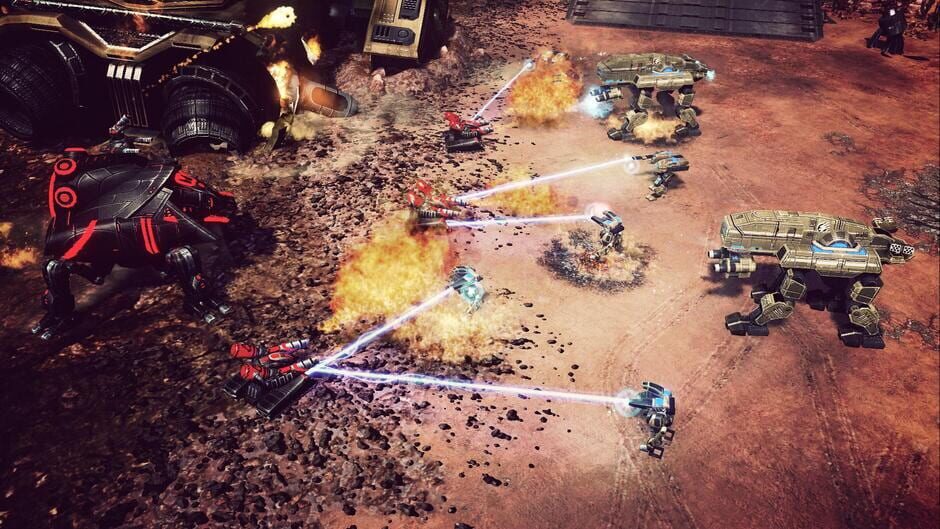
Developed by EA Los Angeles and published by Electronic Arts, Command & Conquer 4: Tiberian Twilight is a real-time strategy game released on March 16, 2010. It serves as the narrative conclusion to the Tiberium saga that began with Command & Conquer (1995). The story opens in 2062, when the contamination of Earth threatens human existence, then continues fifteen years later as the Tiberium Control Network (TCN) approaches completion. An unexpected alliance between GDI and the Brotherhood of Nod, initiated by Kane, places their political and military relationship at the center of the narrative. The game features two story-driven campaigns, one for each faction, accompanied by live-action cinematic sequences.
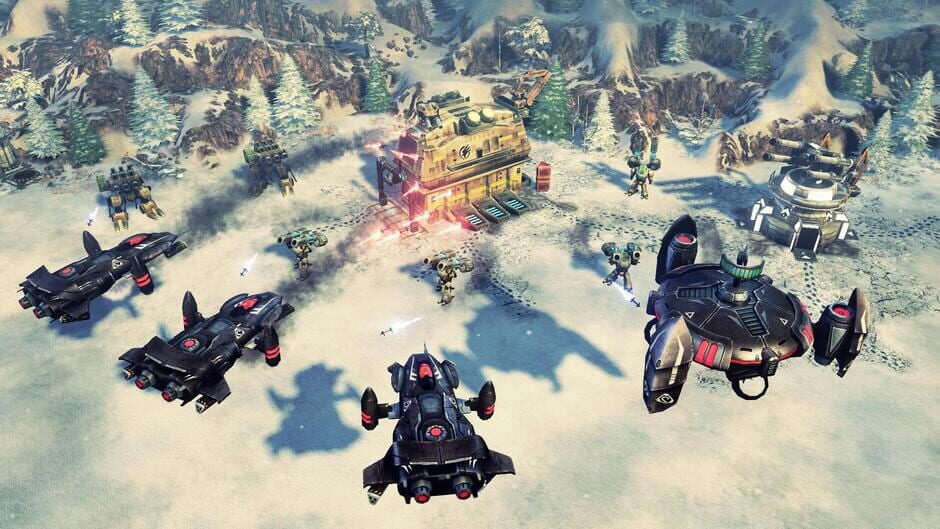
The most significant change concerns base construction. Traditional Construction Yards, refineries and production networks are replaced by Crawlers, enormous mobile bases capable of moving, deploying and producing military units directly. Players choose between three command classes: Offense, specializing in armored vehicles and assault troops; Defense, focused on infantry, fortifications and heavy weapons; and Support, emphasizing aircraft and assistance abilities. Each faction possesses its own vehicles, equipment and powers. Players can switch classes during a match by replacing their Crawler, adapting their forces to changing battlefield conditions.
The economic system also breaks with earlier installments. Units no longer require credits earned through conventional resource harvesting. Instead, production is limited by a budget of Command Points, which are returned when units are destroyed or removed from the battlefield. Tiberium remains present but is primarily used to earn Upgrade Points, allowing players to develop military technologies and abilities. Crystals can be transported to controlled collection zones, although carrying them slows and weakens the transporting unit. Another major feature is persistent progression, which allows experience to accumulate across campaigns, skirmishes and multiplayer matches. Gaining levels unlocks additional units, structures and powers, with separate progression for GDI and Nod.
Real-time combat focuses more heavily on strategic objectives than on destroying opposing bases. Maps contain TCN Nodes, Uplink Towers and other capturable positions. In the Domination multiplayer mode, two teams of up to five players compete to accumulate Victory Points by controlling these installations and completing military objectives. Destroying an enemy Crawler does not permanently eliminate its commander, who can return with another mobile base. The classes are designed to complement one another: offensive forces advance, defensive units secure positions, and support forces reinforce operations. The campaigns also support two-player cooperative play, with each participant commanding their own units.
The game retains the franchise's tradition of live-action cinematics, including the return of Joseph D. Kucan as Kane. Another significant feature concerns its technical requirements: a permanent Internet connection and an EA account were required even for single-player campaigns. This dependence on online services accompanied the shared progression system across game modes. Through its redesigned economy and military organization, Tiberian Twilight adopts a substantially different approach from earlier installments.
Key Highlights
- The conclusion of the Tiberium saga: GDI and Nod confront a planetary crisis caused by Earth's contamination.
- Fully mobile bases: Crawlers replace traditional construction and production infrastructure.
- Three specialized classes: Offense, Defense and Support each possess their own units and abilities.
- A redesigned economy: Command Points limit deployed forces, while Tiberium provides military upgrades.
- Persistent progression: experience gained through campaigns, skirmishes and multiplayer unlocks additional equipment.
- Objective-based warfare: capturing TCN Nodes, tactical cooperation and battles supporting up to five players per team.
- Two cooperative campaigns: GDI and Nod missions can be played alone or with a second commander.
Conclusion
Command & Conquer 4: Tiberian Twilight concludes the main storyline of the Tiberium universe while transforming several of the series' fundamental systems. Crawlers, specialized classes and the removal of the traditional economy shift strategic priorities toward mobility, force composition and objective control. Persistent progression and cooperative modes connect its different gameplay experiences, while the campaigns continue the story of GDI, Nod and Kane.
Did You Know?
- The storyline begins in 2062 and continues fifteen years later, as the Tiberium Control Network approaches completion.
- Each faction has three classes — Offense, Defense and Support — creating six military specializations in total.
- Crawlers can be replaced to change classes during a match. Previously deployed units do not necessarily disappear when this happens.
- Command Points limit the number and type of active units. They are refunded when units are destroyed or deliberately decommissioned.
- Green Tiberium provides one Upgrade Point, while blue Tiberium provides two. Red Tiberium, found in the campaign, awards five points when collected.
- Carrying a Tiberium crystal slows a unit, reduces its armor and temporarily disables its special abilities.
- GDI and Nod maintain separate progression levels, but experience earned for a faction carries across its different game modes.
- Domination supports battles of up to five versus five, with captured TCN Nodes contributing to each team's score.
- From its original release, the game required a persistent Internet connection, even in single-player mode. Its operation therefore depends on Electronic Arts authentication and online services.
Link graph
Open in the full graphLoading the graph…
Only the strongest links are shown.