Imagine and build your own city, then guide its growth into a thriving metropolis. Through detailed simulation and a living economy, every planning and management decision influences its development. Design residential neighborhoods, develop busy business districts and organize the infrastructure needed to attract residents, companies and tourists. Meet the changing needs of your population while balancing economic constraints with your urban ambitions. As time passes, watch your city grow, transform and respond to your choices. Combining architectural creativity with strategic planning, shape a city whose activities and landscapes evolve alongside its inhabitants.
Video game
2023
Simulation
Strategy
Sandbox
Cities: Skylines II
- Colossal Order Developer
- Iceflake Studios Developer
- Paradox Interactive Publisher
A city begins with your plans and evolves with its people.
Details
- Type
- Video game
- Release
- October 24, 2023
- Countries
- 🇫🇮 Finland
- Genres
- Simulation, Strategy, Sandbox
- Platforms
- PlayStation 5, Xbox Series, PC
- Engine
- Unity 2022
- Game modes
- Single player
Synopsis
Cities: Skylines II



Trailer
Watch the trailer
Overview
Presentation
Initially developed by Colossal Order and published by Paradox Interactive, Cities: Skylines II is a city-building and management simulation released on October 24, 2023. It follows Cities: Skylines by expanding the systems governing construction, transportation, economics and citizen management. Players begin with a relatively undeveloped territory and gradually organize a city through roads, zoning and public services. Residential, commercial, industrial and office zones fulfill different purposes, while building density determines the appearance of individual neighborhoods. New zoning options include row houses, medium-density apartments, low-rent housing and mixed-use buildings combining shops with residences. European and North American architectural themes also allow players to vary the visual identity of urban areas.
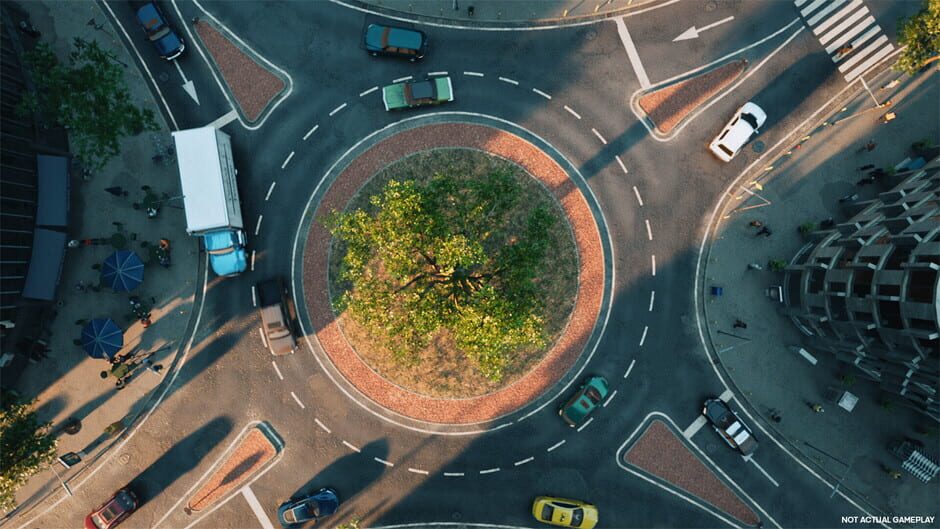
Infrastructure construction is a central part of the experience. Road-building tools support curves, parallel roads, street grids, roundabouts, bridges and tunnels. Existing roads can be modified and upgraded as traffic conditions change. The traffic simulation considers several factors when calculating routes, including travel time, cost, comfort and individual preferences. Drivers may search for suitable parking, while other citizens may choose public transportation to save money or time. Networks of buses, trams, subways, trains, ships and aircraft support passenger movement, while cargo infrastructure supplies businesses with goods and materials. Congestion, accidents and neighborhood accessibility therefore affect the operation of the entire city.
The economic system revolves around exchanges between households, businesses and municipal services. Residents earn money, pay rent and purchase goods, while companies hire workers, acquire resources and sell products. Players influence these activities through taxation, budgets, local policies and infrastructure. Industrial operations can exploit natural resources, while commercial and office activities depend on available workers, production chains and access to markets. Public spending must be balanced against tax revenue and service quality. Healthcare, education, public safety, electricity, water, waste management and other municipal facilities all require planning and funding. Service buildings can receive upgrades that expand their capacity without necessarily constructing additional facilities.
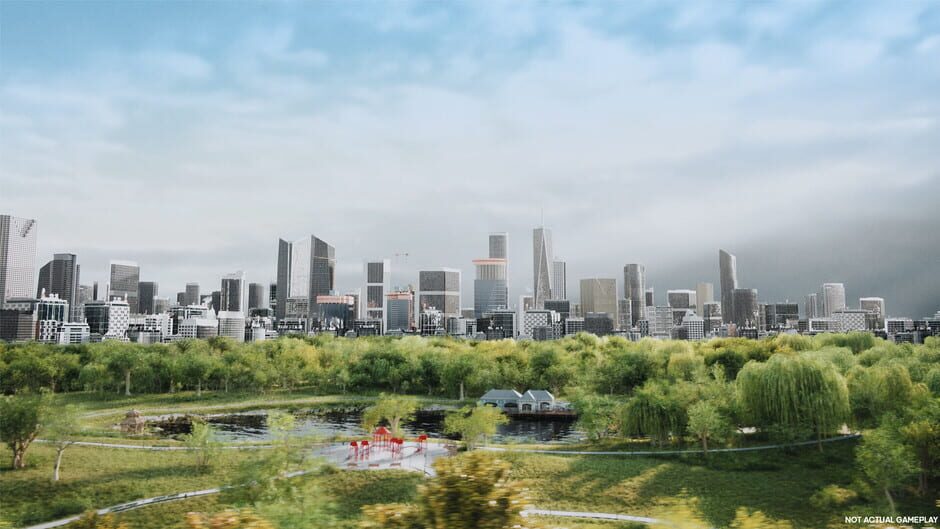
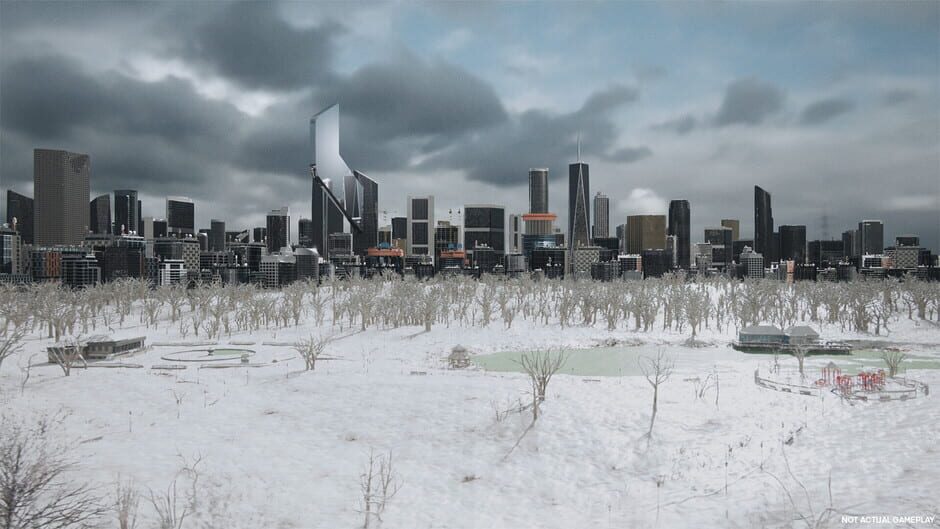
Every resident follows an individually simulated life path. Citizens may move into the city or be born there, attend school, find employment, consume goods, grow older or relocate. Their well-being depends on factors such as housing conditions, income, health, pollution and access to services. These behaviors contribute to traffic patterns and economic activity. The environment also plays an important role: maps feature different climates, a day-and-night cycle, four seasons and changing weather conditions. Cold temperatures may increase heating demand, while snowfall and severe weather affect infrastructure maintenance. Urban planning must therefore account for the current needs of residents as well as future changes in population and environmental conditions.
City progression uses milestones earned through urban development, citizen satisfaction and construction activities. Development Points unlock additional services and facilities, allowing players to choose different priorities rather than following a single fixed technology path. Maps provide extensive room for expansion through tiles purchased as the city grows. The visual presentation supports observation at different scales, from entire districts to individual vehicles, infrastructure and residents. Since release, the game has received technical updates and additional content. In 2026, Iceflake Studios assumed development responsibility, including updates, creative tools and the planned console editions.
Key Highlights
- Detailed city construction: different zoning densities, mixed-use buildings and architectural themes support varied urban layouts.
- Advanced road tools: grids, curves, roundabouts, parallel roads, bridges and tunnels provide control over transportation networks.
- Detailed traffic simulation: citizens choose routes based on travel time, costs, comfort and individual preferences.
- An interconnected economy: resources, businesses, households, taxation and trade shape the city's development.
- Simulated citizen life paths: housing, education, employment, health and aging influence individual behavior.
- Dynamic climate: seasons, temperatures and weather conditions affect energy requirements and infrastructure maintenance.
- Flexible progression: milestones, Development Points and territorial expansion guide the growth of a metropolis.
Conclusion
Cities: Skylines II expands urban simulation by connecting planning decisions more closely to citizen behavior, transportation networks and economic systems. Construction tools offer different ways to organize neighborhoods, while public services, taxation and environmental conditions determine how those areas function. Milestone-based progression and territorial expansion support the transformation of a small settlement into a metropolis within a simulation where the different components of urban life remain interconnected.
Did You Know?
- Base-game maps can contain 441 unlockable tiles, representing an announced buildable area of approximately 159 km². These tiles do not all need to be connected.
- Progression includes 20 milestones, ranging from a small settlement to a Megalopolis. They unlock Development Points, expansion permits and additional management options.
- The original residential zoning system includes six categories, covering low-density houses, medium-density housing, low-rent apartments and mixed-use buildings.
- Traffic pathfinding considers time, comfort, money and behavior, while travelers' ages also influence their transportation preferences.
- The climate simulation includes four seasons. Their effects vary according to each map's geographical characteristics, influencing temperature, daylight and municipal requirements.
- Individual citizens can be followed through major events in their lives, from moving into the city or being born there to growing old.
- Originally developed by Colossal Order, the game was transferred to Iceflake Studios at the beginning of 2026. The separately announced PlayStation 5 and Xbox Series editions were still in development in November 2026.
Link graph
Open in the full graphLoading the graph…
Only the strongest links are shown.