

Presentation
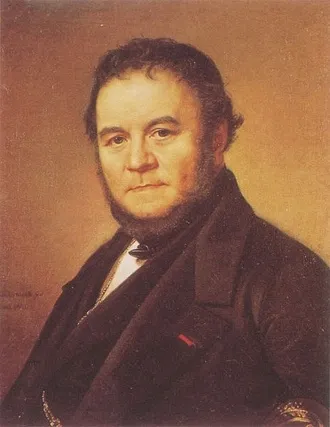
Stendhal, the pen name of Henri Beyle, born on January 23, 1783, in Grenoble and deceased on March 23, 1842, in Paris, was a French novelist, essayist, and art critic regarded as one of the major writers of the nineteenth century. His work occupies a distinctive position between Romanticism, whose fascination with passion and individual freedom he shared, and Realism, reflected in his perceptive examination of social behavior. Rather than concentrating on elaborate descriptions, he explores the impulses, contradictions, and hidden calculations of his characters. His swift, ironic, and often incisive prose seeks to uncover the truth of human feelings beneath appearances and conventions.
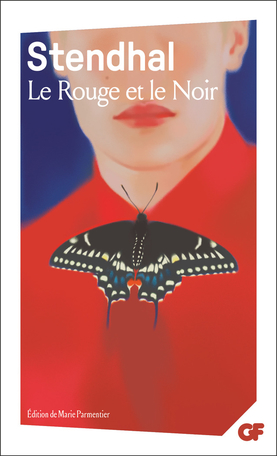
In The Red and the Black, published in 1830, Stendhal follows Julien Sorel, an intelligent and ambitious young man from a modest background whose aspirations collide with the rigid social hierarchies of Restoration France. Through his romantic relationships and conflicting ambitions, the novel examines hypocrisy, the desire for recognition, and the tensions between personal merit and inherited privilege. With The Charterhouse of Parma, published in 1839, Stendhal transports readers to an Italy shaped by the Napoleonic upheavals and intricate political intrigues. The experiences of Fabrice del Dongo, his adventures, and his passions form a narrative in which the pursuit of happiness confronts the realities of power.
Stendhal's reflections on emotion find a particularly original expression in On Love, published in 1822. In this essay, he attempts to analyze the emergence and transformation of romantic passion. He introduces the celebrated concept of crystallization, a process through which the imagination continually attributes new qualities to the beloved. This attention to subjectivity, illusion, and the mechanisms of desire runs throughout his fiction. For Stendhal, emotions never exist independently of their social circumstances: loving, succeeding, or seeking freedom also means confronting the values and constraints of one's time.
Career
Henri Beyle was born into a bourgeois family in Grenoble. His father, Chérubin Beyle, was a lawyer, while his mother, Henriette Gagnon, died when he was only seven years old. Her death affected him profoundly, as did his difficult relationship with his father. He found a more welcoming intellectual environment with his maternal grandfather, the physician Henri Gagnon, who introduced him to Enlightenment thinkers and encouraged his interest in science and literature. In 1799, he left Grenoble for Paris, where his cousin Pierre Daru helped him enter the military administration. This beginning of his professional life coincided with Napoleon Bonaparte's rise to power, whose campaigns would profoundly shape his early adulthood.
Stendhal accompanied Napoleonic forces in Italy and subsequently held various military and administrative positions. He took part in the Russian campaign of 1812 and witnessed the political upheavals of imperial Europe. Italy soon became a country of particular emotional significance to him, associated with beauty, music, passion, and a freedom he often contrasted with French society. Following Napoleon's downfall, he spent several years in Milan and developed his literary activities, publishing writings on art, travel, and literature. He adopted the pseudonym Stendhal in 1817, published On Love in 1822, and gradually turned his attention toward fiction.
The publication of The Red and the Black in 1830 marked a decisive stage in his literary career. That same year, the July Revolution ushered in a new political era and created opportunities for diplomatic employment. Stendhal became French consul at Civitavecchia, in the Papal States, while continuing his writing. In 1839, The Charterhouse of Parma earned the admiration of Balzac, who devoted an important critical essay to the novel in 1840. Nevertheless, Stendhal did not experience the lasting literary fame that later generations would grant him. Troubled by declining health, he died in Paris in 1842. Many of his manuscripts, including autobiographical writings, were published posthumously, gradually revealing the full scope of his literary achievement.
Key Facts
- A pioneer of psychological fiction: Stendhal examines subtle movements of consciousness, hesitation, and emotional contradiction. His characters are defined not only by their actions but also by the desires, calculations, and illusions that drive their behavior.
- The crystallization of romantic love: in On Love, he describes how imagination progressively idealizes a beloved person, attributing qualities that may exceed reality. This concept became one of his most celebrated contributions to the literary and psychological study of passion.
- Italy as a personal and artistic passion: Italian landscapes, music, history, and cities occupy an essential place in his life and writing. For Stendhal, Italy often represents an intensity of feeling and freedom of existence that he seeks to capture through his fictional characters.
- A critical observer of society: through Julien Sorel and Fabrice del Dongo, he examines the relationship between individual ambition, social hierarchy, and political power. His irony exposes the hypocrisies of societies where advancement depends as much on appearances and connections as on merit.
- Recognition largely achieved after his death: although his novels attracted the interest of some contemporaries, notably Balzac, Stendhal became a central figure in French literary history mainly after his death. His economical prose, narrative freedom, and exploration of subjectivity profoundly influenced later generations of novelists.