

Presentation
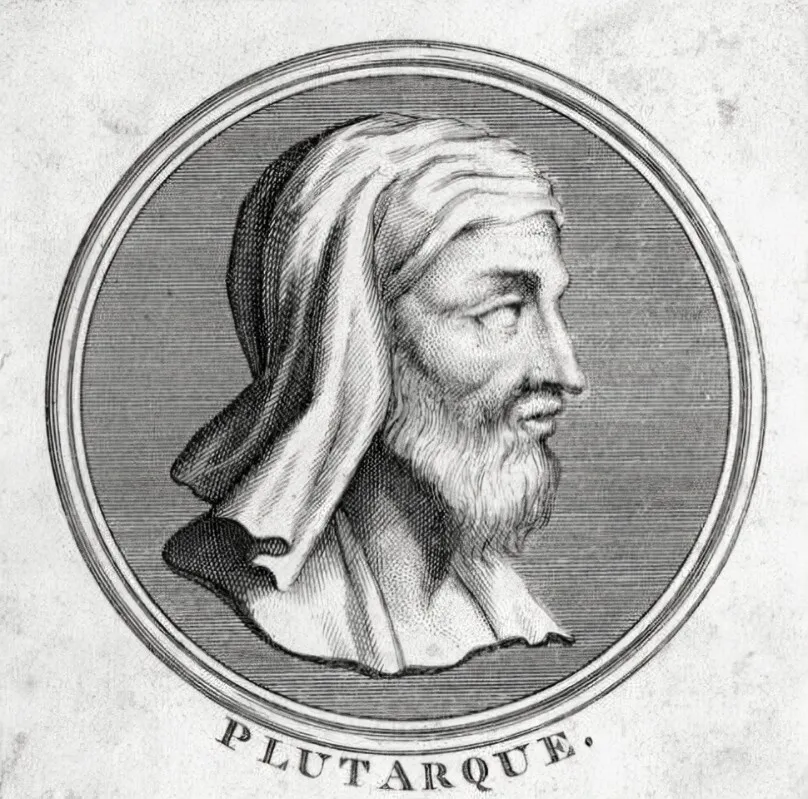
Plutarch, born around 46 CE in Chaeronea, Boeotia, and deceased sometime after 119, was a Greek philosopher, historian, and biographer who lived under the Roman Empire. Influenced by the philosophical tradition of Plato, he produced an extensive body of writing devoted to history, morality, education, and the understanding of human behavior. His work combines scholarship, historical anecdotes, and ethical reflection, guided by a central conviction: studying remarkable individuals from the past can reveal the strengths and weaknesses of human nature.
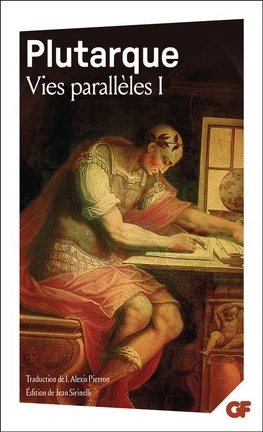
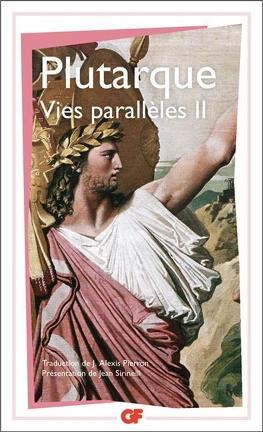
His most celebrated work, Parallel Lives, pairs biographies of distinguished Greek and Roman figures to compare their actions, personalities, and political decisions. Alexander and Caesar, Demosthenes and Cicero, or Demetrius and Antony become the subjects of reflections on ambition, courage, justice, and the dangers of power. Plutarch is concerned with more than recounting events: he focuses on revealing gestures, memorable words, and decisive choices that illuminate the character of his subjects. This approach places his biographies at the intersection of history, literature, and moral philosophy.
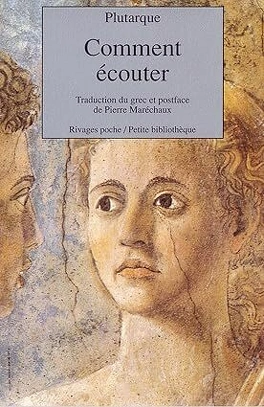
Another essential part of his writings is traditionally collected under the title Moralia. In On Listening to Lectures, he examines the foundations of genuine intellectual learning; in On Tranquility of Mind, he considers how individuals can preserve inner balance when confronted with life's difficulties. The Dialogue on Love explores the different dimensions of romantic attachment, while Bravery of Women brings together examples of female courage and moral excellence. Throughout these writings, Plutarch advocates a practical philosophy intended to illuminate both major decisions and everyday conduct.
Career
Plutarch was born into a prosperous family in Chaeronea, a Greek city in Boeotia that formed part of the Roman Empire. He received a thorough education and studied in Athens under Ammonius, a philosopher associated with the Platonist tradition. This training encouraged his interest in philosophy, mathematics, religion, and Greek cultural heritage. He subsequently traveled through parts of the Mediterranean world, including Rome and Alexandria, where he encountered educated circles and deepened his understanding of Roman institutions.
Despite his travels and growing reputation, Plutarch remained strongly attached to his hometown, where he spent much of his life. He participated in the civic affairs of Chaeronea, taught philosophy, and maintained relationships with influential members of Greco-Roman society. Religious duties also played an important role in his life: he became a priest of Apollo at the sanctuary of Delphi, one of the Greek world's most prestigious spiritual centers. This position reflected his enduring interest in religious practices, divination, and the relationship between humanity and the divine.
His literary activity extended over several decades, during a period when Greek culture retained considerable intellectual influence within the Roman Empire. Plutarch composed biographies, dialogues, and philosophical treatises, drawing on the historical and literary sources available to him. Much of his original output has been lost, but the surviving works remain an exceptional record of ancient thought and society. His death is generally placed in the first half of the second century, although its precise date remains unknown. His writings continued to circulate through Greek and Byzantine manuscript traditions before achieving renewed prominence in Renaissance Europe.
Key Facts
- History as a moral mirror: in Parallel Lives, Plutarch does more than describe the achievements of famous men. He examines their personalities, contradictions, and decisions to demonstrate how individual virtues and weaknesses can influence the destiny of entire societies.
- A comparative approach to biography: pairing Greek and Roman figures allows him to explore two interconnected political and cultural traditions. His biographies are not always historical accounts in the modern sense; they also serve as reflections on human conduct.
- Philosophy for everyday life: his treatises address education, anger, peace of mind, friendship, and human relationships. Plutarch argues that wisdom must be expressed through habits and actions rather than remaining purely theoretical knowledge.
- Women's place in historical memory: in Bravery of Women, he gathers examples of female courage, loyalty, and initiative. Although his thinking reflects the social conventions of antiquity, the work explicitly acknowledges women's capacity for outstanding moral virtue.
- A lasting influence on European literature: Plutarch's biographies inspired the political thought and literary imagination of numerous writers, including Montaigne and Shakespeare. His historical portraits also remain invaluable sources, although they must be examined alongside other ancient evidence.