Presentation
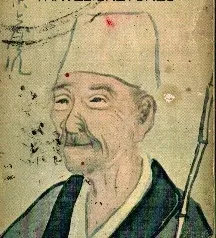
Matsuo Bashō, born in 1644 in Ueno, in Japan's former Iga Province, and deceased on November 28, 1694, in Osaka, is one of the greatest poets in Japanese literary history. A major figure of the Edo period, he helped transform haikai, a poetic practice often associated with humor and literary wordplay, into an art capable of expressing profound experiences of the world. His poems evoke seasons, landscapes, animals, and everyday gestures with an economy of language that leaves considerable room for the reader's imagination and sensitivity.
His work is distinguished by an extraordinary attentiveness to the present moment. A silent pond, a bird's call, a bare branch, or autumn rain becomes an opportunity to contemplate passing time and the fragility of existence. Bashō developed an aesthetic in which simplicity never meant a lack of expressive depth. Associated with concepts such as sabi, a beauty marked by solitude and the passage of time, and karumi, the natural lightness of expression, his poetry seeks quiet emotional resonance rather than dramatic effects.
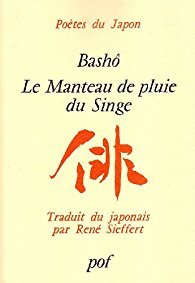
An indefatigable traveler, Bashō also transformed journeys into a literary and spiritual practice. His travel journals combine prose and poetry, human encounters and contemplation of landscapes. His celebrated The Narrow Road to the Deep North (Oku no hosomichi), inspired by a journey begun in 1689 through northern Japan, demonstrates this union of lived experience and poetic creation. Collections associated with his school, particularly Monkey's Raincoat (Sarumino), extended this collaborative approach and helped establish a new literary sensibility.
Career
Born Matsuo Munefusa into a family of lower-ranking samurai, Bashō grew up in Iga Province. As a young man, he entered the service of the Tōdō family and became close to Tōdō Yoshitada, a poetry enthusiast with whom he studied haikai under Kitamura Kigin. Yoshitada's premature death in 1666 marked a turning point in his life. Several years later, in 1672, Bashō left his native province for Edo, present-day Tokyo, hoping to establish himself as a professional poet.
In Edo, he gradually gained recognition as a poetry teacher and attracted a circle of disciples. In 1680, he settled in a modest retreat in the Fukagawa district, where his followers planted an ornamental banana tree, known in Japanese as bashō. The poet adopted this name, which became inseparable from his literary identity. He increasingly distanced himself from prevailing literary fashions, seeking a more personal expression rooted in nature, everyday experience, and the subtle emotional qualities of ordinary things.
From 1684 onward, Bashō undertook several extensive journeys across Japan, frequently traveling on foot through temples, mountains, villages, and historically significant places. These travels inspired his poetic journals and helped establish his reputation as a leading literary figure. Working with disciples including Mukai Kyorai and Nozawa Bonchō, he contributed to the renewal of haikai and the development of collaborative anthologies. In 1694, weakened by illness during another journey, he died in Osaka. In accordance with his wishes, he was buried at Gichū-ji Temple near Lake Biwa.
Key Facts
- A haiku master before the modern term existed: Bashō primarily practiced hokku, the opening verse of a linked poetic composition. The term “haiku” became established much later, notably through Masaoka Shiki in the late nineteenth century.
- A poetry of impermanence: changing seasons, shifting landscapes, and the smallest manifestations of nature express the fleeting character of existence. His work shares affinities with Buddhist thought without being confined to religious teaching.
- Travel as a way of seeing: his journeys were much more than geographical accounts. They became opportunities to observe the world, encounter different traditions, and deepen his understanding of human existence.
- A profoundly collaborative artistic practice: despite his reputation as a solitary wandering poet, Bashō worked closely with many disciples. Monkey's Raincoat, published in 1691 under his supervision, illustrates the importance of dialogue and linked-verse composition within his school.
- A universal literary legacy: his influence extends far beyond Japan. His concision, sensitivity to fleeting impressions, and ability to suggest rather than explain have inspired generations of poets, translators, and writers around the world.