Presentation
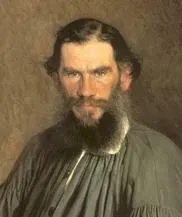
Leo Tolstoy, born on September 9, 1828, at Yasnaya Polyana in the Russian Empire, and deceased on November 20, 1910, at Astapovo, was a Russian novelist, short-story writer, essayist, and moral thinker widely regarded as one of the greatest authors in world literature. A leading figure of Russian realism, he developed a body of work in which meticulous observation of human behavior meets a profound examination of life's meaning. His stories explore love, family, war, social inequality, and the pursuit of a just existence, paying remarkable attention to the inner contradictions of his characters.
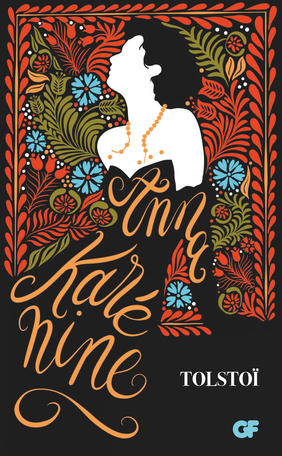
With War and Peace, published between 1865 and 1869, Tolstoy created an immense portrait of Russian society during the Napoleonic Wars. Through the intertwined destinies of aristocratic families, he questions the role of individuals in history, the illusions of military glory, and the influence of chance on collective events. In Anna Karenina, serialized beginning in 1875, he examines the tensions between romantic passion, social conventions, and family responsibilities. Anna's tragic journey and Levin's spiritual search give the novel both intimate and philosophical dimensions, revealing how personal desires collide with society's expectations.
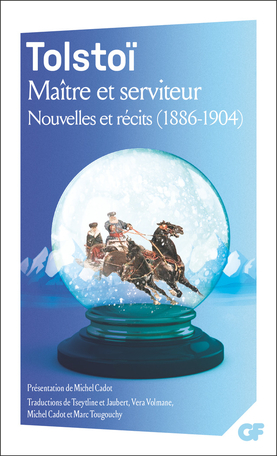
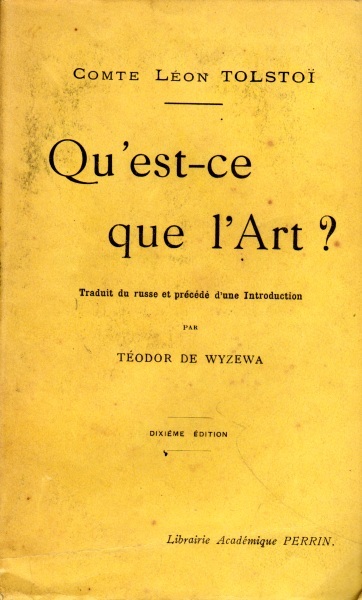
His literary achievement extends far beyond these monumental novels. In stories such as How Much Land Does a Man Need? and Master and Man, Tolstoy examines greed, mortality, and the possibility of moral transformation. His writings about artists and musicians also explore the relationships between sensitivity, society, and creative expression. In What Is Art?, published in 1898, he develops a demanding conception of artistic creation based on the communication of feelings and the moral responsibility of the artist. This reflection continues a lifelong intellectual journey in which literature, spirituality, and social criticism gradually become inseparable.
Career
Born into an aristocratic family, Lev Nikolayevich Tolstoy grew up on the family estate of Yasnaya Polyana, near Tula. Having lost both parents during childhood, he was raised by relatives and received a private education before enrolling at Kazan University in 1844. He left without completing a degree and spent several years dividing his time between managing his estate, aristocratic social life, and a personal search for moral discipline. In 1851, he joined his brother Nikolai in the Caucasus and entered the Russian army. His military experiences, particularly during the Crimean War and the siege of Sevastopol, inspired his early fiction and strengthened his critical understanding of violence.
His literary career began in earnest with Childhood, published in 1852, followed by autobiographical and military narratives. After leaving the army, Tolstoy traveled through Europe and became interested in educational methods. On his estate, he established a school for peasant children, advocating an approach to teaching that was less authoritarian and more closely connected to lived experience. In 1862, he married Sophia Andreyevna Behrs, with whom he had thirteen children. The following decades marked his greatest period of novelistic achievement: War and Peace and Anna Karenina brought him recognition extending far beyond Russia.
From the late 1870s onward, Tolstoy experienced a profound spiritual crisis that transformed his understanding of literature and society. He developed a personal interpretation of Christianity emphasizing nonviolence, rejection of domination, and criticism of wealth, institutional religion, and political authority. His convictions created tensions with his family, the authorities, and the Russian Orthodox Church, which formally excluded him from ecclesiastical communion in 1901. Nevertheless, he continued his literary, educational, and social activities, corresponding with thinkers and reformers internationally. In November 1910, aged 82, he left his family estate and became seriously ill during his journey. He died at Astapovo railway station and was buried at Yasnaya Polyana.
Key Facts
- A revolution in the art of the novel: Tolstoy combines precise descriptions of everyday life with subtle explorations of thought and emotion. In War and Peace, he also transforms historical fiction by challenging the belief that major events are determined solely by rulers and military commanders.
- An examination of women's place in society: through Anna Karenina, he exposes the contradictions of a society that judges women harshly while allowing greater freedom to men. The novel explores the tensions between individual desire, marriage, motherhood, and social expectations without reducing its characters to simple moral examples.
- An advocate of nonviolence: during the second half of his life, Tolstoy developed a philosophy based on nonviolent resistance to evil, voluntary simplicity, and rejection of coercion. His writings influenced Mahatma Gandhi, with whom he corresponded shortly before his death.
- A moral conception of art: in What Is Art?, he challenges the notion of art as a privilege of elites or an activity devoted exclusively to aesthetic pleasure. He argues that genuine art enables human beings to share emotions and strengthen their mutual understanding.
- A life marked by contradictions: an aristocrat who became a critic of property and privilege, and a celebrated novelist who questioned the value of his own masterpieces, Tolstoy embodied a persistent tension between personal convictions and everyday circumstances. This struggle shaped his reflections on responsibility, justice, and the difficulty of living according to one's principles.