
Presentation
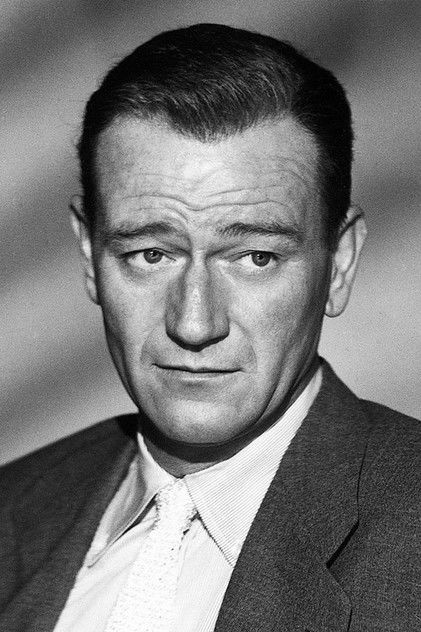
John Wayne, born Marion Robert Morrison on May 26, 1907, in Winterset, Iowa, and deceased on June 11, 1979, in Los Angeles, was an American actor, director and producer. Nicknamed "The Duke," he became one of Hollywood's most recognizable stars, particularly associated with the western. His towering figure, distinctive walk and deep voice came to represent a particular vision of the American frontier.
Yet behind this image of courage and determination, his finest performances reveal more complex characters, sometimes lonely, authoritarian or trapped by their convictions. His collaborations with John Ford and Howard Hawks allowed him to explore the conflicts between violence, justice, loyalty and the creation of American myths.
Career
After spending his childhood in Iowa and California, John Wayne received a football scholarship to the University of Southern California. He discovered filmmaking through studio work and developed a friendship with John Ford. Following minor roles, Raoul Walsh cast him as the lead in The Big Trail in 1930. His major breakthrough came with Ford's Stagecoach in 1939.
He subsequently became a leading western star, notably appearing in Howard Hawks's Red River and Rio Bravo. In 1956, he portrayed Ethan Edwards in The Searchers, a former soldier whose obsessive quest exposes racist attitudes and a profound inability to find his place in society. This remains one of the most powerful and morally ambiguous performances of his career.
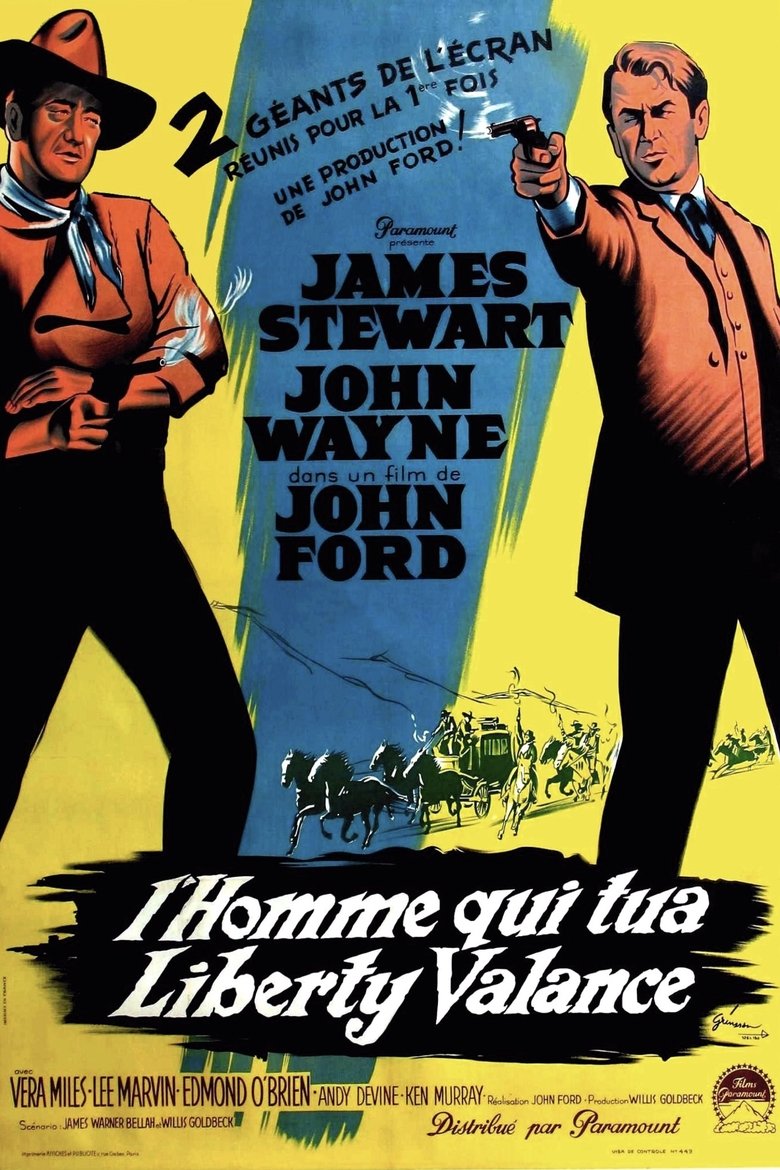
In 1962, he reunited with John Ford for The Man Who Shot Liberty Valance, opposite James Stewart. His character Tom Doniphon represents an older West governed by force and personal codes, confronted by the emergence of law and democracy. Also a director, Wayne made The Alamo in 1960. He won his only Academy Award for Best Actor for True Grit and concluded his screen career with The Shootist in 1976.
Did You Know?
- Real name: born Marion Robert Morrison, he adopted the name John Wayne early in his career. His nickname "Duke" came from his childhood dog.
- Academy Award: he won Best Actor in 1970 for True Grit, released in 1969.
- John Ford: their long partnership helped define the classical western while gradually questioning its heroes and mythology.
- Directing: he directed The Alamo in 1960 and co-directed The Green Berets in 1968 with Ray Kellogg.
- Legacy: his influence on the western remains immense, although portrayals of Indigenous peoples in films of his era are now frequently examined critically.