Presentation
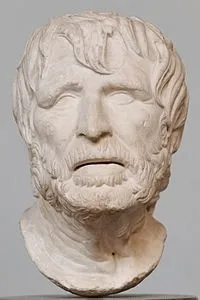
Hesiod was an ancient Greek poet of the Archaic period, generally dated to the late eighth or early seventh century BCE. Alongside Homer, he stands among the earliest major figures of Greek literature whose substantial works have survived. While the Homeric epics primarily recount heroic achievements and the consequences of warfare, Hesiod's poetry examines the origins of the cosmos, the organization of the divine world, and the principles that should guide human existence. His writing combines mythological narratives, moral instruction, and observations of everyday life. It reflects a period when poetry was not merely a form of storytelling but also a means of transmitting knowledge, religious beliefs, and shared values.
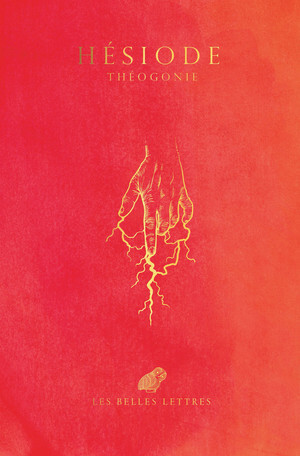
In the Theogony, Hesiod sets out to describe the emergence of the earliest cosmic powers and the succession of divine generations. Beginning with Chaos, Gaia, and other primordial beings, the poem develops an extensive genealogy that gradually leads to the establishment of Zeus's sovereignty. The conflicts involving Uranus, Cronus, and the Olympian gods, together with the struggle against the Titans, form a history of power in which successive generations seek to establish a new order. By arranging Greek mythological traditions into a coherent narrative, Hesiod gives the poem exceptional significance: it does not simply introduce the gods but attempts to explain how a universe shaped by conflict and transformation becomes an ordered world.
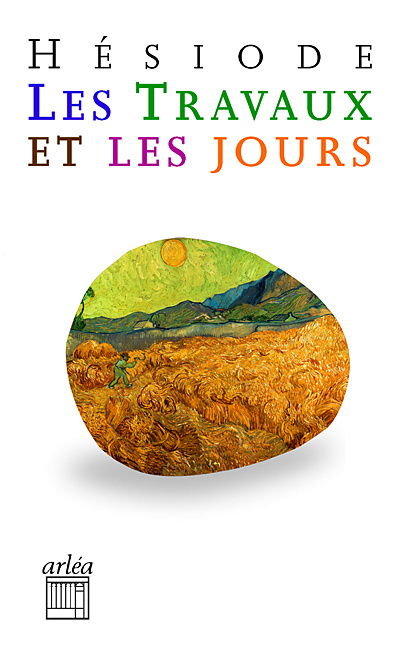
With Works and Days, Hesiod adopts a more directly human perspective. Addressed to Perses, presented as his brother, the poem reflects on injustice, disputes over inheritance, and the necessity of working to sustain one's life. Agricultural recommendations, observations of the seasons, and advice on proper conduct are interwoven with famous mythological narratives, including those of Prometheus, Pandora, and the successive races or ages of humanity. Labor emerges as a fundamental condition of human existence, while justice is presented as an indispensable principle of communal life. By bringing together the practical concerns of farming and broader questions about human destiny, Hesiod gives poetry an educational and moral purpose that would exert a lasting influence on Greek thought.
Career
Very little is known with certainty about Hesiod's life, and the biographical information traditionally associated with him comes primarily from his own poems. According to the account in Works and Days, his father left Aeolian Cyme, a Greek city on the coast of Asia Minor, and settled in Ascra, a small Boeotian village near Mount Helicon. The poet describes a region with difficult climatic conditions, where agricultural work shaped daily existence. His exact birthplace, however, cannot be established with certainty. Unlike the elaborate biographies developed by later ancient authors, modern scholarship distinguishes between information presented within poetic tradition and historically verifiable facts.
In the opening of the Theogony, Hesiod presents himself as a shepherd who encounters the Muses on the slopes of Mount Helicon. They give him a laurel staff and teach him the art of song, symbolically granting him the authority to celebrate the gods. This episode is among the most famous ancient accounts of how Greek poets represented the origins of their inspiration. It should not, however, be treated as a verifiable biographical event, but rather as a narrative of poetic vocation and legitimacy. In Works and Days, Hesiod also describes a dispute with Perses concerning their inheritance and criticizes judges who may be influenced by gifts. Whether this situation reflects an actual family conflict or serves primarily as a literary framework, it allows the poet to develop an extended argument about justice and individual responsibility.
Hesiod also claims to have participated in a poetic competition at Chalcis, on the island of Euboea, during funeral games held in honor of Amphidamas. According to his account, he won a tripod and dedicated it to the Muses of Mount Helicon. These details helped shape the traditional image of a poet with rural roots who nevertheless gained recognition through public poetic performance. Later stories attributed to him a competition with Homer and various accounts of his death, none of which can be regarded as securely established historical facts. His poetry, transmitted through centuries of performance, copying, and education, nevertheless acquired exceptional authority in Greek culture. His works became essential references for understanding the gods, teaching moral principles, and reflecting on humanity's place in the universe.
Key Facts
- A foundational source for Greek mythology: the Theogony brings together and organizes numerous traditions concerning the gods, their origins, and their relationships of power. It does not represent a single definitive version of Greek mythology, but remains one of the most important ancient sources for understanding its divine narratives.
- The myth of the five ages of humanity: in Works and Days, Hesiod describes successive generations corresponding to the Golden, Silver, Bronze, Heroic, and Iron Ages. This account expresses a largely pessimistic reflection on violence, injustice, and the deterioration of the human condition.
- A defense of labor and justice: unlike narratives devoted exclusively to heroic achievements, Hesiod places agricultural work and everyday responsibilities at the heart of his poetry. He contrasts justice and honest effort with greed, idleness, and abuses of power.
- Poetry rooted in rural life: his observations concerning sowing, harvesting, seasonal changes, and sailing provide valuable insights into the practical concerns of Archaic Greece. These recommendations nevertheless belong to a poetic and moral discourse rather than a modern agricultural manual.
- An enduring literary and intellectual legacy: Hesiod helped establish the tradition of didactic poetry, in which storytelling serves to communicate knowledge and principles of conduct. His representations of Zeus, Pandora, Prometheus, and the origins of the world continued to influence literature, philosophy, and the arts from antiquity to the present.