
Presentation
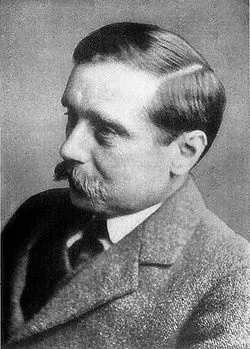
H. G. Wells, born Herbert George Wells on September 21, 1866, in Bromley, Kent, and deceased on August 13, 1946, in London, was a British novelist, journalist, essayist, and thinker regarded as one of the founders of modern science fiction. His writing occupies a central place in the history of speculative literature, alongside that of Jules Verne, although their approaches differed significantly. Influenced by the scientific discoveries of his time, particularly evolutionary theory, Wells imagined extraordinary situations to examine human behavior, relationships of domination, and the possible consequences of technological progress. Beneath the surface of adventurous storytelling, his novels frequently present profound criticism of industrial civilization and its assumptions.
In The Time Machine, published in 1895, a British inventor constructs a device capable of traveling through time and discovers an extremely distant future in which humanity has developed into two distinct species: the Eloi and the Morlocks. This division becomes a disturbing representation of social inequalities carried to their biological and historical consequences. Wells therefore uses time travel to investigate class divisions, evolutionary change, and the belief that humanity must inevitably advance toward a better future. Rather than depicting the future as a promise of perfection, he presents it as a realm of uncertainty, where civilizations can also deteriorate and disappear.
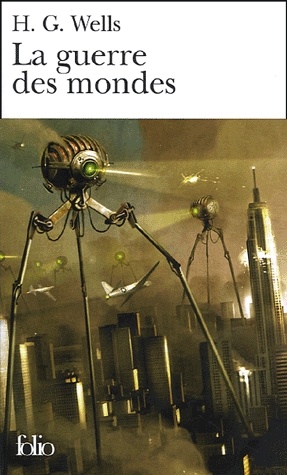
With The War of the Worlds, published in book form in 1898, Wells imagines an invasion of England by beings from Mars equipped with military technology far superior to humanity's own. The novel portrays the sudden collapse of a society's confidence in its power and superiority. Through the experiences of people confronted by an overwhelming force, he explores fear, institutional fragility, and the violence of conquest. The story can also be read as a reversal of the colonial relationships associated with the British Empire. This ability to connect scientific speculation with political and moral concerns is one of Wells's defining achievements, making his imaginative worlds far more than spectacles of futuristic machinery or extraterrestrial creatures.
Career
Herbert George Wells was born into an English family of modest means. His father, Joseph Wells, ran a shop and played professional cricket, while his mother, Sarah Neal, worked as a domestic servant and housekeeper. Financial difficulties led young Herbert to take several jobs, including an apprenticeship in the drapery trade. A childhood leg injury had already given him extended periods for reading, fostering a lasting enthusiasm for books and imaginative storytelling. Determined to continue his education, he became a pupil-teacher and, in 1884, won a scholarship to the Normal School of Science in South Kensington, London. There he studied natural sciences under Thomas Henry Huxley, the influential biologist and defender of Darwin's theory of evolution, whose teaching profoundly shaped his understanding of the world.
After working in education, Wells turned toward journalism and began publishing scientific and literary writing. His career reached a decisive turning point with The Time Machine in 1895, which quickly attracted a wide readership. During the following years, he developed a sequence of stories he described as scientific romances, including The Island of Doctor Moreau and The Invisible Man. These narratives feature discoveries and experiments whose consequences frequently exceed their inventors' intentions. The War of the Worlds, first serialized in 1897, confirmed his international reputation. Wells established himself as a writer capable of transforming scientific knowledge into powerful questions about society and humanity's future.
In the early twentieth century, Wells increasingly expanded his activities into politics, history, and social commentary. Sympathetic to socialist ideas, he was involved for a period with the Fabian Society, while advocating educational reform, improved social organization, and greater international cooperation. His essays and historical writings reflected his ambition to make knowledge accessible to broad audiences. The two world wars intensified his concerns about nationalism, industrialized violence, and the need for international institutions capable of preventing future catastrophes. Some of his political and social proposals nevertheless included ideas that are widely criticized today, particularly regarding the scientific management of human populations. Wells remained intellectually active until the end of his life and died in London in 1946, leaving an extensive body of work at the intersection of literature, science, and political thought.
Key Facts
- One of the founders of modern science fiction: Wells helped establish the genre's possibilities through mechanical time travel, extraterrestrial invasions, and the unintended consequences of scientific discoveries. His stories emphasize the human and social effects of inventions rather than merely describing their technological mechanisms.
- The future as a criticism of inequality: in The Time Machine, the division between the Eloi and the Morlocks symbolically extends the divisions between social classes. Wells challenges optimistic assumptions about progress by showing how an advanced civilization might also produce new forms of domination and decline.
- A reversal of the colonial perspective: in The War of the Worlds, the British population encounters a foreign power capable of treating it as an inferior people. This perspective encourages reflection on the violence of conquest and the vulnerability of societies that regard themselves as superior to others.
- A historic radio adaptation: on October 30, 1938, Orson Welles presented an American radio adaptation of The War of the Worlds, written for broadcasting by Howard Koch. Its presentation as a series of news bulletins alarmed some listeners, although later accounts considerably exaggerated the extent of widespread panic.
- A writer committed to humanity's future: beyond his fiction, Wells advocated education, the wider circulation of knowledge, and various forms of global cooperation. His work combines hope for collective progress with a keen awareness of the dangers of war, inequality, and the irresponsible use of science.