Presentation
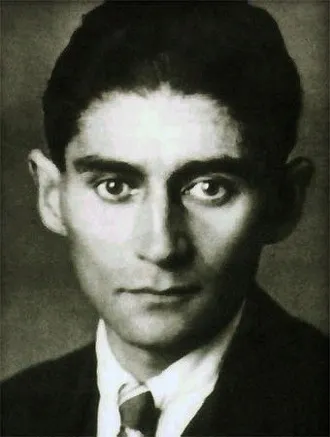
Franz Kafka, born on July 3, 1883, in Prague, then part of the Austro-Hungarian Empire, and deceased on June 3, 1924, in Kierling, Austria, was a German-language writer widely regarded as one of the most distinctive figures in world literature. Born into a Prague Jewish family, he developed a remarkably original body of fiction in which individuals confront incomprehensible institutions, obscure rules, and feelings of guilt whose origins often remain unknown. His narratives combine precise, almost bureaucratic language with disturbing situations in which fantasy and absurdity appear to belong naturally to everyday life.
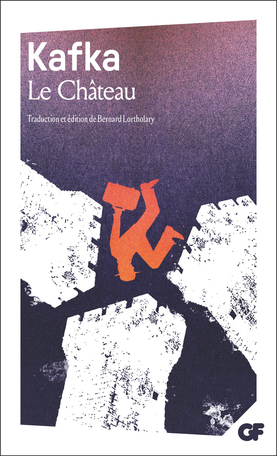
In The Metamorphosis, Kafka tells the story of Gregor Samsa, a traveling salesman who awakens one morning to find himself transformed into a monstrous creature. This extraordinary event becomes the starting point for an examination of exclusion, family obligations, the loss of identity, and the value assigned to individuals according to their social usefulness. In The Trial, Josef K. is arrested without being told the nature of the accusation against him and becomes trapped within an inaccessible judicial system. The Castle extends this exploration through the character of K., who struggles to communicate with an administration whose representatives and decisions remain elusive.
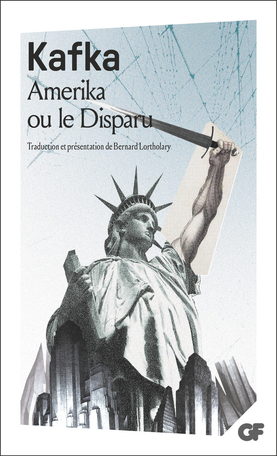
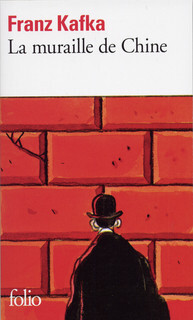
Kafka's fictional universe extends far beyond criticism of institutions. In The Man Who Disappeared, also published under the title Amerika, he follows a young European navigating unfamiliar social hierarchies and power relationships in a foreign country. The stories collected under the title The Great Wall of China also demonstrate his interest in collective enterprises, authority, tradition, and the difficulties of communication. His writing thus addresses universal questions: how can individuals find their place in a world whose rules remain incomprehensible? How can they preserve their freedom when life appears governed by anonymous forces? Kafka does not resolve these questions; he makes their uncertainty the very substance of his literature.
Career
Franz Kafka grew up in Prague in a German-speaking Jewish family. His father, Hermann Kafka, was an energetic and authoritarian merchant, while his mother, Julie Löwy, participated in the family business. His difficult relationship with his father profoundly shaped his emotional life and influenced his reflections on authority, guilt, and family expectations. He received a German-language education while living in a city where Czech, German, and Jewish cultures coexisted. After completing a classical secondary education, he attended the German University in Prague, earning a doctorate in law in 1906. During his studies, he met Max Brod, who became his closest friend and eventually played a decisive role in preserving his literary legacy.
Kafka subsequently entered the insurance profession, joining the Workers' Accident Insurance Institute for the Kingdom of Bohemia in 1908. His responsibilities included matters relating to industrial accident prevention, while he devoted his evenings and nights to writing. This divided existence, caught between administrative duties and an intensely demanding literary vocation, remained a persistent source of tension. In 1912, he wrote The Metamorphosis, published in 1915, and began several ambitious fictional projects. His romantic relationships, particularly with Felice Bauer and later Milena Jesenská, produced extensive correspondence and reflected his difficulties reconciling love, personal independence, and creative work.
In 1917, Kafka was diagnosed with tuberculosis, an illness that progressively weakened his health and required extended periods of rest. Nevertheless, he continued writing while reflecting intensely on identity, spirituality, and the human condition. In 1923, he moved to Berlin with Dora Diamant, hoping to establish greater independence from his family and devote himself to literature. His health, however, deteriorated rapidly. He died in 1924, aged forty, at a sanatorium near Vienna. Only a relatively small portion of his writing had been published during his lifetime. Despite Kafka's request that his manuscripts be destroyed, Max Brod preserved them and arranged for the posthumous publication of The Trial, The Castle, and Amerika, introducing the wider world to the extraordinary significance of his fiction.
Key Facts
- The origin of the word “Kafkaesque”: the adjective describes oppressive, absurd, or incomprehensible situations in which individuals become trapped by rules and systems they cannot understand or control. It is now widely used beyond literature, particularly when describing bureaucratic or institutional experiences.
- A style in which the extraordinary becomes ordinary: Kafka describes improbable events with calm, almost documentary precision. This contrast between matter-of-fact language and deeply unsettling situations is one of the defining characteristics of his writing.
- A literary legacy preserved against its author's wishes: Kafka instructed Max Brod to destroy his unpublished manuscripts. His friend disregarded that request and published several unfinished novels, allowing essential parts of Kafka's work to survive for future generations.
- An identity shaped by several cultures: a German-language Jewish writer born in Prague, Kafka grew up under Austro-Hungarian rule and became a Czechoslovak citizen after 1918. This complex cultural and linguistic background provides important context for his interest in belonging, exclusion, and communication.
- A profound influence on modern literature: his exploration of absurdity, anxiety, and human isolation transformed twentieth-century thought and storytelling. His work influenced numerous writers and philosophers, including Albert Camus, and remains fundamental to discussions of the relationship between individuals and structures of power.