Presentation
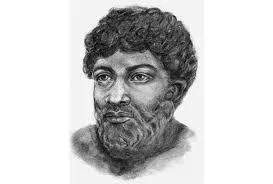
Aesop (Αἴσωπος, Aisopos) is a figure of ancient Greek literature, traditionally believed to have lived during the sixth century BCE. His name has become inseparable from the fable, a short narrative in which animals, human beings, and sometimes objects embody behaviors and situations intended to encourage moral reflection. Surrounded by legend, Aesop occupies a distinctive place in literary history: several ancient writers mention his existence, but no texts written in his own hand have survived, and it is impossible to establish precisely which stories he may have composed. The Fables attributed to him today therefore represent the legacy of a long oral and written tradition, gradually collected and transformed across many generations.
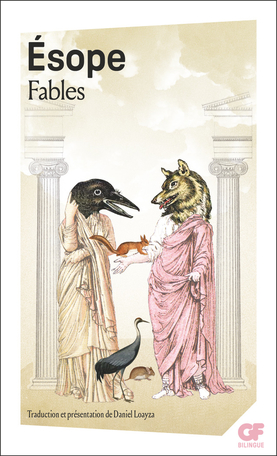
Aesopic stories generally rely on a concise plot, an easily understood conflict, and an ending that reveals the consequences of the characters' actions. The fox frequently represents cunning, the lion power, and the wolf brutality, while supposedly weaker animals may demonstrate intelligence or perseverance. Stories such as The Tortoise and the Hare, The Fox and the Crow, and The Wolf and the Lamb, traditionally associated with the Aesopic corpus, show how apparently simple situations can explore pride, flattery, injustice, and relationships of domination. Their effectiveness lies in their narrative economy: a handful of characters, a decisive event, and a lesson that often remains open to different interpretations.
Yet the significance of these fables extends beyond teaching rules of good behavior. They offer an occasionally sharp examination of social relationships, in which strength does not guarantee wisdom and weakness may require inventive strategies for survival. Some praise caution, others courage, solidarity, or suspicion, without forming a perfectly consistent moral system. This diversity reflects the varied origins and successive revisions of the corpus. Through their apparent simplicity and symbolic richness, the stories attributed to Aesop have survived for centuries, inspiring popular literature, education, rhetoric, and political satire.
Career
Aesop's biography remains largely uncertain. Ancient traditions often describe him as having Phrygian origins in Asia Minor, although other accounts assign him different backgrounds. Neither his birthplace nor his exact dates can be established. The historian Herodotus, writing in the fifth century BCE, mentions a storyteller named Aesop who had supposedly been enslaved on the island of Samos, belonging to a man called Iadmon. This account is among the earliest references to the figure, but provides too little information to reconstruct a complete biography. Later narratives greatly expanded these limited details, portraying Aesop as a man distinguished by his enslaved status, intelligence, and ability to outwit powerful individuals.
According to traditions gathered in the Life of Aesop, a narrative composed and revised long after the fabulist's supposed lifetime, he gained his freedom through his cleverness and subsequently advised influential figures. He was credited with extensive travels, encounters with rulers, and an extraordinary talent for settling disputes through short illustrative stories. Legend also relates that he was sentenced to death at Delphi, following an accusation involving a sacred object. Rich in adventures and moral episodes, these accounts belong primarily to the genre of literary biography. They helped establish the image of Aesop as a socially vulnerable individual whose speech became a source of power, but they cannot be treated as verified historical events.
The transmission of his literary legacy is much better documented than his life. At the end of the fourth century BCE, Demetrius of Phalerum is believed to have compiled a collection of Aesopic stories that has since been lost. During the following centuries, adaptations multiplied, notably through the Latin poet Phaedrus, in the first century CE, and the Greek fabulist Babrius, who rendered parts of the tradition in verse. Other prose collections survived through ancient and medieval manuscripts, often incorporating additions and alterations. Renaissance humanists helped spread these tales throughout Europe, before Jean de La Fontaine, in the seventeenth century, transformed much of this narrative material into French poetry. Under Aesop's name, therefore, what has survived is less the securely identified work of one individual than a shared literary inheritance transmitted across cultures and centuries.
Key Facts
- A figure between history and legend: Herodotus and other ancient writers refer to Aesop, but the available evidence is fragmentary. Detailed accounts of his appearance, enslavement, travels, and death come mainly from literary traditions developed long after the period in which he was believed to have lived.
- Animals representing human behavior: foxes, lions, wolves, and tortoises offer recognizable images of cunning, authority, violence, and perseverance. These characters make the stories accessible while creating a critical distance through which individual weaknesses and social injustices can be examined.
- A literary corpus developed across centuries: the stories called Aesopic fables did not all originate with one author or during a single period. Oral transmission, translations, and repeated adaptations explain differences between collections, alternative versions, and occasional contradictions between their moral lessons.
- A major inspiration for La Fontaine: the French poet drew extensively from the Aesopic tradition, transforming it through his poetic style, dialogue, verse, and observations of society. His writing extended Aesop's influence in French literature without merely reproducing the ancient stories.
- A universal literary form: the fable communicates complex ideas through a striking situation and a memorable conclusion. Used in education and persuasive argument since antiquity, it remains an effective means of exploring justice, power, and human conduct.