


Présentation
Éditions Dupuis est une maison d’édition belge dont l’histoire est intimement liée à celle de la bande dessinée franco-belge.
Installée historiquement à Marcinelle, près de Charleroi, elle trouve ses racines dans l’imprimerie développée à la fin du XIXe siècle par Jean Dupuis.
L’activité éditoriale proprement dite commence en avril 1922 avec le lancement de Les Bonnes Soirées, raison pour laquelle Dupuis a célébré en 2022 le centenaire de sa maison d’édition.
La bande dessinée ne devient pourtant centrale que seize ans plus tard.
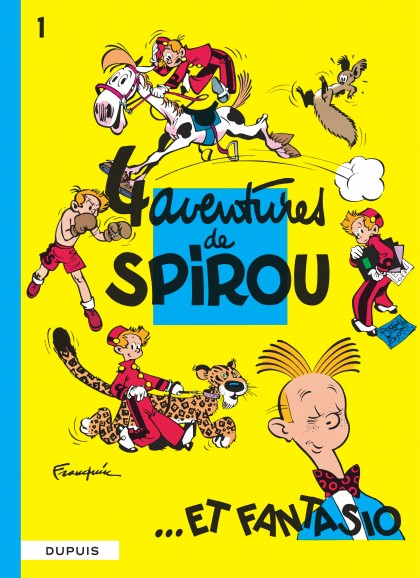
Le 21 avril 1938, Dupuis lance le Journal de Spirou, hebdomadaire jeunesse autour d’un nouveau personnage de groom créé graphiquement par Rob-Vel.
Ce journal va profondément modifier l’histoire de la maison.
Pendant plusieurs décennies, Spirou fonctionne à la fois comme magazine, atelier, espace de prépublication et lieu de découverte d’auteurs.
Autour de Jijé, André Franquin, Morris, Peyo, Will, Jean Roba, Maurice Tillieux, Raoul Cauvin, Lambil et de nombreux autres créateurs se développe progressivement ce que l’on appellera rétrospectivement l’École de Marcinelle.
Il ne s’agit pas d’une école au sens institutionnel.
Le terme désigne plutôt une tradition graphique et narrative associée au journal : dessin expressif, mouvement, sens du gag, lisibilité, énergie des personnages et importance du rythme.
De cet environnement naissent ou se développent quelques-uns des personnages les plus célèbres de l’histoire du neuvième art.
Spirou et Fantasio devient une série collective transmise entre plusieurs générations d’auteurs.
Lucky Luke est créé par Morris pour Spirou en 1946 avant de poursuivre plus tard son histoire éditoriale ailleurs.
Gaston Lagaffe apparaît en 1957 sous le crayon de Franquin.
Les Schtroumpfs naissent en 1958 dans une aventure de Johan et Pirlouit de Peyo avant d’obtenir leur propre série.
Boule et Bill apparaissent en 1959 sous la plume de Maurice Rosy et le dessin de Jean Roba.
Les Tuniques Bleues sont créées en 1968 par Raoul Cauvin et Louis Salvérius, avant que Willy Lambil ne reprenne le dessin après la mort de ce dernier.
Cette liste ne signifie pas que Dupuis reste aujourd’hui l’éditeur principal de toutes ces œuvres.
Certaines séries ont changé de maison, de structure juridique ou de gestion de droits au fil du temps.
Le lien historique avec Dupuis doit donc être distingué de l’attribution éditoriale actuelle.
Cette précision est particulièrement importante pour Lucky Luke, Les Schtroumpfs ou certaines périodes de Boule et Bill.
D’autres séries, en revanche, restent au cœur du catalogue contemporain de la maison.
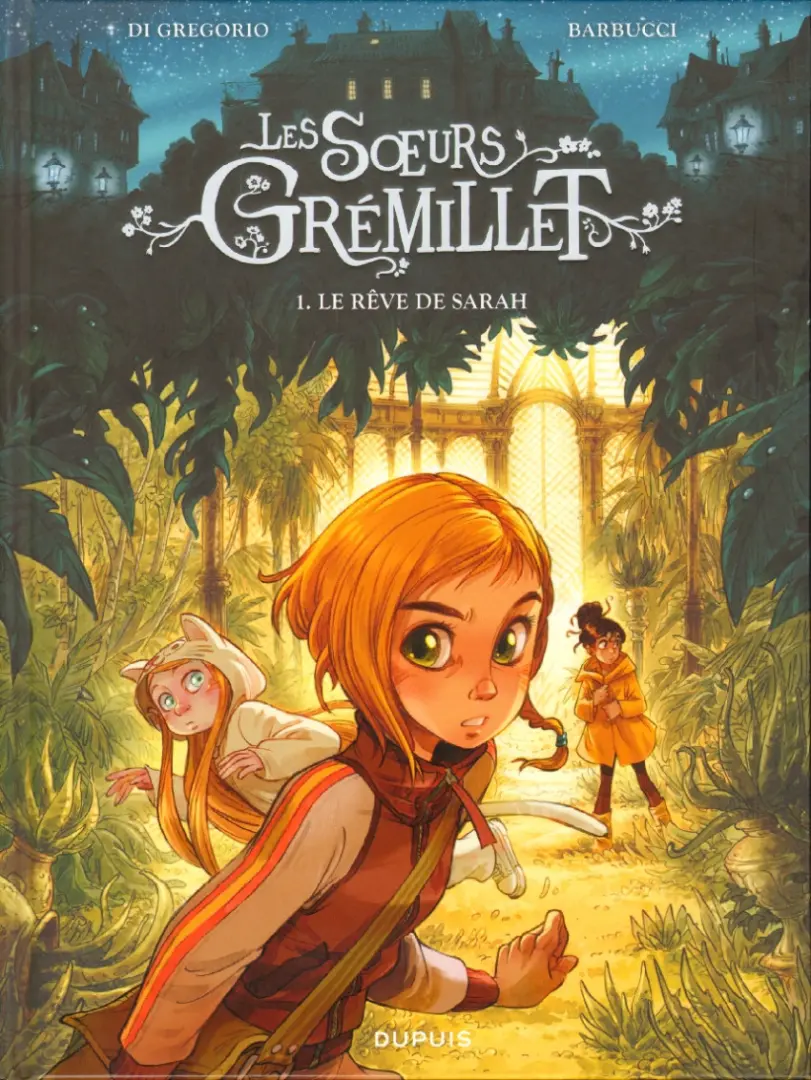
Spirou et Fantasio, Gaston, Les Tuniques Bleues, Largo Winch, Le Petit Spirou, Cédric, Les Nombrils, Seuls, Louca, Dad, Zombillénium ou Animal Jack illustrent aujourd’hui différentes générations du catalogue Dupuis.
La maison a également élargi sa politique éditoriale au-delà de la bande dessinée jeunesse traditionnelle.
À la fin des années 1980, Philippe Vandooren et Jean Van Hamme créent le label Aire Libre.
Cette structure interne donne davantage de liberté à des auteurs souhaitant développer des récits autonomes, personnels, historiques, documentaires ou graphiquement plus expérimentaux.
Au fil des décennies, Aire Libre accueille notamment des œuvres de Cosey, Hermann, Jean Van Hamme, José-Louis Bocquet, Emmanuel Guibert, Étienne Davodeau, Cyril Pedrosa, Baru, Blutch, Bastien Vivès et de nombreux autres auteurs.
Le label devient l’un des éléments essentiels de l’élargissement du public de Dupuis vers la bande dessinée adulte et le roman graphique.
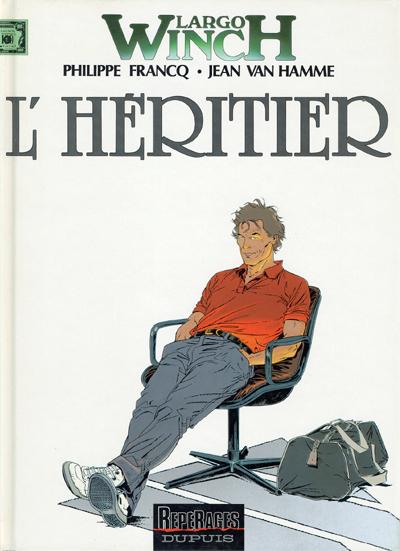
À partir de 1990, Largo Winch, créé en bande dessinée par Jean Van Hamme et Philippe Francq, apporte une autre grande série au catalogue.
Le thriller financier et l’aventure internationale rejoignent ainsi une maison longtemps identifiée principalement à l’humour, à la jeunesse et aux héros issus de Spirou.
L’histoire de Dupuis est également marquée par plusieurs changements de propriété.
En 1985, après plusieurs décennies de contrôle familial, la société est vendue à un ensemble réunissant notamment Groupe Bruxelles Lambert et Hachette, tandis que différentes activités de presse, édition et audiovisuel sont réorganisées.
En 2004, Média-Participations rachète le groupe Dupuis.
La maison rejoint alors un ensemble qui possède déjà notamment Dargaud et Le Lombard.
Cette appartenance ne fusionne pas les catalogues.
Dupuis, Dargaud et Le Lombard restent des maisons éditoriales différentes avec leurs propres auteurs, séries, contrats et histoires.
Une œuvre Dargaud ne devient donc pas une œuvre Dupuis parce que les deux maisons appartiennent à Média-Participations.
Dupuis développe parallèlement une activité qui dépasse le livre.
La société travaille aussi autour du Journal de Spirou, de l’audiovisuel, de l’animation, des licences, du numérique et des exploitations dérivées de ses univers.
Cette capacité à faire circuler les personnages entre magazine, album, animation et autres supports prolonge une logique déjà présente dès les premières décennies de la maison.
En 2013, Dupuis rachète Marsu Productions, société qui gérait notamment les droits d’exploitation du Marsupilami et de Gaston.
L’opération permet symboliquement de réunir de nouveau au sein de Dupuis plusieurs créations majeures de Franquin qui avaient suivi pendant des années des trajectoires éditoriales séparées.
La maison poursuit également une stratégie de diversification par différents labels.
Niffle travaille notamment sur les éditions patrimoniales.
Champaka Brussels développe des beaux livres consacrés aux auteurs et à l’art de la bande dessinée.
Zephyr apporte une spécialisation dans certains récits, notamment liés à l’aviation.
En 2021, le label manga Vega rejoint Dupuis et devient Vega-Dupuis, ouvrant plus directement la maison à l’édition japonaise et aux créations utilisant les codes du manga.
Le catalogue contemporain est ainsi beaucoup plus large que l’image traditionnelle du seul « éditeur de Spirou ».
Dupuis publie des bandes dessinées d’aventure, humour, science-fiction, fantastique, fantasy, histoire, polar, western, documentaire, autobiographie, jeunesse et romans graphiques.
Cette diversité repose cependant sur une continuité inhabituelle.
Plus d’un siècle après les débuts éditoriaux de Jean Dupuis, la maison demeure installée rue Destrée à Marcinelle, adresse où l’imprimerie s’était développée dès le début du XXe siècle.
La société actuelle, Éditions Dupuis SA, reste une entreprise belge et continue d’exploiter une identité propre au sein de Média-Participations.
Son histoire peut donc se lire comme celle d’une entreprise ayant progressivement transformé un métier d’imprimeur en maison de presse, puis une revue jeunesse en l’un des plus importants laboratoires de la bande dessinée européenne.
Histoire
1896-1921 : avant l’édition, l’imprimerie de Jean Dupuis
L’histoire commence avant la naissance officielle de la maison d’édition.
En 1896, Jean Dupuis, alors âgé de 21 ans, achète sa première presse à pédale.
Formé aux métiers de relieur et de typographe, il commence modestement son activité.
À la fin du XIXe siècle, il développe notamment l’impression d’emballages en papier pour les pharmacies de la région de Charleroi.
L’entreprise grandit.
En 1911, Jean Dupuis fait construire un atelier rue Destrée à Marcinelle.
Cette adresse devient le centre historique de l’entreprise.
Plus d’un siècle plus tard, les Éditions Dupuis y conservent encore leur siège belge.
À ce stade, Dupuis est principalement imprimeur.
Le passage vers l’édition intervient dans les années 1920.
1922 : Jean Dupuis devient éditeur avec Les Bonnes Soirées
En avril 1922, Jean Dupuis lance Les Bonnes Soirées.
La publication se présente comme une revue hebdomadaire illustrée proposant notamment des romans-feuilletons.
Cette date constitue le véritable départ de l’activité d’éditeur de Dupuis.
La maison elle-même s’est appuyée sur ce repère pour célébrer son centenaire en 2022.
Jean Dupuis comprend rapidement l’intérêt de combiner plusieurs métiers.
L’entreprise peut concevoir un titre de presse, l’éditer, l’imprimer puis organiser sa diffusion.
Cette maîtrise de la chaîne de fabrication lui permet de développer progressivement plusieurs publications.
Les années 1920-1930 : construire une activité de presse
Après Les Bonnes Soirées, Dupuis développe d’autres titres de presse.
La maison s’adresse à différents publics et explore plusieurs formes d’édition populaire.
Cette expérience construit l’infrastructure qui permettra ensuite le lancement d’un hebdomadaire entièrement destiné à la jeunesse.
À la fin des années 1930, Jean Dupuis et ses fils cherchent justement à créer un journal adapté aux jeunes lecteurs.
La bande dessinée va devenir le moteur de cette nouvelle étape.
1938 : le Journal de Spirou change la maison
Le 21 avril 1938 paraît le premier numéro du Journal de Spirou.
Le personnage de Spirou est créé par Robert Velter, dit Rob-Vel.
Son métier de groom lui donne immédiatement une silhouette identifiable avec son uniforme rouge.
Le projet dépasse cependant rapidement ce seul personnage.
Le journal accueille histoires d’aventure, humour, jeux et séries dessinées.
Une version néerlandophone, Robbedoes, accompagne également son développement.
Le succès de l’hebdomadaire transforme progressivement Dupuis en l’un des grands acteurs de la bande dessinée.
Jijé devient le premier grand pilier artistique
Parmi les auteurs qui façonnent les premières décennies de Spirou, Jijé, de son vrai nom Joseph Gillain, occupe une place fondamentale.
Dessinateur extrêmement polyvalent, il travaille sur plusieurs séries et participe à maintenir le journal dans des périodes difficiles.
Mais son importance dépasse ses propres publications.
Jijé devient aussi un mentor pour une génération de jeunes dessinateurs.
Franquin, Morris et Will travaillent dans son environnement et bénéficient de son expérience.
Cette transmission joue un rôle essentiel dans la formation du style graphique qui sera plus tard associé à l’École de Marcinelle.
1946 : Franquin reprend Spirou et Morris crée Lucky Luke
Après la Seconde Guerre mondiale, une nouvelle génération devient centrale.
André Franquin reprend progressivement Spirou et Fantasio après Jijé.
Il enrichit profondément l’univers.
Son travail développe le mouvement, l’expressivité, les décors et la galerie de personnages.
Le Marsupilami, créé plus tard dans les aventures de Spirou, deviendra à son tour une figure majeure.
Dans le même environnement, Morris crée Lucky Luke en 1946 pour le Journal de Spirou.
Le cow-boy solitaire s’impose rapidement comme l’un des personnages les plus populaires de la bande dessinée franco-belge.
Lucky Luke poursuivra plus tard sa carrière éditoriale hors de Dupuis, notamment après le départ de Morris vers Dargaud.
Son origine reste néanmoins directement liée à Spirou et à la première génération d’auteurs de Marcinelle.
Les années 1950 : l’École de Marcinelle prend forme
Durant les années 1950, le journal rassemble une concentration exceptionnelle de talents.
Franquin, Morris, Will, Peyo, Tillieux, Roba et d’autres créateurs développent des styles personnels tout en partageant certaines caractéristiques.
Le mouvement est privilégié.
Les personnages possèdent une forte expressivité corporelle.
Le gag repose autant sur la mise en scène graphique que sur le dialogue.
Les décors restent lisibles même lorsqu’ils sont détaillés.
Cette tradition sera progressivement désignée sous le nom d’École de Marcinelle, souvent opposée ou comparée à la ligne claire associée au Journal de Tintin.
La distinction ne doit pas être considérée comme une frontière absolue.
Mais elle permet de comprendre comment deux grands hebdomadaires ont développé des cultures graphiques différentes et complémentaires.
1957 : Gaston transforme les pages de la rédaction
En 1957, André Franquin et Yvan Delporte imaginent Gaston Lagaffe.
Le personnage apparaît initialement comme un « héros sans emploi » chargé d’animer les pages rédactionnelles du journal.
Il ne part pas explorer le monde.
Il travaille — ou tente de ne pas travailler — au sein même de la rédaction.
Cette idée transforme le cadre de la bande dessinée humoristique.
Le bureau, le courrier, les contrats, les inventions absurdes, les collègues et les catastrophes quotidiennes deviennent matière à gag.
Gaston finit rapidement par obtenir sa propre bande dessinée.
Le personnage devient l’une des créations majeures de Franquin et l’un des symboles historiques de Dupuis.
1958 : les Schtroumpfs apparaissent chez Peyo
Peyo entre dans le Journal de Spirou en 1952 avec Johan, bientôt accompagné de Pirlouit.
En 1958, dans l’univers de Johan et Pirlouit, apparaissent de petits personnages bleus parlant une langue où de nombreux mots sont remplacés par « schtroumpf ».
Ils ne devaient être au départ que des personnages secondaires.
Le succès est immédiat.
Les Schtroumpfs obtiennent leurs propres récits, d’abord notamment sous forme de mini-récits encartés dans Spirou, puis en albums.
Ils deviennent progressivement une franchise internationale majeure.
Leur histoire éditoriale quittera ensuite en partie Dupuis, mais leur naissance reste indissociable de Peyo, de Johan et Pirlouit et du Journal de Spirou.
1959 : Boule et Bill naissent dans un mini-récit
Le 24 décembre 1959, Boule et Bill apparaissent dans le Journal de Spirou.
Le mini-récit Boule contre les mini-requins est scénarisé par Maurice Rosy et dessiné par Jean Roba.
Roba développe ensuite la série autour du quotidien d’une famille et de son cocker.
L’humour repose moins sur l’aventure que sur l’observation du foyer, des relations entre enfants, parents et animaux.
Boule et Bill devient l’une des grandes séries familiales issues de Spirou.
Comme d’autres créations nées chez Dupuis, la série connaîtra au fil du temps différentes configurations éditoriales.
Les années 1960 : multiplier les héros et les genres
Le catalogue continue de s’élargir.
Gil Jourdan de Maurice Tillieux développe le policier humoristique.
Buck Danny, créé par Jean-Michel Charlier et Victor Hubinon, installe durablement l’aviation et l’aventure.
Johan et Pirlouit développe la fantasy médiévale humoristique.
La Patrouille des Castors, Tif et Tondu et d’autres séries enrichissent encore l’hebdomadaire.
Dupuis n’est déjà plus seulement l’éditeur d’un personnage ou d’un genre.
Le journal devient une structure capable de faire cohabiter policier, western, aviation, humour, aventure, fantastique et récits jeunesse.
1968 : Les Tuniques Bleues remplacent le vide laissé par Lucky Luke
En 1968, Raoul Cauvin et Louis Salvérius créent Les Tuniques Bleues.
La série naît notamment pour renforcer l’offre western du journal après le départ de Lucky Luke.
Mais elle développe rapidement sa propre identité.
Sous couvert d’aventures pendant la guerre de Sécession, les histoires de Blutch et Chesterfield proposent une critique récurrente de la guerre, de la hiérarchie militaire et de l’absurdité de certains ordres.
À la mort de Salvérius en 1972, Willy Lambil reprend le dessin.
Le tandem Lambil-Cauvin fera des Tuniques Bleues l’une des séries les plus durables de Dupuis.
Les années 1970 : renouveler une nouvelle fois le catalogue
Une autre génération de personnages apparaît autour du journal.
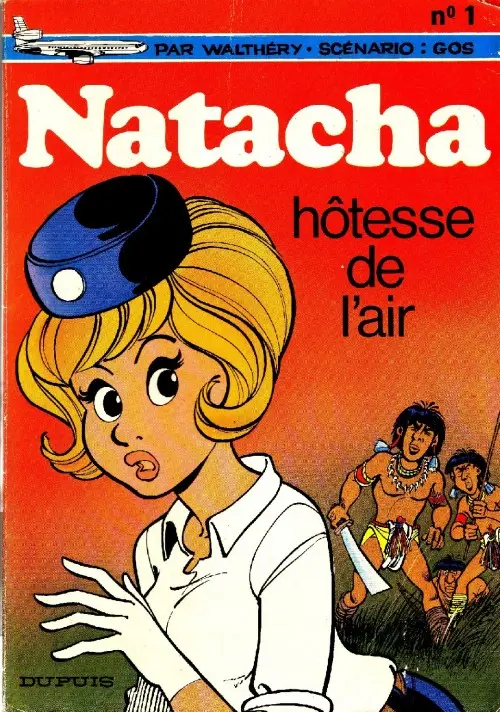
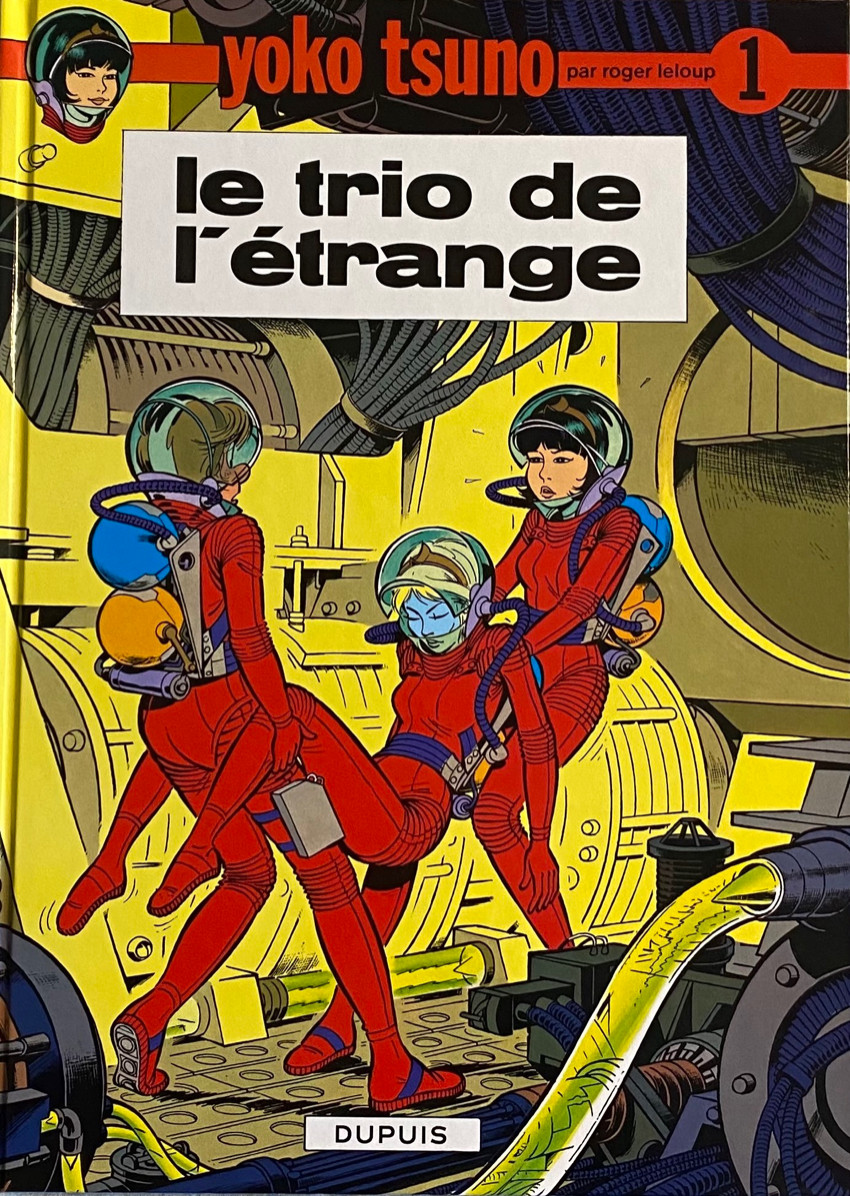
Natacha, Yoko Tsuno, Papyrus ou différentes séries scénarisées par Raoul Cauvin viennent renouveler le catalogue.
Cauvin devient notamment l’un des grands scénaristes maison.
Au fil des décennies, il travaille sur des séries aussi diverses que Les Femmes en blanc, Pierre Tombal, L’Agent 212, Cédric ou Les Psy.
Cette capacité à accompagner les auteurs sur une longue durée constitue déjà une caractéristique centrale de Dupuis.
1985 : la fin du contrôle familial
En 1985, la famille Dupuis cède le contrôle de l’entreprise après une période de négociations complexes.
Le Groupe Bruxelles Lambert, associé notamment à Hachette, prend le contrôle des activités d’édition et d’audiovisuel, tandis que les différentes activités du groupe historique sont réorganisées.
Cette étape marque la fin de plusieurs générations de gestion familiale directe.
Elle provoque également des inquiétudes chez certains auteurs attachés au fonctionnement historique de la maison.
Dupuis continue néanmoins son activité éditoriale et conserve Marcinelle comme centre important.
1988 : Aire Libre ouvre la maison au récit d’auteur
À la fin des années 1980, la bande dessinée connaît une nouvelle évolution.
Plusieurs auteurs souhaitent raconter des histoires qui ne correspondent plus nécessairement aux séries traditionnelles de 44 ou 46 pages.
Philippe Vandooren et Jean Van Hamme créent alors Aire Libre.
Le projet est pensé presque comme une maison d’édition à l’intérieur de Dupuis.
Les auteurs disposent d’un espace où format, pagination, sujet et approche graphique peuvent varier davantage.
Le label accueille progressivement fiction, documentaire, autobiographie, récit historique, drame, comédie et roman graphique.
Aire Libre permet ainsi à Dupuis de conserver son important public jeunesse tout en développant une politique ambitieuse vers les lecteurs adultes.
1990 : Largo Winch devient une nouvelle grande série
En 1990, Jean Van Hamme et Philippe Francq lancent en bande dessinée Largo Winch.
Le personnage existait auparavant sous forme romanesque, mais son adaptation en BD prend rapidement une ampleur particulière.
Héritier d’un immense empire financier, Largo évolue entre complots économiques, aventures internationales et rapports de pouvoir.
La série apporte à Dupuis un thriller contemporain fortement marqué par l’économie et la finance.
Elle devient l’un des grands succès modernes de la maison et continue encore aujourd’hui avec de nouveaux scénaristes.
1995 : Spirou atteint son numéro 3000
En 1995, le Journal de Spirou atteint son 3000e numéro.
Cette longévité est exceptionnelle dans un secteur où de nombreux magazines historiques de bande dessinée ont disparu.
Le journal continue de jouer un rôle particulier dans l’écosystème Dupuis.
Même si la publication directe en album est désormais devenue dominante, Spirou reste un lieu où peuvent être testées de nouvelles séries, suivis de nouveaux auteurs et maintenue une relation hebdomadaire avec les lecteurs.
2004 : Dupuis rejoint Média-Participations
En juin 2004, Média-Participations rachète le groupe Dupuis.
Le groupe possède déjà notamment Dargaud et Le Lombard.
L’opération réunit donc sous un même propriétaire trois grandes maisons historiques de la bande dessinée franco-belge.
La logique retenue consiste cependant à préserver leurs identités.
Dupuis reste Dupuis.
Dargaud reste Dargaud.
Le Lombard reste Le Lombard.
Les liens économiques, les infrastructures et certaines activités peuvent être mutualisés, mais les catalogues conservent leurs histoires et leurs politiques éditoriales.
2013 : Gaston et le Marsupilami reviennent dans l’environnement Dupuis
En mars 2013, Dupuis rachète Marsu Productions.
Cette société avait été créée à la fin des années 1980 autour du développement autonome du Marsupilami et gérait également plusieurs droits liés à l’univers de Franquin, dont Gaston.
L’acquisition possède une forte valeur symbolique.
Gaston Lagaffe et le Marsupilami, deux personnages étroitement liés à l’histoire de Spirou, reviennent dans l’environnement de leur éditeur historique.
Elle permet aussi à Dupuis de réunir plus largement le patrimoine de Franquin au sein de son catalogue.
Développer le patrimoine avec Niffle et Champaka
À côté des nouveautés, Dupuis développe progressivement une véritable politique patrimoniale.
Le label Niffle propose des éditions travaillées permettant de redécouvrir les grandes œuvres de la bande dessinée sous de nouvelles formes.
Franquin, Peyo, Roba, Tillieux, Will, Hermann ou Tardi peuvent ainsi faire l’objet d’intégrales, de restaurations ou de présentations particulières.
Champaka Brussels, rapproché de Dupuis en 2017, développe de son côté de grands ouvrages autour du dessin, de l’illustration et des carrières d’auteurs.
Ces labels montrent que le patrimoine ne se limite plus à maintenir les anciens albums disponibles.
Il devient lui-même un travail éditorial.
2021 : Vega-Dupuis ouvre une véritable ligne manga
En 2021, Dupuis rachète à Steinkis Groupe et Nexusbook le label Vega.
Le catalogue et son cofondateur Stéphane Ferrand rejoignent la maison sous l’identité Vega-Dupuis.
L’objectif est de développer une véritable ligne manga destinée à plusieurs publics.
Seinen, shōnen, shōjo, kodomo, créations occidentales inspirées du manga et collaborations internationales peuvent trouver leur place dans ce nouvel espace.
L’opération marque un élargissement important pour une maison historiquement construite autour de la bande dessinée européenne.
Dupuis aujourd’hui
En 2026, Éditions Dupuis SA reste une société belge dont le siège est situé 52 rue Destrée à Marcinelle.
La direction générale est assurée par Julie Durot.
La maison appartient à Média-Participations mais conserve son identité propre.
Son site met notamment en avant Spirou, Cédric, Les Tuniques Bleues, Largo Winch, Les Nombrils, Boule et Bill, Le Petit Spirou, Seuls, Louca, Dad, Animal Jack, Zombillénium et de nombreuses autres séries.
Les labels Aire Libre, Niffle, Champaka, Zephyr et Vega permettent parallèlement d’étendre le catalogue vers d’autres formats, autres publics et autres traditions graphiques.
Le journal Spirou continue lui aussi de paraître.
Plus d’un siècle après Les Bonnes Soirées, la maison conserve ainsi une particularité rare : elle reste simultanément éditeur de patrimoine, éditeur de séries populaires, découvreur de nouveaux auteurs et acteur de la presse de bande dessinée.
Ce qui la distingue
Avoir construit son catalogue autour d’un journal-laboratoire
La différence essentielle entre Dupuis et de nombreuses maisons contemporaines tient à l’importance historique du Journal de Spirou.
Pendant des décennies, les albums ne constituent pas le seul point de départ.
Les séries vivent d’abord chaque semaine auprès des lecteurs.
Les auteurs peuvent tester des personnages, publier des récits courts, commencer une histoire longue ou expérimenter de nouveaux formats.
Gaston, les Schtroumpfs ou Boule et Bill illustrent parfaitement cette logique : certaines créations apparaissent presque latéralement avant de devenir suffisamment populaires pour obtenir leur propre série.
Le journal fonctionne ainsi comme un laboratoire permanent de création.
Avoir produit une véritable tradition graphique sans imposer un style unique
L’École de Marcinelle constitue l’une des grandes contributions de Dupuis à l’histoire graphique de la bande dessinée européenne.
Franquin, Morris, Will, Peyo, Roba ou Tillieux ne dessinent pourtant pas de la même manière.
Ce qui les rapproche tient davantage à une culture du mouvement, de l’expressivité, du rythme et de la narration.
Dupuis réussit donc à faire émerger une identité visuelle collective sans transformer ses auteurs en exécutants d’un modèle unique.
Cette souplesse explique aussi pourquoi cette tradition a pu continuer à évoluer avec les générations suivantes.
Avoir fait naître des personnages devenus plus grands que leur maison d’origine
Peu d’éditeurs peuvent associer leur histoire à autant de personnages devenus internationalement connus.
Spirou, Lucky Luke, Gaston, les Schtroumpfs, Boule et Bill et le Marsupilami ont tous entretenu des liens fondamentaux avec Dupuis et le Journal de Spirou.
Mais certaines de ces propriétés ont ensuite changé d’éditeur ou de structure de droits.
Cette circulation est précisément un signe de leur importance.
Le patrimoine de Dupuis dépasse parfois les limites de son catalogue actuel.
Pour PANACHES CULTURE, il faut donc distinguer lieu de naissance, publication historique et éditeur actuel.
Transmettre les grandes séries à plusieurs générations d’auteurs
Spirou et Fantasio constitue l’exemple le plus évident.
Rob-Vel, Jijé, Franquin, Fournier, Tome et Janry, Morvan et Munuera, Yoann et Vehlmann ainsi que d’autres créateurs ont participé, sous différentes formes, à l’histoire du personnage.
Cette capacité de transmission permet à un héros de ne pas être définitivement lié à une seule période.
Les Tuniques Bleues connaissent elles aussi plusieurs équipes.
Largo Winch poursuit son histoire après Jean Van Hamme.
Dupuis développe ainsi une véritable expérience dans la continuité éditoriale d’univers patrimoniaux.
Faire coexister bande dessinée familiale et création adulte
L’image historique de Dupuis reste fortement liée à la jeunesse et aux lectures familiales.
Elle est justifiée, mais incomplète.
Avec Aire Libre, la maison a construit depuis la fin des années 1980 un espace important pour des œuvres destinées à un lectorat adulte.
Autobiographie, histoire, politique, documentaire, drame ou expérimentation graphique peuvent côtoyer les grandes séries d’aventure.
Cette coexistence permet à Dupuis de ne pas enfermer son identité dans une définition purement générationnelle de la bande dessinée.
Traiter le patrimoine comme une matière éditoriale vivante
Dupuis possède plusieurs décennies d’archives, de planches et de séries.
Mais la maison ne se contente pas de reproduire indéfiniment les anciennes éditions.
Les intégrales, fac-similés, éditions commentées, Artiste Éditions et labels comme Niffle ou Champaka permettent de replacer les œuvres dans leur contexte et de valoriser le travail graphique original.
Franquin, Peyo, Roba, Tillieux ou d’autres auteurs peuvent ainsi être lus à la fois comme créateurs de séries populaires et comme artistes possédant une histoire propre.
Être restée fortement attachée à Marcinelle
L’histoire de Dupuis possède une géographie particulièrement forte.
Jean Dupuis développe son imprimerie dans la région de Charleroi.
L’atelier de la rue Destrée est construit en 1911.
Le Journal de Spirou naît dans cet environnement.
L’expression même École de Marcinelle inscrit cette origine géographique dans l’histoire de la bande dessinée.
Aujourd’hui encore, le siège d’Éditions Dupuis SA est situé rue Destrée à Marcinelle.
Cette continuité est rare pour une maison ayant traversé plusieurs changements de propriétaires et plus d’un siècle d’activité éditoriale.
Appartenir à Média-Participations sans se confondre avec les autres maisons du groupe
Depuis 2004, Dupuis appartient à Média-Participations.
Le groupe possède également plusieurs autres maisons majeures de bande dessinée.
Cette proximité peut facilement provoquer des erreurs d’attribution.
Dargaud, Le Lombard et Dupuis sont des maisons distinctes.
Une série publiée par Dargaud ne doit pas être considérée comme une publication Dupuis.
Une œuvre Le Lombard ne devient pas Dupuis parce qu’elle partage le même groupe économique.
Inversement, les séries portant le logo Dupuis doivent continuer d’être rattachées à Éditions Dupuis.
Pour PANACHES CULTURE, le groupe propriétaire fournit le contexte économique ; la maison réellement éditrice reste l’entité pertinente pour rattacher une œuvre.
À savoir
- Les racines de Dupuis remontent à 1896, lorsque Jean Dupuis achète sa première presse ; l’activité éditoriale débute en avril 1922 avec Les Bonnes Soirées, date retenue ici pour la création de la maison d’édition.
- L’entreprise s’installe rue Destrée à Marcinelle en 1911 ; Éditions Dupuis SA y conserve toujours son siège belge.
- Le Journal de Spirou paraît pour la première fois le 21 avril 1938, avec un personnage créé par Rob-Vel ; le magazine continue de paraître aujourd’hui.
- Autour de Spirou se développe ce qui sera appelé l’École de Marcinelle, associée notamment à Jijé, Franquin, Morris, Will, Peyo et Roba.
- Lucky Luke est créé par Morris en 1946 pour le Journal de Spirou ; la série poursuit ensuite son histoire chez d’autres éditeurs et ne doit donc pas être automatiquement attribuée à Dupuis pour toutes ses périodes.
- Gaston Lagaffe apparaît en 1957, les Schtroumpfs en 1958 dans Johan et Pirlouit et Boule et Bill en 1959, trois créations directement liées à l’écosystème du Journal de Spirou.
- Les Tuniques Bleues sont créées en 1968 par Raoul Cauvin et Louis Salvérius ; Willy Lambil reprend le dessin après la mort de Salvérius en 1972.
- Le label Aire Libre, créé à la fin des années 1980 par Philippe Vandooren et Jean Van Hamme, ouvre largement Dupuis au récit adulte, au roman graphique, à l’autobiographie et au documentaire.
- Largo Winch est lancé en bande dessinée chez Dupuis en 1990 par Jean Van Hamme et Philippe Francq et demeure l’une des grandes séries d’aventure contemporaines de la maison.
- Média-Participations rachète le groupe Dupuis en 2004 ; Dupuis conserve cependant son identité éditoriale distincte de Dargaud et du Lombard.
- En 2013, Dupuis rachète Marsu Productions, réunissant de nouveau dans son environnement notamment Gaston et le Marsupilami ; en 2021, le label manga Vega rejoint la maison sous l’identité Vega-Dupuis.
- En 2026, Éditions Dupuis SA est toujours une maison belge active basée à Marcinelle, dirigée par Julie Durot et développant albums, Journal de Spirou, labels patrimoniaux, romans graphiques, manga, audiovisuel et exploitation de ses univers.