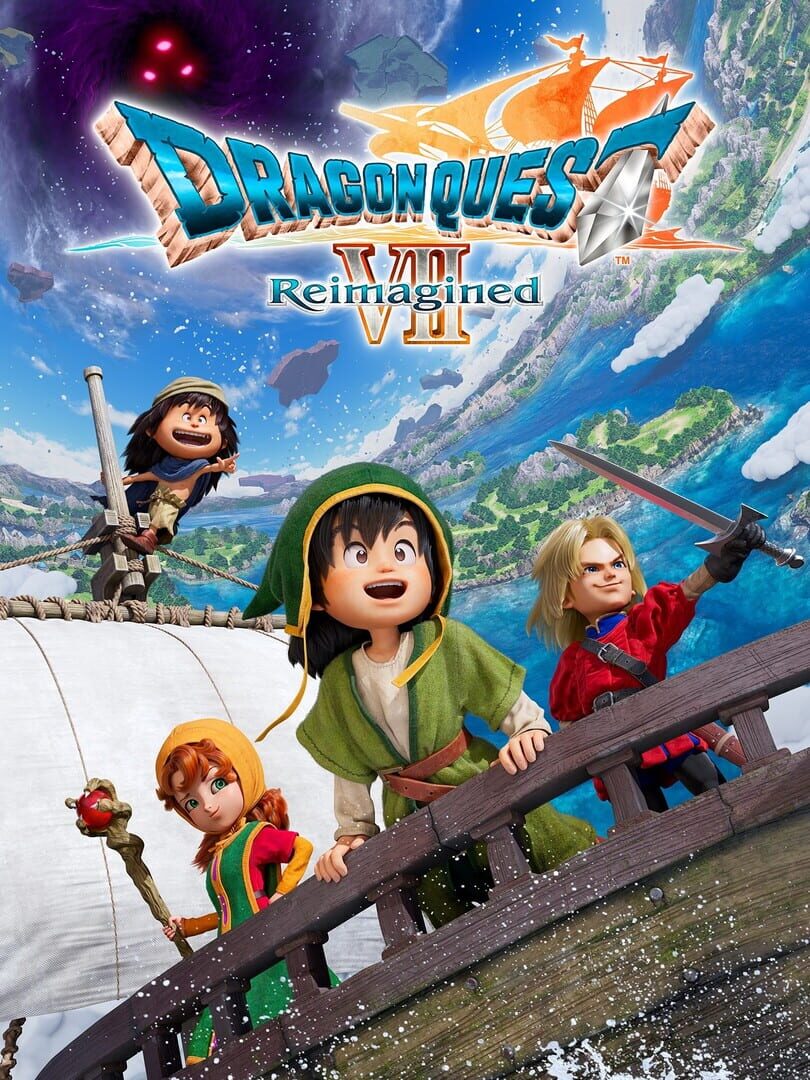
As the son of a fisherman, you have spent your entire life on the peaceful island of Estard. Yet one question continues to intrigue you: could there be more to the world than this small island kingdom? Searching for answers alongside your childhood friends, you discover the Shrine of Mysteries and are transported into the past. There, you learn that entire lands have been sealed away by a malevolent force. The fate of the world now rests in your hands.
Video game
2026
Adventure
Fantasy
RPG
Dragon Quest VII Reimagined
- HexaDrive Developer
- Square Enix Publisher
- Square Enix Creative Studio 5 Developer
Beyond a forgotten island, the past awaits rediscovery.
Details
- Type
- Video game
- Release
- February 5, 2026
- Genres
- Adventure, Fantasy, RPG
- Platforms
- PlayStation 5, Xbox Series, Nintendo Switch, PC, Nintendo Switch 2
- Engine
- Unreal Engine 4
- Game modes
- Single player
Synopsis
Dragon Quest VII Reimagined
Trailer
Watch the trailer
Overview
Presentation
Dragon Quest VII Reimagined is a Japanese role-playing game released on February 5, 2026. It reimagines Dragon Quest VII, originally released for PlayStation in 2000, rebuilding its world through a new three-dimensional presentation and revising several gameplay systems. The adventure begins on Estard Island, where a young fisherman's son wonders whether other lands exist beyond his kingdom. Alongside his childhood friends, he discovers a mysterious shrine that opens the way to journeys between past and present. Progression revolves in part around collecting fragments of ancient tablets: once assembled, they provide access to different regions and historical periods. Each destination features its own inhabitants, challenges and individual stories, gradually contributing to a larger adventure.
The narrative retains this succession of regional stories while introducing a restructured progression designed to improve pacing. Players explore towns, natural landscapes and dungeons, speak with local inhabitants and resolve situations specific to each territory. Traveling between different eras is an essential part of exploration: regions visited in the past can later be encountered in the present under different circumstances. Puzzles, hidden paths and optional activities accompany the search. The interface has also been redesigned, using tab-based menus to simplify access to inventory, equipment and party information.
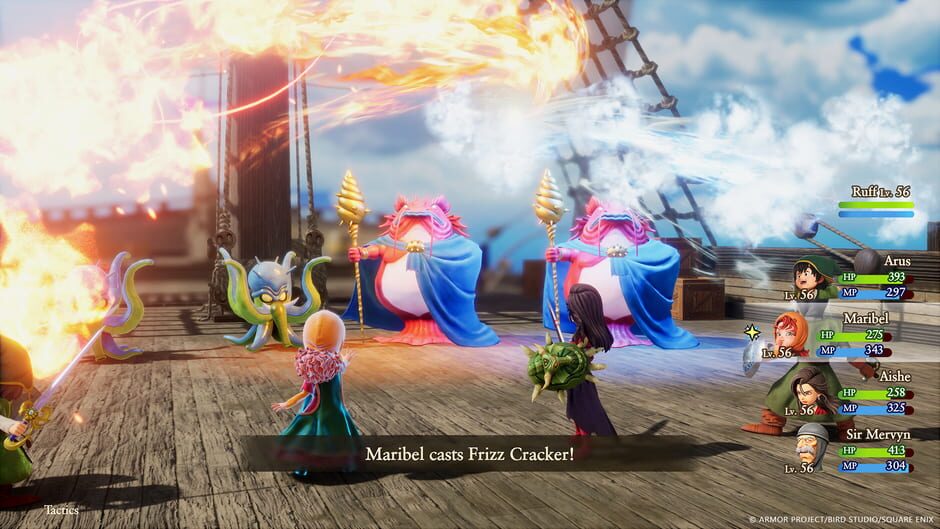
Turn-based combat remains central to the game, accompanied by several improvements. Characters have access to attacks, spells and distinctive abilities, while players select actions according to the enemies they face. Monsters are visible during exploration: they can be engaged directly, and significantly weaker enemies can even be defeated instantly without entering a traditional battle. Encounters also offer adjustable battle speed and automatic combat options. A new mechanic allows characters to unleash a special perk associated with their vocation when they become sufficiently worked up. These abilities may strengthen attacks or support allies, adding another strategic consideration to turn management.
Character progression relies on a vocation system that supports different specializations, including Warrior, Mage and Priest. Each vocation features its own characteristics, spells and abilities. As the adventure progresses, the Moonlighting mechanic allows a character to use two vocations simultaneously, combining their skills and advantages. This creates opportunities to develop versatile characters or reinforce particular offensive and defensive roles. Both vocations can advance at the same time, encouraging experimentation with different combinations. Optional activities, including a battle arena and the Lucky Panel minigame, offer additional challenges and opportunities to obtain items.
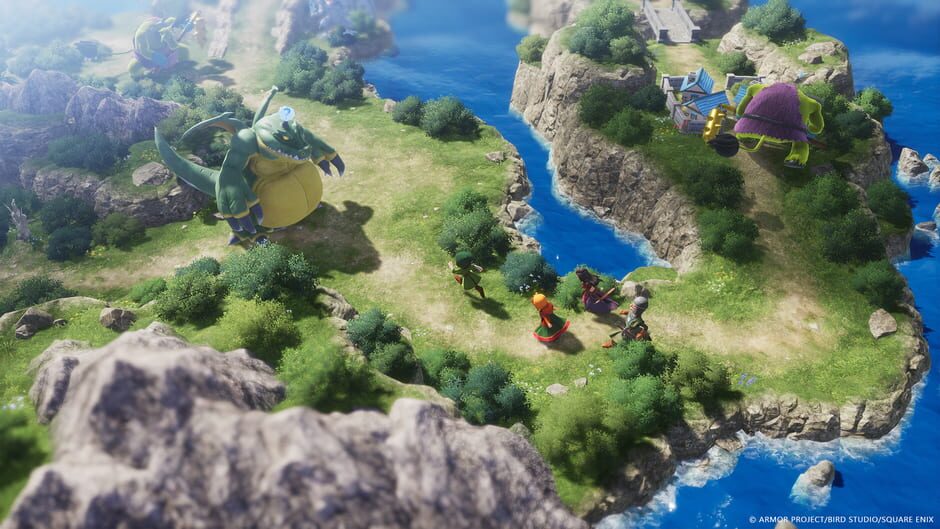
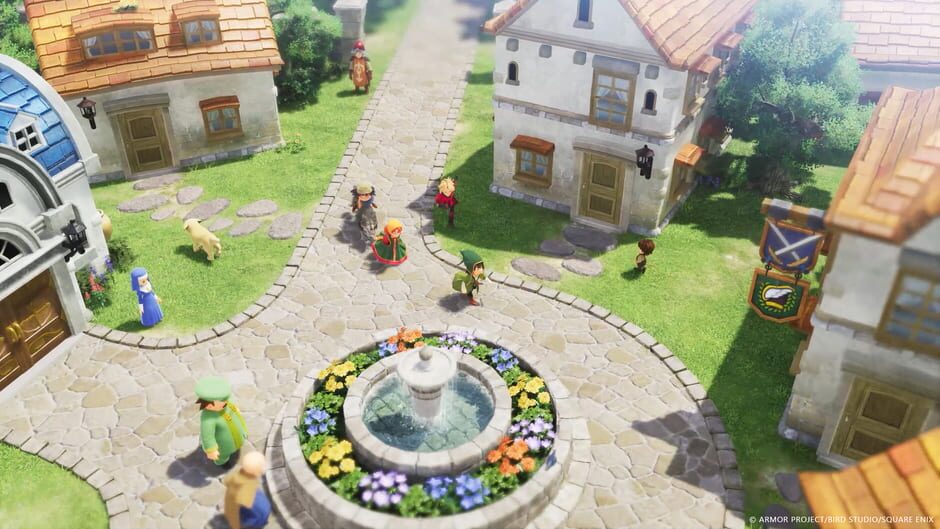
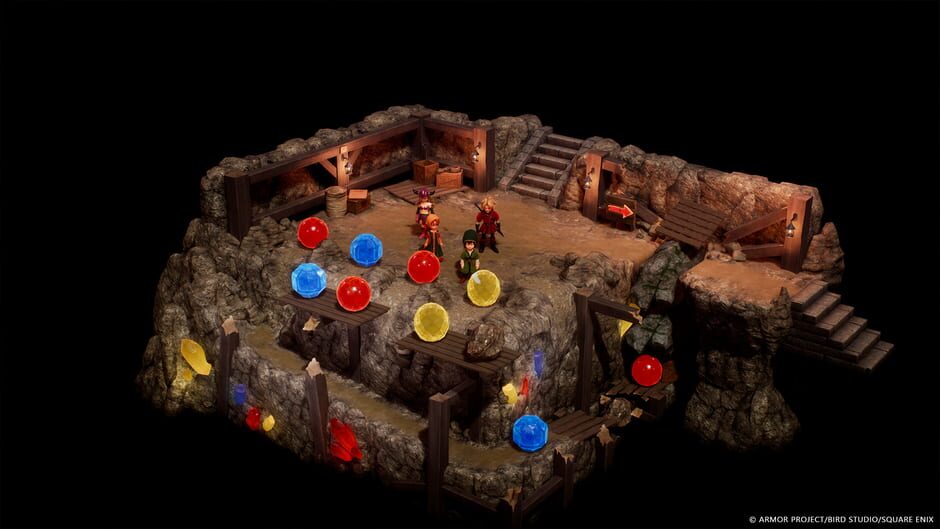
The visual direction of Dragon Quest VII Reimagined uses a miniature diorama aesthetic inspired by handcrafted figures. Characters retain the proportions and expressions established by Akira Toriyama's original designs, while towns, landscapes and dungeons resemble detailed scale models. To establish this distinctive appearance, the art team created physical dolls and then scanned them into three-dimensional models. The elevated viewpoint provides an overview of environments and makes routes easier to identify. This artistic approach accompanies revised menus, combat systems and narrative pacing while preserving the exploration-driven structure of Dragon Quest VII.
Key Highlights
- An adventure across past and present: collecting tablet fragments provides access to different regions and supports exploration.
- A restructured narrative: regional stories contribute to a larger adventure, with progression revised from previous versions.
- Modernized turn-based combat: visible enemies, adjustable battle speed and automation provide additional options during encounters.
- Vocation-specific abilities: characters can activate special perks under certain battle conditions.
- A dual-vocation system: Moonlighting allows two specializations and their abilities to be combined on a single character.
- Expanded exploration activities: towns, dungeons, puzzles, optional challenges and a battle arena accompany the journey.
- A diorama-inspired visual identity: handcrafted-style characters, miniature environments and Akira Toriyama's designs shape the presentation.
Conclusion
Dragon Quest VII Reimagined revisits the exploration and time-travel structure of Dragon Quest VII through a completely redesigned visual presentation. Tablet collection, stories associated with individual regions and turn-based encounters preserve the foundations of the original role-playing game. Dual vocations, revised combat mechanics and restructured progression give this edition its own gameplay characteristics while retaining a narrative built around discovering new territories and historical periods.
Did You Know?
- Dragon Quest VII Reimagined is a new interpretation of Dragon Quest VII, originally released for PlayStation in 2000, following an earlier remake developed for Nintendo 3DS.
- The visual direction draws inspiration from handcrafted dolls and figurines. Physical models were created and then scanned to establish the characters' three-dimensional appearance.
- Tablet fragments unlock passages to different regions of the past, forming a central part of the exploration system.
- The Moonlighting system allows characters to combine two vocations and benefit from their abilities, attributes and special perks. Both specializations can develop simultaneously.
- Certain special abilities activate when a character reaches a particular state during battle. Every vocation features its own offensive or support perk.
- Significantly weaker enemies can be defeated directly in the field with a preemptive strike, without entering a turn-based encounter.
- The game includes a battle arena and the Lucky Panel minigame, providing challenges and rewards separate from the main progression.
- A free demo allows players to experience the beginning of the adventure and transfer their save data to the full game. It also provides access to an additional outfit for Maribel under certain conditions.
Link graph
Open in the full graphLoading the graph…
Only the strongest links are shown.