Presentation
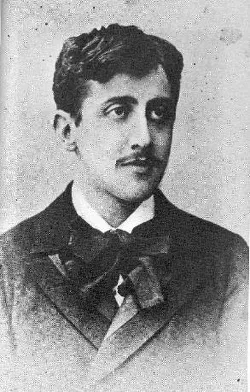
Marcel Proust, born on July 10, 1871, in Auteuil, Paris, and deceased on November 18, 1922, in the French capital, was a novelist, essayist, and literary critic widely regarded as one of the most important writers of the twentieth century. His work profoundly transformed the novel by making memory, perception, and the passage of time central forces in storytelling. Through expansive, intricate prose of extraordinary psychological precision, Proust explores the sensations, desires, memories, and contradictions that shape human existence. His examination of social relationships also reveals the ambitions, hypocrisies, and vulnerabilities of a French society undergoing significant change.
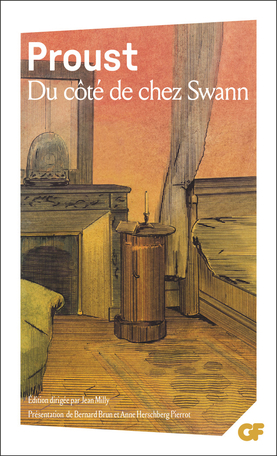
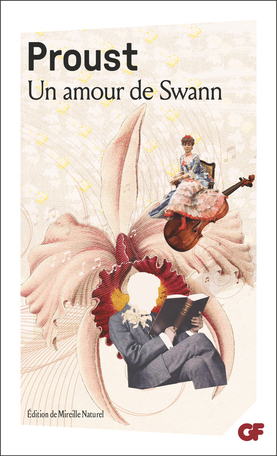
His masterpiece, In Search of Lost Time, is a seven-volume novel published between 1913 and 1927, with its final volumes appearing after his death. In Swann's Way, the narrator revisits the landscapes of his childhood, family memories, and his first encounters with fashionable society. The celebrated madeleine episode illustrates the power of involuntary memory: a present sensation unexpectedly brings back a past that appeared to have vanished. Swann in Love, a major section of this opening volume, explores the mechanisms of romantic passion, jealousy, and illusion through the relationship between Charles Swann and Odette de Crécy.
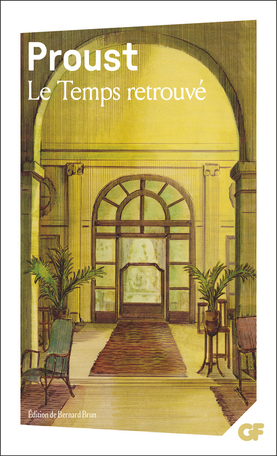
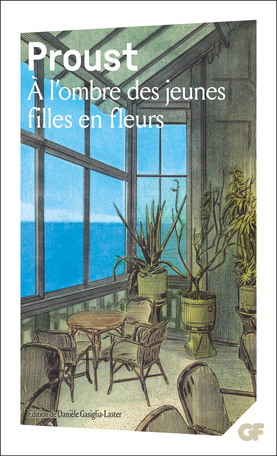
In In the Shadow of Young Girls in Flower, Proust further examines adolescence, the discovery of desire, and experiences that shape artistic sensitivity. The cycle culminates in Time Regained, where his reflections on memory and lived experience find their fulfillment in a theory of literary creation. Art becomes a means of recovering, understanding, and giving form to experiences seemingly erased by time. This attention to artistic revelation also informs his writings on art, in which painting, music, and literature occupy essential places in the search for inner truth.
Career
Marcel Proust was born into a cultivated Parisian bourgeois family. His father, Adrien Proust, was a distinguished physician, while his mother, Jeanne Weil, came from a prosperous and educated Jewish family. From childhood, he suffered severe asthma attacks that continued to affect his life. He spent some of his holidays in Illiers, near Chartres, whose landscapes and memories would later inspire the fictional Combray. A student at the Lycée Condorcet, he developed an early interest in literature, philosophy, and the arts. After completing his military service, he studied law and literature while becoming increasingly familiar with Parisian intellectual and fashionable society.
During the 1890s, Proust published his earliest writings in literary journals and participated in the cultural life of his time. He moved among writers, artists, and aristocratic circles whose customs he would later portray with remarkable insight. His first collection, Pleasures and Days, appeared in 1896. He also developed a strong interest in the British art critic John Ruskin, translating and commenting on several of his works during the early twentieth century. The deaths of his father in 1903 and his mother in 1905 deeply affected him. He gradually withdrew from society and devoted increasing attention to writing, eventually working in a room lined with cork to reduce outside noise.
Beginning in 1909, Proust concentrated intensely on In Search of Lost Time, continually revising his manuscripts and expanding the narrative with new scenes and reflections. After encountering publishing difficulties, he released Swann's Way in 1913 through Grasset, financing the publication himself. The First World War subsequently interrupted the publication of later volumes but also gave him time to develop his project on a much larger scale. In 1919, In the Shadow of Young Girls in Flower received the Prix Goncourt, establishing his literary reputation. Despite increasingly fragile health, Proust continued working on his masterpiece until his death in 1922. The final volumes appeared posthumously, completing a literary achievement that permanently transformed modern fiction.
Key Facts
- Involuntary memory as revelation: in Proust's fiction, certain memories return not through conscious effort but through a sensation, smell, taste, or sound. The madeleine episode became one of literature's most celebrated illustrations of this phenomenon, in which the past unexpectedly returns with extraordinary intensity.
- A writing style that follows consciousness: his long sentences, digressions, and intricate qualifications represent the movements of thought with exceptional precision. This distinctive style reflects the complexity of impressions and associations passing through the human mind.
- A perceptive observer of social hierarchy: aristocratic salons, bourgeois ambitions, and the conventions of fashionable society occupy central places in his writing. Proust exposes the mechanisms of prestige, snobbery, and social power while revealing their vulnerability to the passage of time.
- Love as an experience shaped by illusion: in Swann in Love and other sections of the novel, romantic love is frequently connected to imagination, possessiveness, and jealousy. Proust examines how emotion can alter our perception of others and imprison us within our own representations.
- Art as a means of recovering time: in Time Regained, artistic creation becomes a way to give lasting form to fleeting experiences. For Proust, literature can reveal truths that everyday routines, habits, and appearances often prevent us from recognizing.