Présentation
Borderlands construit sa formule autour de la rencontre entre le FPS et la progression issue du jeu de rôle. Les affrontements se jouent entièrement en vue subjective, mais les ennemis rapportent de l’expérience, les personnages gagnent des niveaux, développent leurs compétences et remplacent régulièrement leur équipement. Cette combinaison donne au jeu une boucle très simple à comprendre : explorer, combattre, récupérer du butin et utiliser ce butin pour affronter des zones plus dangereuses.
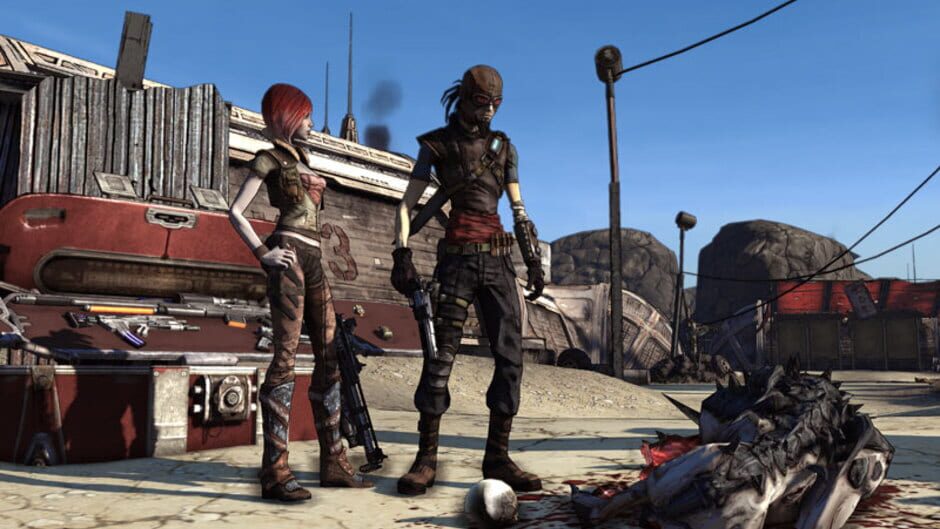
Les armes constituent immédiatement le principal moteur de cette progression. Le système assemble différentes caractéristiques pour produire une très grande quantité de fusils, revolvers, pistolets-mitrailleurs, fusils de précision, lance-roquettes et autres équipements. Dégâts, précision, cadence de tir, capacité du chargeur, effets élémentaires ou propriétés particulières peuvent varier suffisamment pour que deux armes appartenant à la même famille ne remplissent pas exactement le même rôle.
Cette abondance donne une importance particulière au loot. Une caisse, un ennemi puissant ou une récompense de mission peuvent fournir une arme capable de remplacer immédiatement celle utilisée jusque-là. Le joueur compare donc constamment son équipement et doit décider si une amélioration statistique compense une cadence différente, un effet élémentaire ou simplement de meilleures sensations en combat. La recherche de la prochaine bonne arme devient rapidement aussi importante que l’objectif narratif qui conduit jusqu’à elle.
Les quatre personnages jouables complètent cette logique avec des spécialités distinctes. Roland, le Soldier, peut déployer une tourelle Scorpio et développe facilement des capacités adaptées au combat soutenu ou au soutien du groupe. Lilith, la Siren, utilise Phasewalk pour se déplacer temporairement dans un état particulier et peut renforcer sa mobilité ainsi que ses dégâts élémentaires.
Mordecai, le Hunter, privilégie davantage la précision et peut envoyer son rapace Bloodwing attaquer les ennemis, tandis que Brick, le Berserker, dispose d’une compétence orientée vers le combat au corps à corps. Leurs arbres de compétences permettent de renforcer différents aspects de ces capacités sans enfermer complètement chaque personnage dans un seul type d’arme.
La coopération jusqu’à quatre joueurs constitue une autre composante importante. Les personnages conservent leur progression et leurs compétences tout en pouvant parcourir Pandore ensemble. Les différences entre les classes prennent davantage de sens en groupe, notamment lorsque leurs capacités se complètent pendant les affrontements contre de grandes concentrations d’ennemis ou certains adversaires plus résistants.
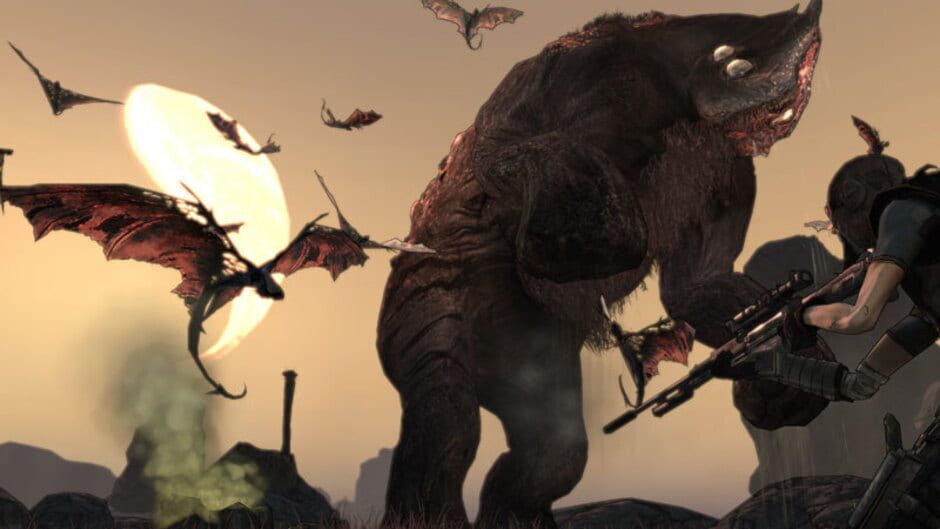
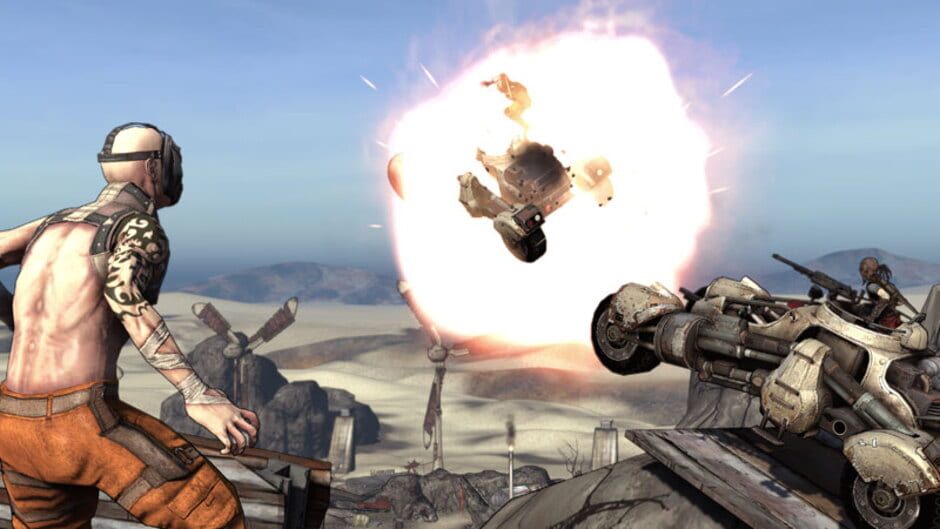
Pandore accompagne cette progression avec une structure composée de grandes zones reliées par différents passages et points de déplacement. L’essentiel du jeu se déroule dans des environnements désertiques, industriels ou rocailleux où les installations humaines semblent avoir été abandonnées à mesure que la planète perdait son intérêt économique. Les véhicules permettent de couvrir plus rapidement certaines distances et disposent également d’armes pour affronter ennemis ou autres véhicules.
Cette désolation joue un rôle important dans l’identité du premier épisode. Les petites colonies paraissent souvent isolées, les bandits occupent les installations abandonnées et une grande partie de la population semble simplement essayer de survivre dans les restes d’une ancienne ruée vers les ressources. Le mélange entre science-fiction, western et monde de récup donne à Pandore une personnalité immédiatement reconnaissable.
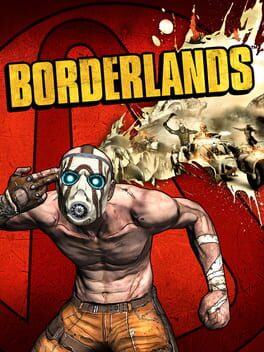
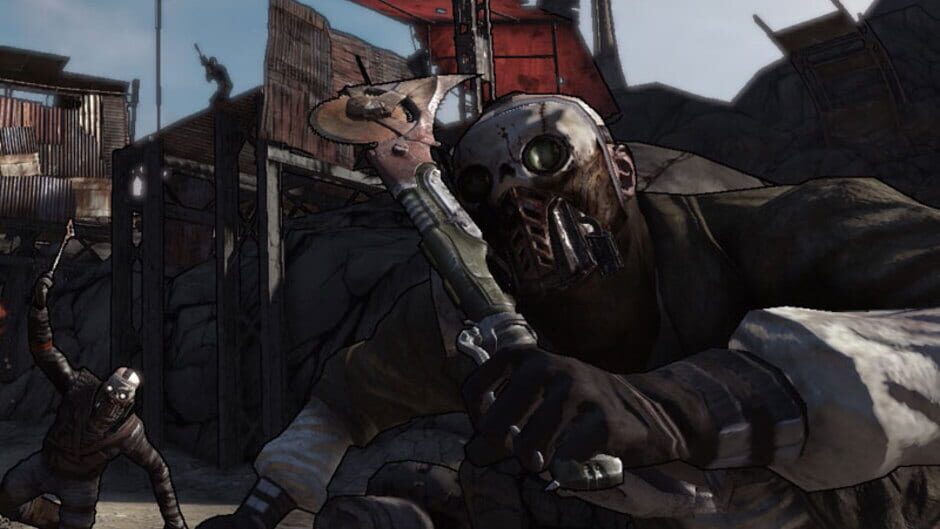
La direction artistique renforce fortement cette identité. Les personnages et décors utilisent des contours marqués et des textures très dessinées qui éloignent le jeu d’une recherche de réalisme. Cette esthétique permet aussi à la violence, aux créatures et aux équipements parfois absurdes de cohabiter avec un univers qui reste globalement hostile.
Le ton de ce premier Borderlands est toutefois plus retenu que celui de plusieurs suites. L’humour est déjà présent à travers Claptrap, les habitants de Pandore, les descriptions d’objets et de nombreuses missions, mais l’aventure conserve davantage de silence et de solitude entre ses personnages. Une grande partie de l’histoire est transmise par les objectifs, les communications et les rencontres plutôt que par de longues séquences narratives.
Cette retenue concerne également les quatre Chasseurs de l’Arche. Roland, Lilith, Mordecai et Brick disposent chacun d’une identité visuelle et mécanique claire, mais restent encore assez peu développés comme personnages pendant la campagne elle-même. Les épisodes suivants leur donneront davantage de personnalité en les intégrant directement aux événements et aux relations de l’univers.
Borderlands reste ainsi plus brut que ses successeurs. Ses environnements sont moins variés, son écriture moins présente et plusieurs missions reposent sur des structures assez répétitives. Mais les éléments essentiels de la série sont déjà réunis : une planète dangereuse, des personnages spécialisés, une quantité massive d’armes, la coopération et une progression qui donne constamment envie de vérifier ce que vient de laisser tomber le dernier ennemi.
Ce qu'il faut retenir
- Le premier épisode de la série Borderlands, situé sur Pandore autour de la recherche d’une mystérieuse Arche extraterrestre.
- Quatre Chasseurs de l’Arche jouables : Roland, Lilith, Mordecai et Brick, chacun associé à une compétence d’action et à plusieurs orientations de progression.
- Une formule qui combine combats de FPS, niveaux, arbres de compétences et recherche permanente de nouvelles armes et équipements.
- Un système de génération d’armes capable de produire une très grande quantité de variantes aux statistiques et propriétés différentes.
- Une campagne jouable en solo ou en coopération jusqu’à quatre joueurs.
- Des environnements désertiques et industriels dont l’esthétique mélange science-fiction, western et récupération.
- Les premières apparitions de plusieurs personnages qui deviendront importants dans la série, notamment Claptrap, Patricia Tannis, Marcus et Scooter.
Conclusion
Borderlands pose une formule dont les épisodes suivants développeront largement toutes les composantes. Le mélange entre FPS et progression fonctionne parce que le loot influence directement les sensations de combat : une nouvelle arme peut changer la manière d’aborder les affrontements, tandis que les compétences donnent progressivement une spécialisation plus nette aux quatre personnages.
Le premier voyage sur Pandore possède également une atmosphère particulière. La planète paraît plus vide et plus hostile que dans les suites, avec de vastes territoires désertiques et des colonies installées au milieu des restes d’une exploitation abandonnée. Cette cohérence visuelle donne une vraie personnalité au monde, même si elle entraîne aussi une variété d’environnements plus limitée.
Le jeu montre davantage son âge dans la structure de certaines missions, les longs déplacements et une narration beaucoup moins développée que celle des épisodes suivants. Les quatre protagonistes sont surtout définis par leurs capacités et leur apparence, tandis que plusieurs personnages appelés à devenir importants restent encore relativement secondaires.
Ces limites n’empêchent pas le principe central de fonctionner. L’envie de tester une nouvelle arme, de gagner un niveau ou de développer une compétence entretient naturellement la progression et s’adapte particulièrement bien à la coopération. Borderlands constitue ainsi une base encore imparfaite mais déjà très identifiable, dont Borderlands 2 reprendra les principales idées pour leur donner davantage de variété, de personnages et d’ampleur.
À savoir
- Borderlands est développé par Gearbox Software et publié par 2K.
- Le jeu original est sorti le 20 octobre 2009.
- Les quatre personnages jouables sont Roland le Soldier, Lilith la Siren, Mordecai le Hunter et Brick le Berserker.
- La campagne se déroule sur Pandore et peut être parcourue en solo ou en coopération jusqu’à quatre joueurs.
- Le jeu combine tir en vue subjective, progression par niveaux et compétences, collecte de loot et utilisation de véhicules.
- Quatre extensions majeures ont accompagné le jeu : The Zombie Island of Dr. Ned, Mad Moxxi’s Underdome Riot, The Secret Armory of General Knoxx et Claptrap’s New Robot Revolution.
- Borderlands: Game of the Year Edition, version enrichie comprenant notamment les quatre extensions, est sortie en 2019 sur PlayStation 4, Xbox One et PC.