Présentation
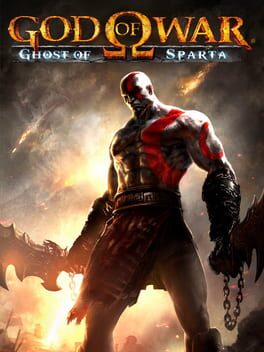
Développé principalement par Ready at Dawn en collaboration avec Santa Monica Studio et édité par Sony Computer Entertainment, God of War: Ghost of Sparta paraît sur PlayStation Portable en 2010. Dana Jan occupe les fonctions de Game Director et Design Director, Ru Weerasuriya celle de Creative Director et Marc Turndorf dirige la production chez Ready at Dawn. Le scénario est créé et écrit par Cory Barlog en collaboration avec Dana Jan et Ru Weerasuriya.
L’histoire prend place après le premier God of War et avant God of War II. Kratos a déjà vaincu Arès et occupe désormais le trône du dieu de la Guerre, mais cette ascension n’a pas mis fin aux cauchemars qui le poursuivent. Ghost of Sparta utilise cette période pour explorer ce qui sépare encore le guerrier de son passé au moment où ses relations avec l’Olympe deviennent de plus en plus fragiles.
L’aventure s’intéresse particulièrement à Sparte et à la famille de Kratos. Ses souvenirs d’enfance, la disparition de son frère Deimos et les secrets entourant ses origines deviennent le moteur d’une quête plus intime que la mission imposée par les dieux dans Chains of Olympus. Le jeu donne ainsi davantage de contexte à plusieurs éléments physiques et narratifs associés au personnage depuis ses premières apparitions.
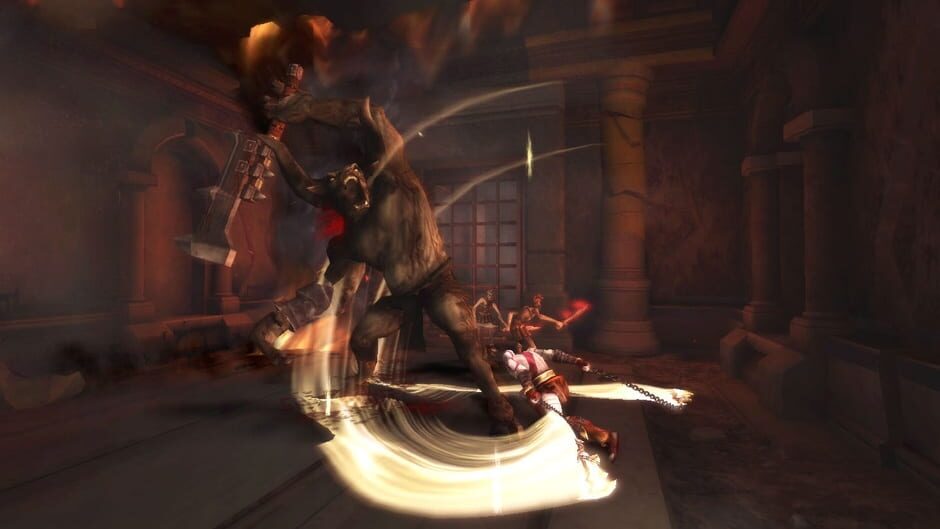
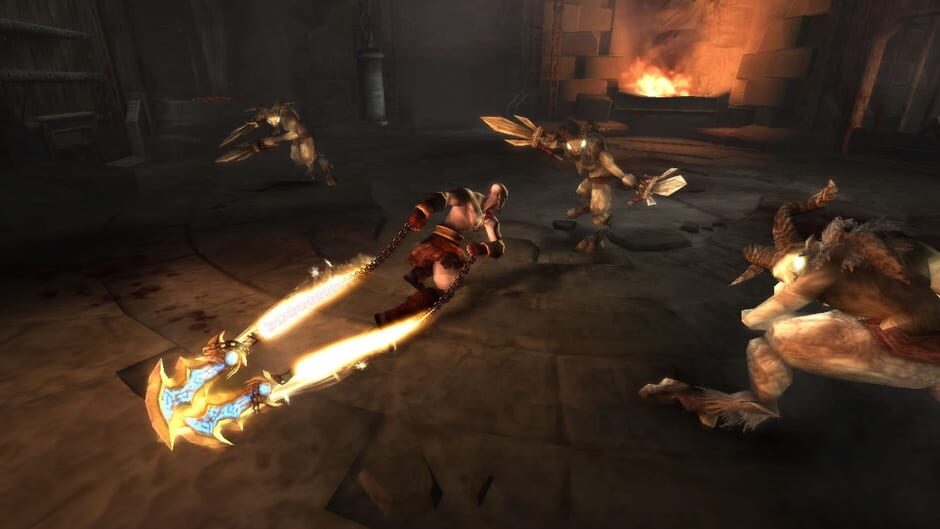
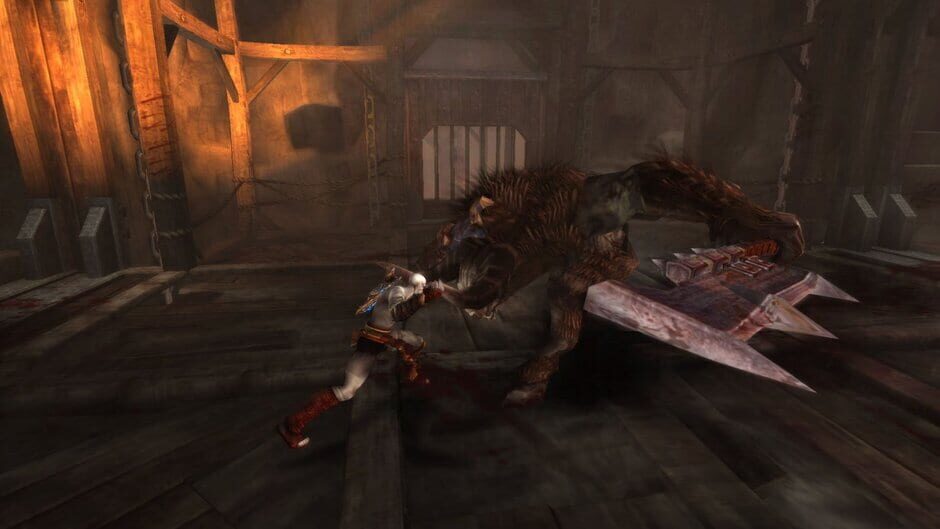
Le système de combat reste construit autour des Lames d’Athéna, utilisées pour enchaîner attaques rapides, coups puissants et mouvements capables de toucher plusieurs adversaires. Ready at Dawn conserve la fluidité des épisodes précédents tout en augmentant le nombre d’ennemis présents dans certaines séquences et en développant plusieurs possibilités offensives adaptées aux contraintes de la PSP.
La principale nouvelle arme est constituée des Armes de Sparte, un ensemble formé d’une lance et d’un bouclier. Kratos peut lancer la lance à distance, attaquer au corps à corps et utiliser le bouclier pour se protéger. Leur fonctionnement offre une alternative plus défensive et précise aux grands mouvements circulaires des lames enchaînées.
La Fléau de Théra modifie également les Lames d’Athéna en les chargeant d’une énergie ardente. Cette capacité permet d’augmenter temporairement leur puissance, de briser certaines protections et d’interagir avec plusieurs éléments du décor. Elle s’intègre donc aussi bien aux affrontements qu’à la progression environnementale.
Kratos obtient parallèlement de nouveaux pouvoirs magiques, notamment l’Œil de l’Atlantide, le Fléau d’Érinys et la Corne de Borée. Ils permettent respectivement d’utiliser différentes attaques élémentaires ou de zone et complètent un arsenal conçu pour offrir plusieurs réponses aux groupes d’ennemis et aux créatures les plus résistantes.
Les combats restent associés aux énigmes et aux phases de plateforme caractéristiques de la série. Le joueur doit escalader, déplacer des mécanismes, franchir des passages dangereux et utiliser les nouvelles capacités de Kratos pour progresser. La caméra demeure entièrement contrôlée par le jeu et sert régulièrement à souligner l’échelle des environnements ou des créatures rencontrées.
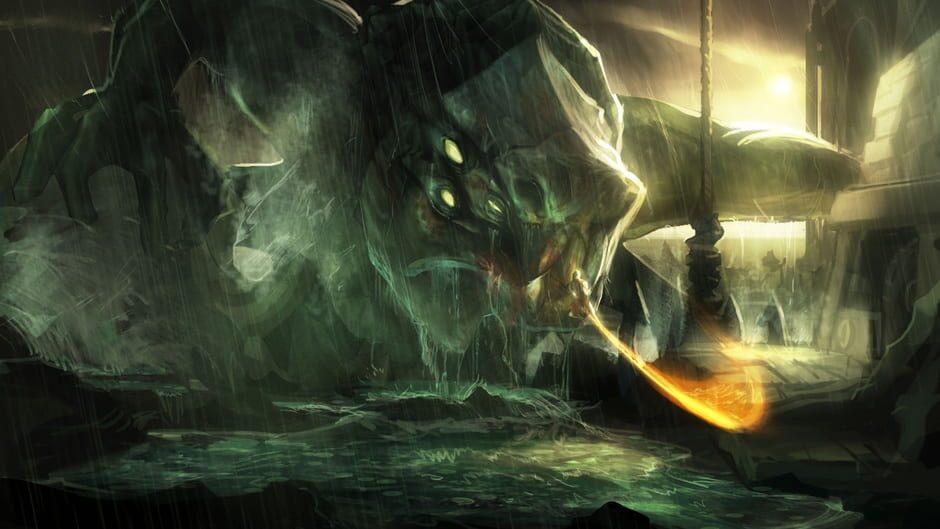
Ghost of Sparta développe des lieux comme Atlantis, Sparte et le Domaine de la Mort, mais traverse également des montagnes, temples et installations liées aux différentes figures mythologiques rencontrées. Ready at Dawn cherche à exploiter davantage les capacités techniques de la PSP que dans Chains of Olympus, avec des environnements plus détaillés, davantage d’effets visuels et une échelle plus ambitieuse.
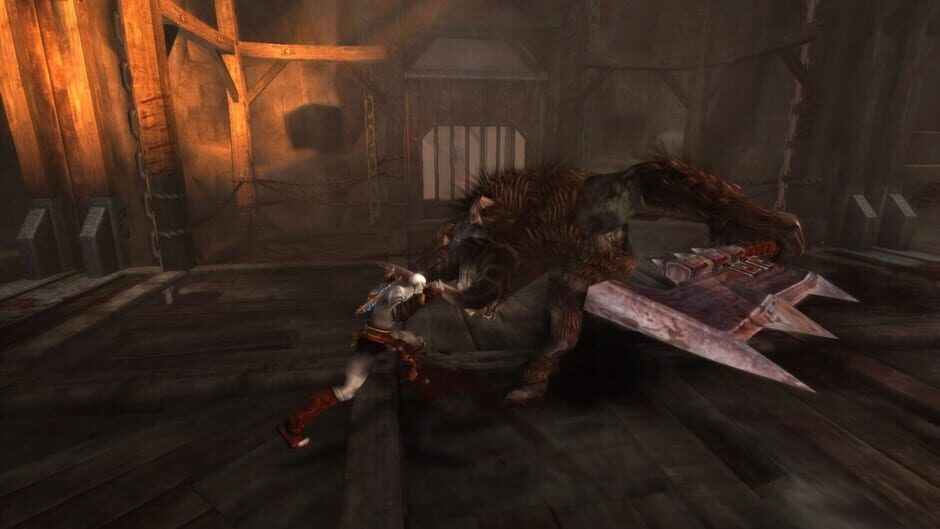
Les affrontements s’appuient toujours sur un bestiaire inspiré de la mythologie grecque. Kratos affronte des créatures déjà familières ainsi que de nouveaux ennemis associés aux régions traversées et aux divinités impliquées dans son histoire. Les Quick Time Events restent utilisés pour certaines exécutions et séquences spectaculaires, dans la continuité des épisodes précédents.
Le récit donne cependant à cette violence une fonction particulièrement personnelle. Les adversaires rencontrés ne constituent pas seulement des obstacles à une mission confiée par l’Olympe : Kratos agit cette fois pour retrouver une partie de sa propre histoire. Son rapport à Athéna, à Sparte et aux autres dieux se transforme à mesure qu’il comprend davantage le rôle qu’ils ont joué dans les événements qui ont marqué son enfance.
Ghost of Sparta complète ainsi un espace important entre les deux premiers épisodes principaux. Il explique davantage la colère de Kratos envers l’Olympe, approfondit son identité spartiate et développe sa famille sans modifier la trajectoire déjà établie par God of War II. Comme Chains of Olympus, il utilise le format portable pour enrichir directement la continuité principale plutôt que pour raconter une aventure indépendante.
Ce qu'il faut retenir
- Une histoire située entre God of War et God of War II, alors que Kratos vient d’accéder au rang de dieu de la Guerre mais reste hanté par son passé.
- Une intrigue particulièrement centrée sur la famille de Kratos, Sparte et son frère Deimos, qui développe plusieurs éléments jusque-là seulement évoqués dans la série.
- Les Lames d’Athéna toujours au centre du combat, complétées par les Armes de Sparte et la Fléau de Théra qui offrent de nouvelles possibilités offensives et défensives.
- De nouveaux pouvoirs comme l’Œil de l’Atlantide, le Fléau d’Érinys et la Corne de Borée, intégrés à un système de combat toujours fondé sur les combos et l’amélioration progressive.
- Des environnements plus ambitieux pour la PSP, notamment Atlantis, Sparte et le Domaine de la Mort, associés aux énigmes, à la plateforme et aux grandes séquences caractéristiques de God of War.
- Un épisode qui approfondit directement les raisons de la rupture progressive entre Kratos et l’Olympe et donne davantage de contexte au personnage avant les événements de God of War II.
Conclusion
God of War: Ghost of Sparta reprend les bases de Chains of Olympus tout en proposant une aventure plus ambitieuse sur le plan technique et plus personnelle sur le plan narratif. Ready at Dawn conserve les combats rapides, la plateforme, les énigmes et la mise en scène spectaculaire de la série, mais les organise autour d’une période particulièrement importante de la vie de Kratos.
Les nouvelles armes renforcent cette évolution sans rompre avec le système connu. Les Armes de Sparte introduisent une manière de combattre davantage fondée sur la lance et le bouclier, tandis que la Fléau de Théra enrichit directement les Lames d’Athéna. Kratos conserve ainsi son identité de combat tout en disposant d’outils réellement différents.
Le jeu profite également davantage du format PSP. Les environnements sont plus vastes et plus détaillés que dans Chains of Olympus, les effets visuels plus nombreux et les affrontements peuvent mettre davantage de créatures à l’écran. Cette progression technique permet à l’épisode portable de rester proche de l’échelle visuelle recherchée par les jeux de salon.
Son apport principal reste cependant narratif. Deimos, Sparte et les souvenirs de Kratos replacent sa colère dans une histoire familiale qui précède largement son pacte avec Arès. Le conflit avec les dieux devient ainsi progressivement plus personnel : leurs décisions ont affecté Kratos bien avant qu’il ne commence à les servir ou à les combattre.
Ghost of Sparta occupe donc une place importante malgré son statut d’épisode PSP. En reliant directement le premier God of War à God of War II et en développant une partie essentielle du passé de Kratos, il complète la période grecque de la série tout en donnant davantage de profondeur aux motivations qui conduiront le personnage à se retourner contre l’Olympe.
À savoir
- God of War: Ghost of Sparta est développé principalement par Ready at Dawn, en collaboration avec Santa Monica Studio, et édité par Sony Computer Entertainment.
- Dana Jan occupe les fonctions de Game Director et Design Director, Ru Weerasuriya celle de Creative Director et Marc Turndorf celle de Director of Production.
- L’histoire est créée et écrite par Cory Barlog, en collaboration avec Dana Jan et Ru Weerasuriya.
- Le jeu paraît sur PlayStation Portable le 2 novembre 2010 en Amérique du Nord et à partir du 3 novembre 2010 en Europe continentale.
- Son histoire commence après la fin du premier God of War et raconte une partie de l’ascension de Kratos comme nouveau dieu de la Guerre, avant les événements de God of War II.
- Ghost of Sparta est le deuxième God of War développé par Ready at Dawn pour PSP, après Chains of Olympus en 2008.
- Le jeu est remasterisé avec Chains of Olympus dans God of War: Origins Collection, publié sur PlayStation 3 en 2011 avec graphismes haute définition et prise en charge des trophées.
```