Présentation
Diablo III reprend le principe fondamental des deux premiers épisodes : choisir une classe, explorer Sanctuary, éliminer des groupes toujours plus nombreux d’ennemis et construire progressivement un personnage grâce aux compétences et au butin obtenu. Blizzard conserve la vue isométrique et le rythme caractéristique de l’action-RPG, mais rend les commandes, les combats et la progression beaucoup plus immédiats.
Les cinq classes disponibles dans le jeu original répondent à des approches très différentes. Le Barbare privilégie la force et le combat rapproché, le Sorcier manipule différentes formes de magie, le Féticheur combine invocations, poisons et malédictions, le Moine associe mobilité et techniques martiales, tandis que le Chasseur de démons se spécialise dans les attaques à distance, les pièges et les déplacements rapides. Le Croisé rejoint ensuite le jeu avec Reaper of Souls, puis le Nécromancien est ajouté en 2017.
La progression abandonne l’attribution permanente de points dans des arbres de compétences comme ceux de Diablo II. Les capacités se débloquent progressivement avec les niveaux et peuvent être équipées puis modifiées par des runes. Le joueur est donc encouragé à changer régulièrement de compétences et à expérimenter différents assemblages sans devoir recommencer son personnage à chaque nouvelle orientation.
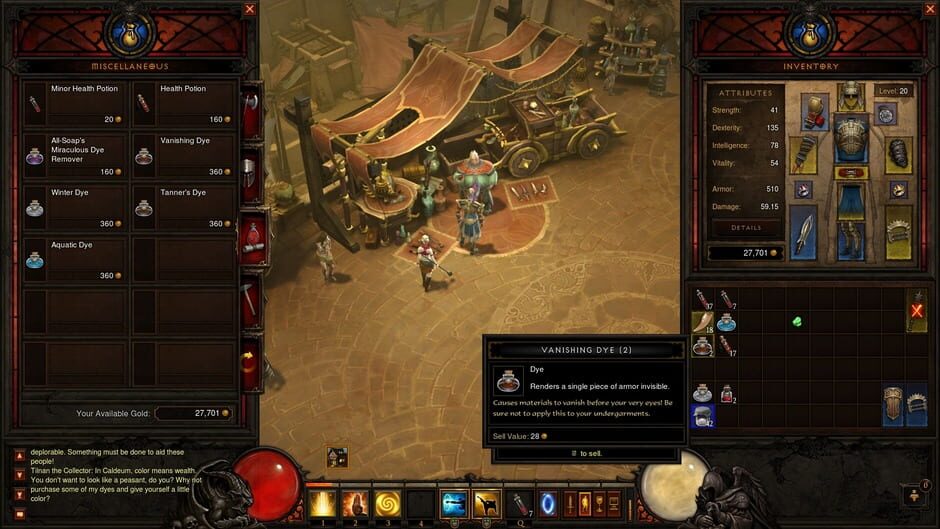
Cette souplesse devient particulièrement importante lorsque l’équipement commence à déterminer les builds. Armes, armures, bijoux et objets de classe possèdent des caractéristiques variables, tandis que les objets légendaires et les ensembles peuvent modifier directement le comportement ou la puissance de certaines compétences. À haut niveau, la construction d’un personnage repose ainsi moins sur une simple accumulation de statistiques que sur la recherche de synergies entre capacités, bonus d’ensemble et pouvoirs légendaires.
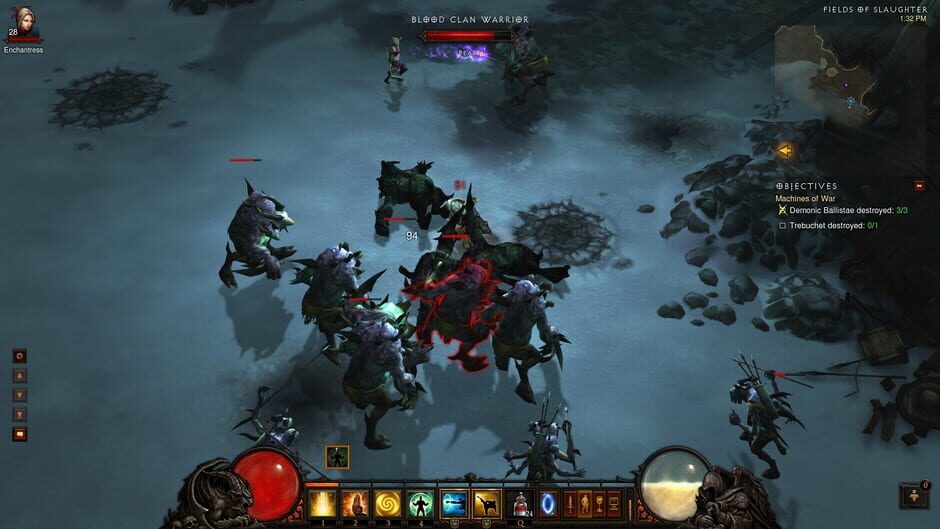
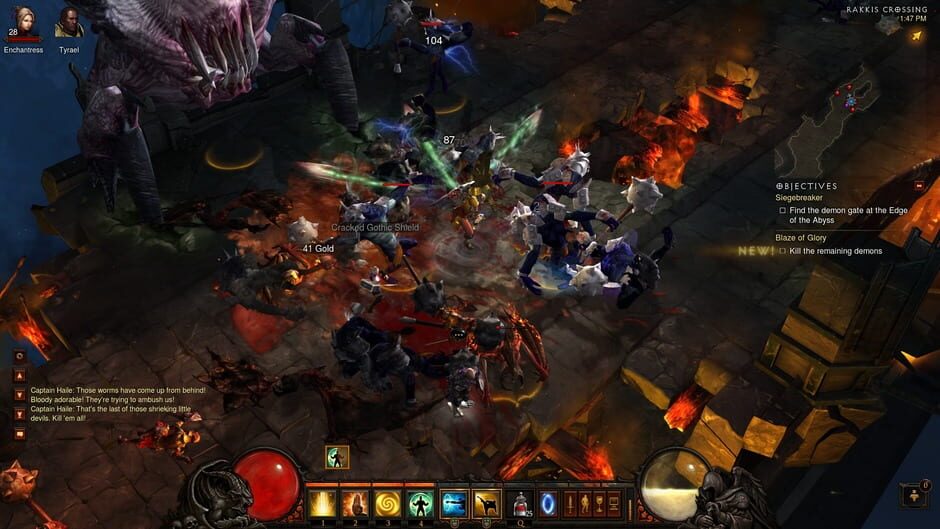
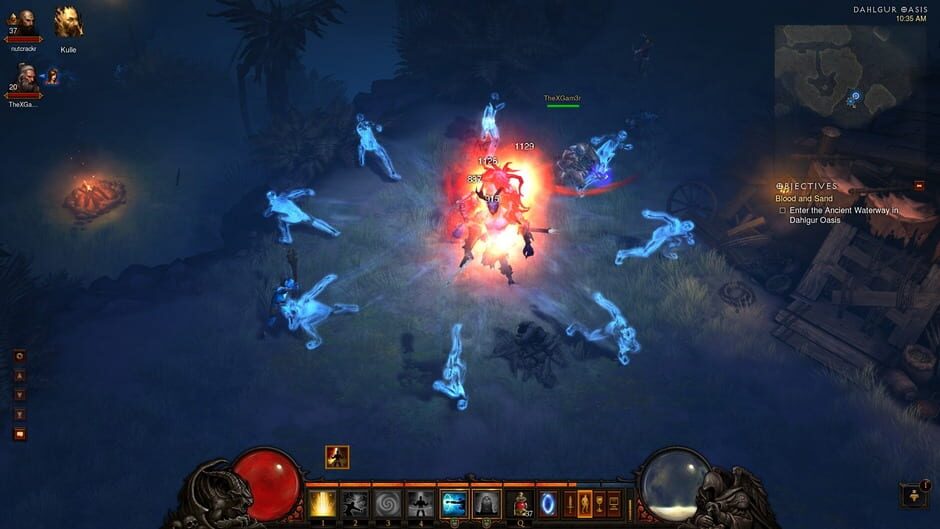
Le combat adopte un rythme plus fluide que dans les épisodes précédents. Les groupes d’ennemis sont nombreux et les compétences sont conçues pour produire rapidement des combinaisons offensives, défensives ou de contrôle. Les élites complètent cette variété grâce à des ensembles de propriétés spéciales qui obligent régulièrement à adapter son positionnement ou ses priorités.
La campagne originale est organisée en quatre actes traversant plusieurs régions de Sanctuary. Les environnements mêlent zones extérieures, donjons semi-aléatoires, événements et rencontres scriptées. La génération procédurale reste présente, mais l’aventure repose davantage que Diablo II sur des décors construits, une narration régulière et des séquences cinématiques qui donnent une place beaucoup plus importante à Leah, Tyrael, Adria et aux différents antagonistes.
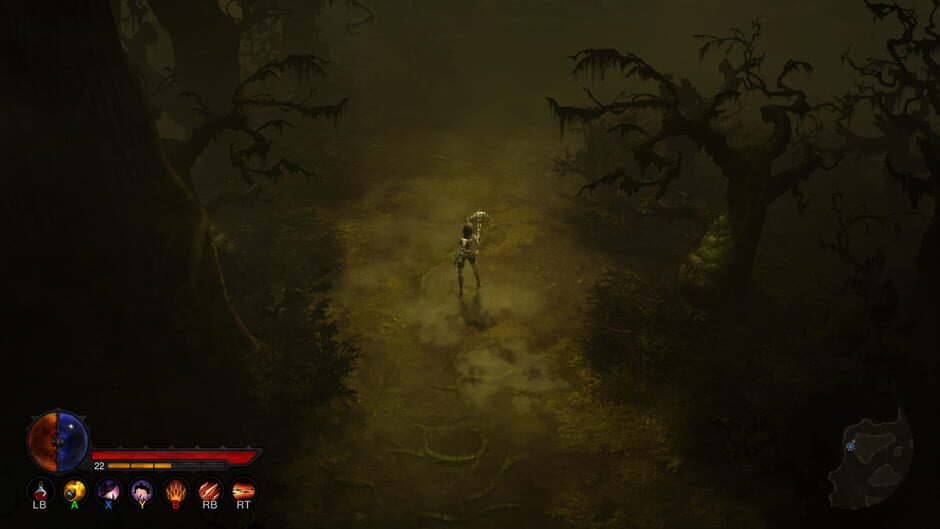
Cette orientation narrative donne au jeu une échelle spectaculaire, mais elle modifie également l’atmosphère de la série. Diablo III utilise davantage de couleurs, d’effets visuels et de scènes grandioses que ses prédécesseurs. Sanctuary reste envahi par les cadavres, les cultes et les créatures infernales, mais l’horreur intime des premiers épisodes cède souvent la place à une guerre plus explicite entre puissances célestes et démoniaques.
La version sortie en 2012 ne correspond toutefois qu’en partie au Diablo III qui s’est installé dans la durée. Son système de loot et la présence d’un hôtel des ventes, comprenant initialement un marché utilisant de l’argent réel sur PC, ont profondément influencé les premières années du jeu. Blizzard a finalement annoncé la suppression des hôtels des ventes en considérant qu’ils affaiblissaient la boucle essentielle consistant à tuer des monstres pour trouver soi-même de meilleurs objets.
La refonte Loot 2.0 puis l’extension Reaper of Souls en 2014 transforment largement cette structure. Les récompenses deviennent davantage adaptées à la classe jouée et les objets légendaires gagnent une importance beaucoup plus grande dans la construction des personnages. Reaper of Souls ajoute également un cinquième acte consacré à Malthael, la classe du Croisé et une nouvelle progression jusqu’au niveau 70.
Adventure Mode constitue l’évolution la plus importante pour la durée de vie. Le joueur peut parcourir librement les actes, accomplir des primes et entrer dans les Failles nephalem sans suivre la campagne dans son ordre narratif. Le jeu devient alors beaucoup plus directement centré sur le combat, le loot et l’amélioration constante des builds.
Les Failles supérieures prolongent cette logique avec des donjons chronométrés dont la difficulté peut augmenter progressivement. Elles transforment l’optimisation en objectif durable : améliorer un ensemble, trouver un meilleur légendaire ou ajuster quelques compétences permet de tenter une difficulté supérieure et de comparer plus précisément l’efficacité d’un personnage.
Le système Parangon poursuit également la progression après le niveau maximal en accordant de nouveaux points à répartir. Les Saisons invitent parallèlement à recommencer périodiquement avec de nouveaux personnages et proposent des objectifs, récompenses et mécaniques temporaires. Elles ont fini par devenir l’un des principaux moyens de renouveler régulièrement l’expérience.
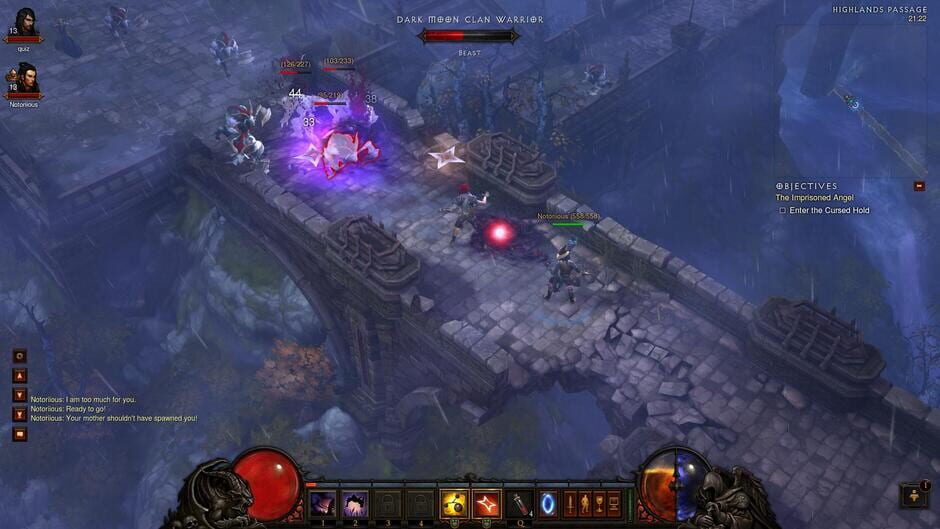
Le mode coopératif s’intègre naturellement à cette structure. Plusieurs joueurs peuvent associer leurs classes et leurs builds, augmenter la vitesse des combats et affronter ensemble les niveaux de difficulté supérieurs. Les versions consoles adaptent parallèlement l’interface et les commandes à la manette et permettent également la coopération locale, donnant au jeu une présence beaucoup plus large que son lancement initial sur PC et Mac.
Cette évolution permanente est essentielle pour comprendre Diablo III. Le jeu de 2012 et celui construit après Reaper of Souls, Loot 2.0, les Failles, les Saisons et les nombreuses mises à jour partagent le même système de combat, mais pas exactement les mêmes priorités. Au fil des années, la campagne devient surtout une porte d’entrée vers un jeu beaucoup plus centré sur l’expérimentation des builds et la répétition volontaire de contenus à difficulté croissante.
Ce qu'il faut retenir
- Un action-RPG situé environ vingt ans après Diablo II, qui ramène le joueur à Tristram avant d’étendre le conflit à plusieurs régions de Sanctuary et aux Hauts Cieux.
- Cinq classes dans le jeu original : Barbare, Chasseur de démons, Moine, Féticheur et Sorcier, auxquelles s’ajoutent ensuite le Croisé et le Nécromancien.
- Un système de compétences flexible où capacités et runes peuvent être réorganisées afin d’adapter régulièrement le build du personnage.
- Une progression fortement dépendante du loot, des objets légendaires, des ensembles de classe et des synergies qu’ils créent avec les compétences.
- Une évolution majeure après la sortie avec Loot 2.0 et Reaper of Souls, qui ajoute notamment le Croisé, un cinquième acte et le niveau 70.
- Adventure Mode, les primes, les Failles nephalem, les Failles supérieures, le Parangon et les Saisons comme fondations de l’expérience à long terme.
- Un jeu qui a profondément changé entre sa version de lancement de 2012 et la formule centrée sur les builds et l’endgame qui s’est imposée par la suite.
Conclusion
Diablo III conserve la simplicité fondamentale de la série : entrer dans une zone remplie de monstres et en ressortir avec un personnage un peu plus puissant. Blizzard accélère cependant considérablement cette boucle grâce à des combats plus fluides, des compétences facilement interchangeables et une quantité d’effets capables de transformer rapidement le comportement d’un build.
Son évolution après la sortie est presque aussi importante que son contenu initial. L’hôtel des ventes et le système de loot des premières versions ont créé une relation à l’équipement qui éloignait une partie de la progression de la chasse directe aux objets. Leur abandon, accompagné de Loot 2.0 puis de Reaper of Souls, replace progressivement les combats et la découverte d’équipement au centre de l’expérience.
Cette transformation explique la place prise par Adventure Mode et les Failles. Une fois la campagne terminée, l’intérêt repose davantage sur l’expérimentation : essayer une combinaison de compétences, compléter un ensemble, exploiter un nouveau pouvoir légendaire puis mesurer le résultat dans des difficultés de plus en plus élevées. La répétition est volontaire et constitue le moteur même de l’endgame.
La campagne reste plus dirigée et plus spectaculaire que celles de ses prédécesseurs, avec une tonalité qui s’éloigne parfois de leur noirceur plus oppressante. Elle donne cependant à Tyrael, Leah et au conflit entre les Cieux et les Enfers une place importante dans la continuité de Sanctuary.
Diablo III est donc difficile à réduire à son lancement de 2012. Sa véritable identité s’est construite progressivement, au fil d’une longue série de refontes et d’extensions qui ont transformé un action-RPG très attendu en une immense machine à expérimenter des classes, des objets et des builds. Cette évolution est devenue l’un des aspects les plus caractéristiques de son histoire.
À savoir
- Diablo III est développé et publié par Blizzard Entertainment.
- Le jeu original est sorti sur PC et Mac le 15 mai 2012.
- Les cinq classes disponibles au lancement sont le Barbare, le Chasseur de démons, le Moine, le Féticheur et le Sorcier.
- L’hôtel des ventes en or et en argent réel de la version PC a été fermé le 18 mars 2014, Blizzard estimant qu’il nuisait à la boucle fondamentale de recherche de loot.
- L’extension Diablo III: Reaper of Souls est sortie le 25 mars 2014 et ajoute notamment le Croisé, un cinquième acte et Adventure Mode.
- Le pack Rise of the Necromancer, sorti le 27 juin 2017, ajoute le Nécromancien comme classe jouable.
- Diablo III continue de fonctionner avec des Saisons ; en 2026, Blizzard réutilise notamment plusieurs anciens thèmes saisonniers dans leur rotation.