Présentation
Alan Wake se présente moins comme un jeu d’horreur traditionnel que comme un thriller surnaturel dont le joueur traverse lui-même les chapitres. Remedy construit l’aventure autour de la narration : voix intérieure d’Alan, manuscrits découverts dans le décor, émissions de radio, programmes télévisés et personnages de Bright Falls contribuent à donner l’impression qu’une histoire se compose en permanence autour du protagoniste.
Cette logique se retrouve jusque dans la structure. La campagne est divisée en épisodes, avec introductions, ruptures dramatiques et fins conçues comme des cliffhangers. Le jeu emprunte ainsi une partie du rythme des séries télévisées tout en utilisant les déplacements et les combats pour maintenir le joueur à l’intérieur du récit.
Le manuscrit constitue l’un de ses dispositifs les plus intéressants. Certaines pages révèlent ce qui est arrivé à d’autres personnages, tandis que d’autres décrivent une scène avant qu’Alan ne l’atteigne. Le joueur avance alors avec une connaissance étrange : savoir qu’un événement inquiétant doit arriver sans forcément savoir quand ni sous quelle forme. Le texte ne se contente pas d’expliquer l’histoire après coup ; il participe directement à l’attente.
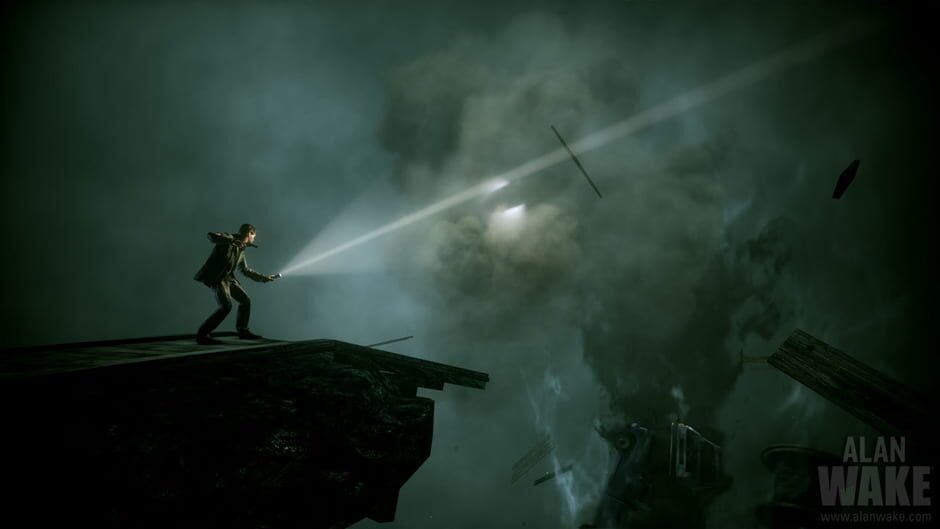
Le combat repose sur une règle tout aussi claire. Les ennemis appelés Taken sont enveloppés d’une obscurité qui les protège des armes conventionnelles. Alan doit d’abord concentrer sur eux le faisceau de sa lampe torche afin de dissiper cette protection, puis utiliser revolvers, fusils ou autres armes pour les éliminer.
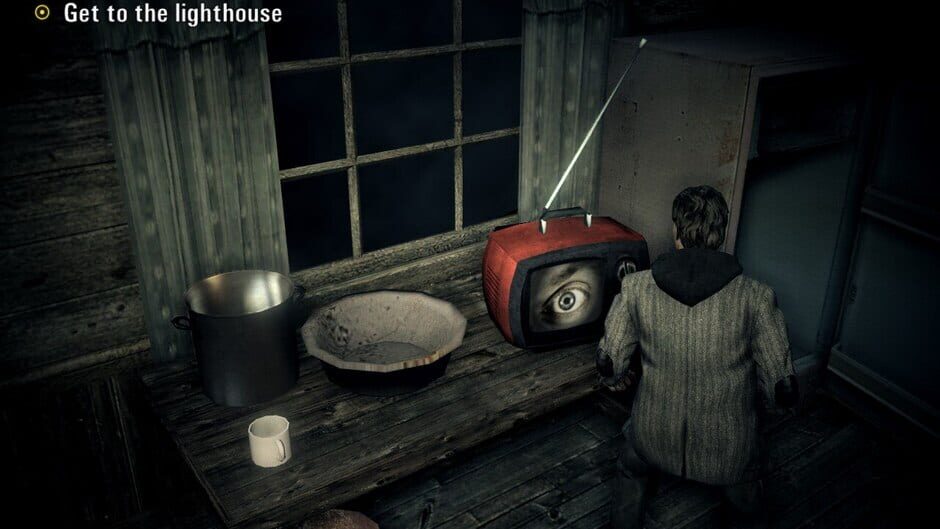
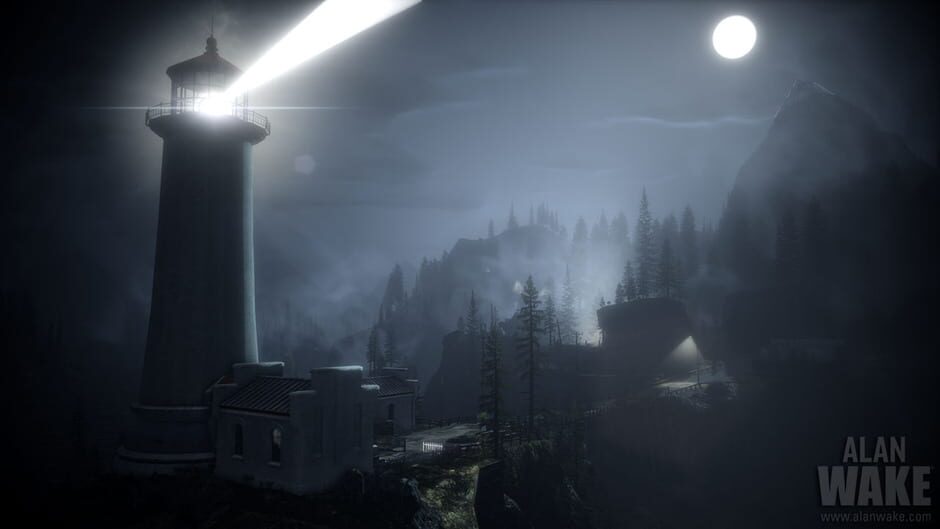
La lumière devient ainsi à la fois une arme et un refuge. Lampadaires, projecteurs et zones fortement éclairées offrent des moments de sécurité, tandis que fusées éclairantes, grenades flash et autres sources lumineuses peuvent repousser ou neutraliser les ténèbres. Dans les séquences nocturnes, apercevoir une lampe au loin revient presque à voir une destination de survie.
Cette mécanique donne un rythme particulier aux affrontements. Alan n’est pas un soldat : il esquive difficilement plusieurs assaillants simultanés et doit surveiller son positionnement autant que ses munitions ou ses batteries. Éclairer un ennemi trop longtemps alors qu’un autre approche par le côté peut rapidement transformer une situation maîtrisée en fuite improvisée.
Les forêts entourant Bright Falls jouent un rôle essentiel dans cette tension. La nuit réduit les repères, les branches bougent, des silhouettes semblent apparaître entre les arbres et les Taken peuvent surgir depuis plusieurs directions. Remedy utilise souvent le décor pour maintenir l’incertitude avant même qu’un véritable affrontement commence.
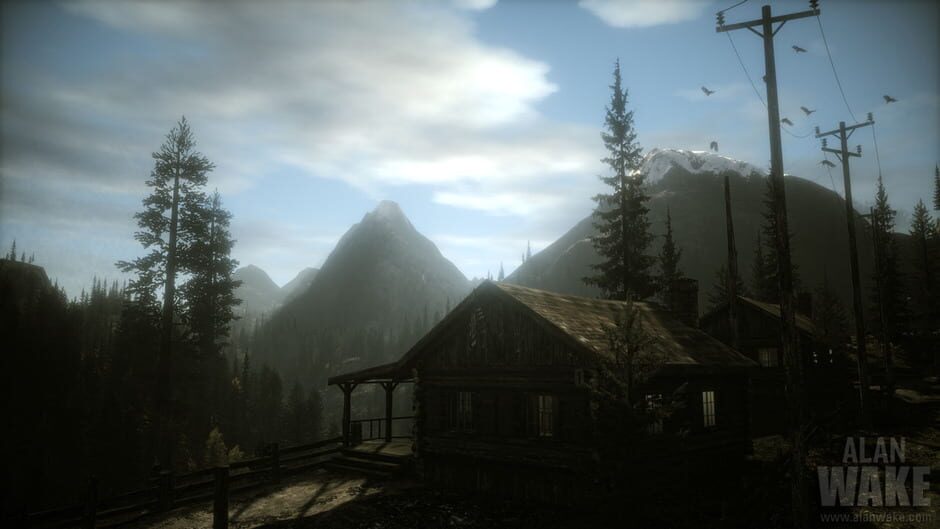
Le contraste avec la journée est volontairement marqué. Bright Falls possède aussi ses habitants, son diner, son commissariat, ses événements locaux et une certaine excentricité de petite ville américaine. Barry Wheeler, l’agent et ami d’Alan, apporte notamment une énergie beaucoup plus légère au milieu d’un récit constamment attiré vers l’obscurité. Ces moments donnent au lieu suffisamment de personnalité pour que sa transformation nocturne soit plus inquiétante.
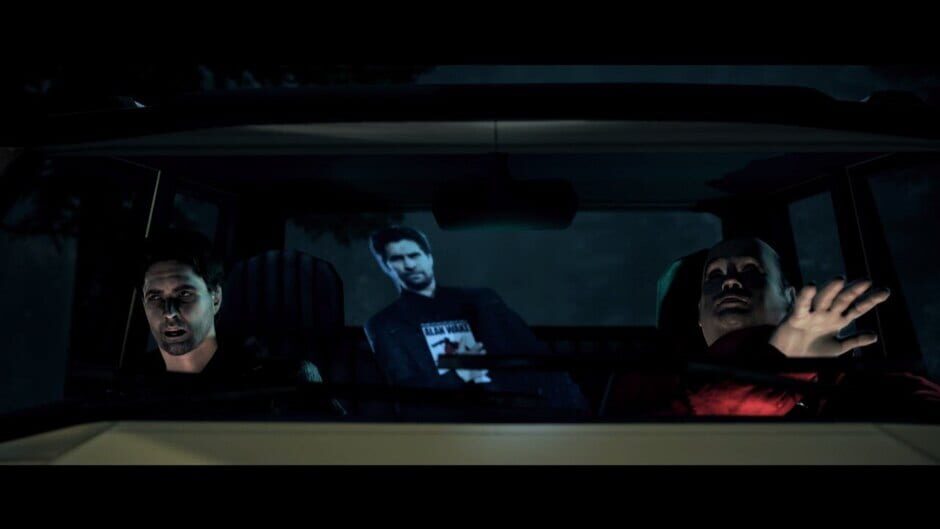
Le jeu alterne également passages à pied, exploration de lieux abandonnés et quelques séquences en véhicule. Il reste cependant relativement dirigé : les environnements peuvent offrir des détours et des secrets, mais Alan Wake privilégie une progression narrative précise plutôt qu’un véritable monde ouvert. Cette structure permet à Remedy de contrôler l’apparition des menaces et le rythme des révélations.
Tout repose finalement sur une relation entre fiction et réalité. Alan est un écrivain qui tente de comprendre une histoire dont il semble être simultanément l’auteur, le protagoniste et la victime. Plus il avance, plus la question cesse d’être simplement « qui a écrit ce manuscrit ? » pour devenir « jusqu’où une histoire peut-elle modifier ce qui est réel ? ».
Ce qu'il faut retenir
- Un thriller d’action psychologique centré sur l’écrivain Alan Wake et la disparition de sa femme Alice à Bright Falls.
- Un manuscrit mystérieux dont les pages décrivent ou annoncent des événements vécus par le protagoniste.
- Des ennemis protégés par les ténèbres qu’il faut d’abord exposer à la lumière avant de pouvoir les éliminer avec des armes conventionnelles.
- Une lumière utilisée aussi bien comme ressource offensive que comme refuge face aux forces obscures.
- Une campagne structurée en épisodes, avec une mise en scène fortement influencée par les codes du thriller télévisé.
- Une ambiance reposant sur le contraste entre la petite ville de Bright Falls et les forêts nocturnes qui l’entourent.
- Un récit où écriture, réalité et perception deviennent progressivement impossibles à séparer clairement.
Conclusion
Alan Wake réussit quelque chose de plus intéressant que simplement rendre l’obscurité dangereuse : il donne à la lumière une valeur presque narrative.
Un lampadaire aperçu entre les arbres n’est pas seulement un élément de décor. Il signifie la sécurité, une respiration et parfois la fin provisoire d’un chapitre de tension. À l’inverse, éteindre une lampe ou quitter une route éclairée suffit à faire comprendre que l’histoire peut recommencer à se refermer sur Alan.
Le système de combat finit par montrer certaines répétitions, notamment lorsque plusieurs rencontres reposent sur la même succession entre lampe torche et armes à feu. Mais cette mécanique possède une cohérence remarquable avec le reste de l’œuvre. Alan n’affronte pas simplement des ennemis : il retire littéralement l’obscurité qui les protège avant de pouvoir agir sur eux.
La structure épisodique renforce encore cette sensation d’être enfermé dans une fiction. Les manuscrits annoncent parfois ce qui va se produire, la voix d’Alan raconte certains événements avec le recul d’un auteur et chaque nouvelle révélation remet en question la frontière entre ce qu’il écrit et ce qu’il vit.
Bright Falls fonctionne alors comme davantage qu’un décor. C’est un endroit suffisamment ordinaire pour que l’irruption du fantastique dérange, mais suffisamment étrange pour que le doute ne disparaisse jamais complètement.
Alan Wake construit ainsi son identité autour d’une peur très particulière : découvrir que l’histoire dans laquelle on se trouve possède peut-être déjà une fin écrite quelque part, puis continuer malgré tout à tourner les pages.
À savoir
- Alan Wake est développé par le studio finlandais Remedy Entertainment et publié à l’origine par Microsoft Game Studios.
- Le jeu est sorti initialement sur Xbox 360 en mai 2010.
- Alan Wake est un écrivain de thrillers confronté à une panne d’écriture lorsqu’il arrive à Bright Falls avec sa femme Alice.
- Les ennemis principaux sont des personnes ou créatures possédées par une présence obscure et protégées par une couche de ténèbres.
- La lampe torche permet de dissiper cette protection avant l’utilisation des armes conventionnelles.
- La campagne originale adopte une structure en épisodes qui participe directement à son identité de thriller.
- L’histoire se poursuivra ensuite à travers d’autres œuvres de l’univers, mais la fiche présente ici uniquement le jeu Alan Wake original.