Présentation
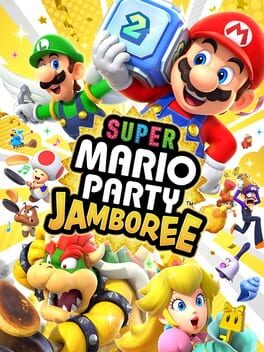
Développé par Nintendo Cube et édité par Nintendo, Super Mario Party Jamboree est un jeu vidéo sorti le 17 octobre 2024 sur Nintendo Switch. Les genres associés à cette fiche sont fantasy et jeu de plateau, avec des modes solo, multijoueur et coopératif.
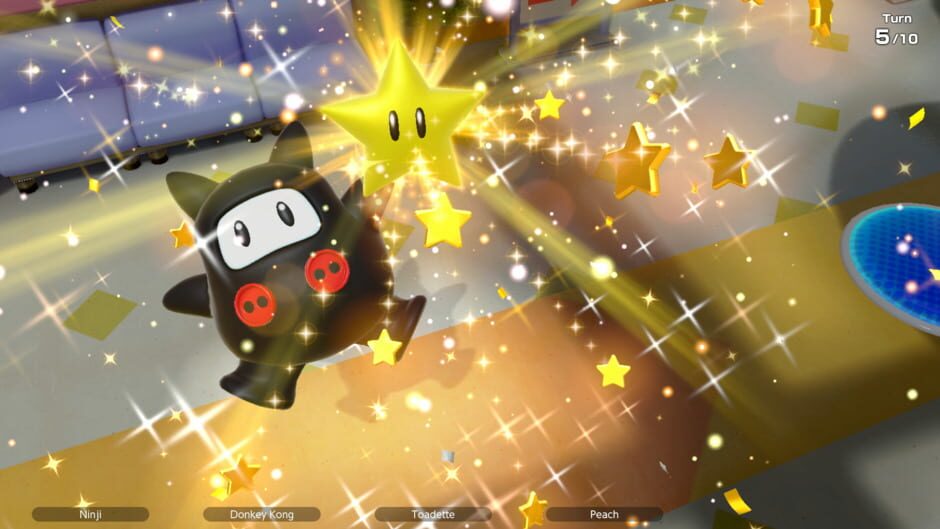
La formule principale reprend le fonctionnement de Mario Party : les joueurs avancent sur un plateau à l’aide de dés, récupèrent des pièces, déclenchent différents événements et participent à un mini-jeu après chaque tour. Les pièces permettent notamment d’obtenir des étoiles, et le nombre d’étoiles détermine le classement final.
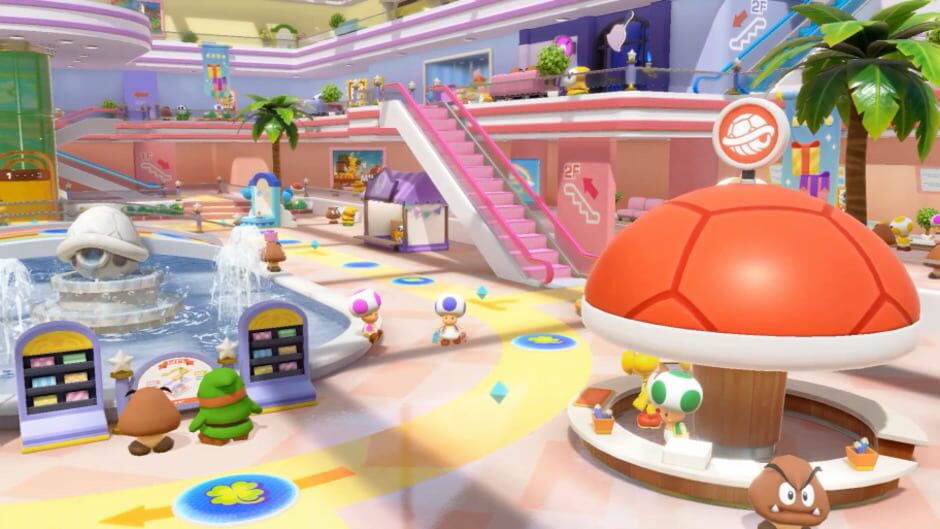
L’épisode propose sept plateaux, dont cinq nouveaux et deux issus de précédents Mario Party. Chaque environnement possède ses propres règles et événements : le Lagon Goomba modifie par exemple ses chemins en fonction des marées, tandis que d’autres plateaux exploitent un centre commercial, un circuit automobile ou différentes transformations du parcours.
Les deux plateaux classiques sont Western Land et Mario’s Rainbow Castle, adaptés à cette nouvelle version tout en conservant leur identité générale.
Les parties de plateau peuvent accueillir jusqu’à quatre joueurs localement ou en ligne. Plusieurs paramètres permettent d’ajuster la partie, notamment la difficulté des personnages contrôlés par la console et certaines règles liées aux étoiles ou aux mini-jeux utilisant les mouvements.
Une variante de règles destinée aux parties plus compétitives cherche également à réduire l’influence du hasard afin de donner davantage de poids aux décisions et aux performances des joueurs.
Les Jamboree Buddies ajoutent une mécanique particulière aux plateaux. Ces personnages peuvent apparaître temporairement pendant une partie et déclencher un mini-jeu lorsque les joueurs les rejoignent. Le vainqueur obtient alors leur aide et bénéficie d’un effet spécifique.
Ces avantages peuvent modifier directement le déroulement d’une partie : certains partenaires influencent les déplacements, les objets ou les transactions réalisées sur le plateau. Leur présence étant temporaire, ils deviennent un objectif supplémentaire pouvant détourner les joueurs de leur route vers une étoile.
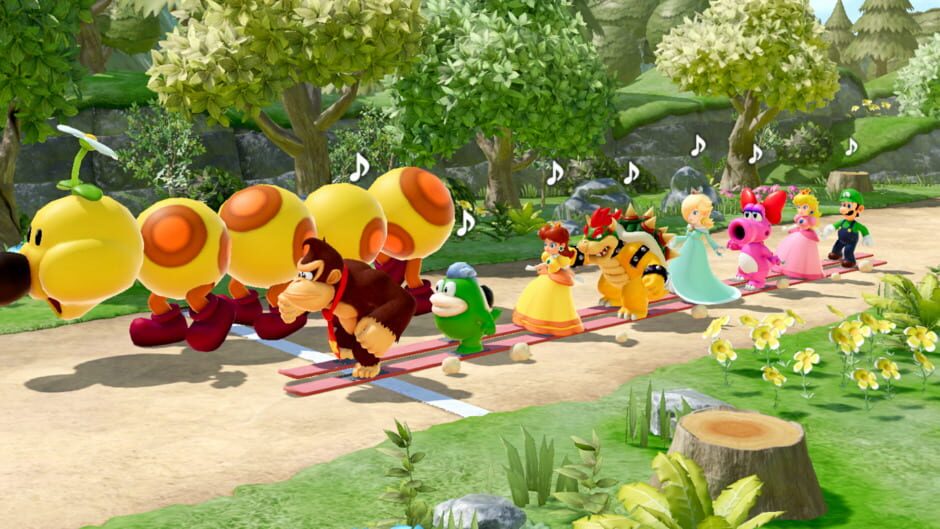
Super Mario Party Jamboree regroupe plus de 110 mini-jeux. La majorité est nouvelle et les épreuves utilisent aussi bien les boutons traditionnels que, pour certaines activités, les commandes par mouvements des Joy-Con.
La Marina des mini-jeux permet d’accéder directement à ces épreuves à travers plusieurs formats. Le Jeu libre permet de sélectionner les mini-jeux, tandis que d’autres variantes organisent des affrontements par équipes, des défis successifs ou des compétitions en ligne.
Certains modes reposent entièrement sur les commandes par mouvements. Ils proposent notamment des activités liées au rythme, à la manipulation d’objets ou au déplacement en imitant les mouvements d’un personnage. Ces modes nécessitent les contrôleurs adaptés et ne sont pas disponibles dans les mêmes conditions que les mini-jeux utilisant uniquement les boutons.
Le Koopathlon constitue l’une des principales nouveautés multijoueur. Jusqu’à 20 joueurs s’affrontent en ligne en réalisant des mini-jeux successifs : plus un joueur marque de points pendant une manche, plus son personnage progresse rapidement sur le parcours.
Le mode construit ainsi une course à grande échelle à partir de plusieurs performances individuelles. Le classement évolue au fil des mini-jeux jusqu’à ce que les participants atteignent l’arrivée.
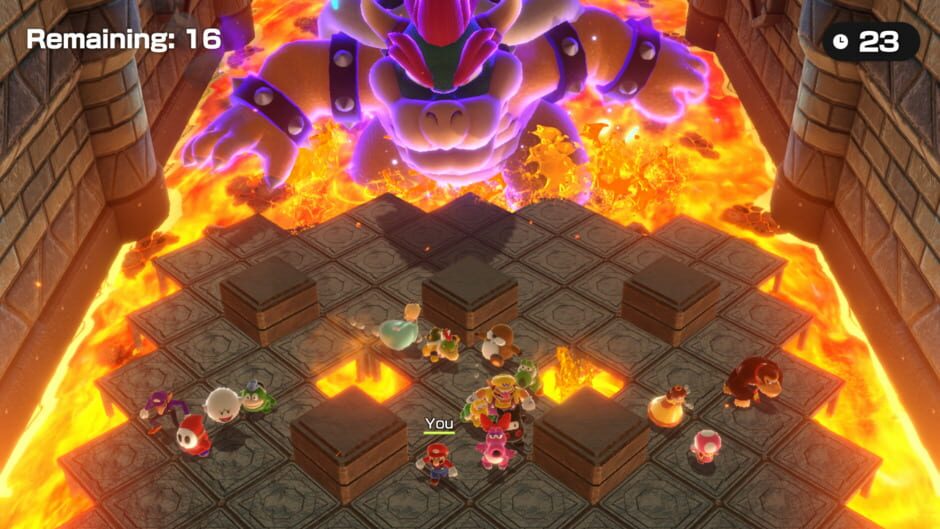
La Brigade anti-Bowser adopte au contraire une structure coopérative. Jusqu’à huit joueurs peuvent travailler ensemble en ligne pour récupérer des bombes et les utiliser contre un faux Bowser, avec des mini-jeux coopératifs entre les différentes manches permettant d’obtenir des objets utiles.
Le jeu comprend également 22 personnages jouables, parmi lesquels Mario, Luigi, Peach, Yoshi et Bowser, ainsi que Pauline et Ninji parmi les nouveaux venus dans la sélection de personnages jouables de Mario Party.
La variété des modes permet ainsi de séparer plusieurs usages de la formule. Les plateaux conservent la progression au tour par tour de Mario Party, la Marina se concentre sur les mini-jeux, le Koopathlon développe la compétition à grande échelle et la Brigade anti-Bowser repose sur la coopération.
Super Mario Party Jamboree étend donc principalement la série par son volume de contenu et par la coexistence de formats très différents : jeu de plateau, mini-jeux indépendants, commandes par mouvements, compétition en ligne jusqu’à 20 joueurs et coopération en équipe.
Ce qu'il faut retenir
- Super Mario Party Jamboree propose sept plateaux, dont cinq nouveaux et deux issus de précédents épisodes.
- Le jeu rassemble plus de 110 mini-jeux, un nombre record pour la série au moment de sa sortie.
- Les parties classiques reposent sur les dés, les pièces, les étoiles et les mini-jeux et peuvent accueillir jusqu’à quatre joueurs.
- Les Jamboree Buddies peuvent rejoindre temporairement un joueur et lui fournir différents avantages sur le plateau.
- Le Koopathlon permet à jusqu’à 20 joueurs de s’affronter en ligne à travers une succession de mini-jeux.
- La Brigade anti-Bowser propose une coopération en ligne pouvant réunir jusqu’à huit participants.
Conclusion
Super Mario Party Jamboree conserve la structure de jeu de plateau qui définit la série, avec déplacements au dé, collecte de pièces, recherche d’étoiles et mini-jeux organisés entre les tours.
L’épisode développe cette base avec sept plateaux, des règles ajustables, les Jamboree Buddies et plus de 110 mini-jeux pouvant être joués à travers plusieurs formats indépendants.
Le Koopathlon et la Brigade anti-Bowser étendent particulièrement le multijoueur en proposant deux structures différentes : une compétition jusqu’à 20 participants fondée sur les scores obtenus dans les mini-jeux, et une épreuve coopérative en ligne contre un adversaire commun.
Super Mario Party Jamboree rassemble ainsi dans un même jeu la formule traditionnelle des plateaux, des collections de mini-jeux, des activités utilisant les commandes par mouvements et plusieurs modes en ligne compétitifs ou coopératifs.
À savoir
- Super Mario Party Jamboree sort le 17 octobre 2024.
- Le jeu est développé par Nintendo Cube et édité par Nintendo.
- Il est disponible sur Nintendo Switch.
- Les genres indiqués dans cette fiche sont fantasy et jeu de plateau.
- Il propose des modes Single player, Multiplayer et Co-operative.
- Le jeu comprend sept plateaux et plus de 110 mini-jeux.
- Le Koopathlon peut réunir jusqu’à 20 joueurs en ligne, tandis que la Brigade anti-Bowser peut réunir jusqu’à huit joueurs en coopération.